Key takeaways
- Adjustable timer and automatic shutoff: Prefer a controllable session limit rather than an indefinite heating mode.
- Overheat protection: A thermal cutoff should stop heating if the control system or enclosure becomes excessively hot.
- Accurate temperature display: Treat the display as an estimate; temperature can vary considerably between the floor, seat, and upper enclosure.
- Low-water protection for steam: The generator should stop or warn when its reservoir is empty.
- Heat-resistant, removable floor protection: This reduces slipping and makes cleaning easier.
- Accessible exit: The zipper or door should open from inside without complicated controls.
The best portable saunas for home relaxation are usually infrared cabins for quieter, faster setup and lower room humidity, while steam tents are the better choice if you want a more intense, humid heat at a lower purchase price.
Portable saunas are not interchangeable: interior dimensions, heat delivery, electrical load, cleanup, and storage size vary substantially. Use the comparison below to match the design to your room, tolerance for heat, and available storage rather than choosing by advertised maximum temperature alone.
Our top picks


As an Amazon Associate we earn from qualifying purchases at no extra cost to you. Ratings are shown as listed on Amazon.
Infrared versus steam portable saunas
| Factor | Portable infrared cabin | Portable steam tent |
|---|---|---|
| Typical interior size | About 32–36 in. wide × 32–36 in. deep × 55–68 in. high; seated use | About 31–35 in. wide × 31–35 in. deep × 65–72 in. high; seated or semi-standing use depending on model |
| Common heat range | Approximately 100–150°F | Approximately 100–140°F inside the tent, with very high humidity |
| Typical setup time | 10–25 minutes for a framed cabin; 3–8 minutes after the first assembly | 5–15 minutes, including filling the steam pot and attaching the hose |
| Folded storage footprint | Roughly 36–42 in. wide × 10–16 in. deep × 30–40 in. high, depending on frame | Usually 14–20 in. wide × 8–12 in. deep × 8–14 in. high when packed |
| Moisture | Low; wipe-down is usually sufficient | High; drying the tent and floor mat after every use is essential |
| Electrical demand | Commonly 1,200–1,700 watts | Commonly 900–1,600 watts |
| Typical market range | About $250–$1,200 | About $120–$500 |
Best portable sauna by situation
| Your situation | Better choice | Why |
|---|---|---|
| Small apartment or bedroom | Compact infrared cabin | No steam plume, less condensation, and typically quieter operation; allow at least 12 in. of clearance from walls. |
| Renter with limited storage | Steam tent | It usually packs into a small carry bag and does not require permanent assembly or wall modifications. |
| Kids or pets in the home | Infrared cabin with a locking or zippered door and timer | There is no separate hot water reservoir to tip over, but the unit still needs supervised, restricted access. |
| Back or knee discomfort | Infrared cabin with a firm, full-height seat | A stable seat around 17–19 in. high is easier to use than a low folding stool; heat is also easier to moderate. |
| Strong preference for humid heat | Steam tent | It creates a damp, enveloping environment that feels hotter at lower air temperatures. |
| Frequent moving between rooms | Lightweight steam tent | Many weigh approximately 15–30 lb, compared with roughly 35–70 lb for framed infrared units. |
What to look for in an infrared portable sauna
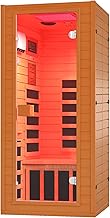
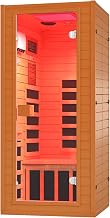
Infrared models heat your body and nearby surfaces with infrared panels rather than first heating a large volume of air. The experience is generally less humid and may be more comfortable for people who find traditional sauna temperatures overwhelming. The most useful controls are an adjustable thermostat, a session timer, independent temperature readings, and an automatic shutoff.
Check the usable interior rather than the exterior dimensions. A cabin advertised as 36 inches wide may have an interior closer to 31 inches after insulation and panel thickness. Before buying, measure the chair or bench: a seat around 17–19 inches high and 16–20 inches wide gives most adults a more natural sitting position. A very low included stool can make standing up difficult, particularly in a warm, confined space.
Carbon heating panels are common in portable cabins because they spread heat across a broad area and stay relatively thin. Ceramic emitters can feel more concentrated and may produce hot spots if the layout is uneven. Look for panel coverage near the back, sides, and lower legs rather than a single rear panel. A removable floor mat helps protect fabric and insulation from perspiration.
Infrared construction trade-offs
| Construction | Advantages | Limitations |
|---|---|---|
| Fabric and insulated soft panels | Lightweight, folds more easily, and usually costs less | Can sag around the door, retain odors, and wear first at zippers and seams |
| Metal or composite frame with fabric enclosure | More stable shape and easier entry; often better panel alignment | Bulkier when stored and may require two people to move safely |
| Wood-panel portable cabin | More rigid, attractive, and better at maintaining its shape | Heavier, less portable, and more demanding of a level floor |
When a steam sauna makes more sense
A steam tent uses an external steam generator connected to the enclosure by a hose. It is usually the most space-efficient option: the tent, chair, generator, and floor mat can often fit in a closet or beneath a bed. Steam also creates a strong sensation of heat without requiring the tent air to reach the temperatures associated with a dry sauna.
The trade-off is maintenance. The generator reservoir must be emptied and allowed to dry, and the tent should remain open until the interior is completely dry. A damp, folded tent can develop mildew or stale odors. Choose a model with a stable, heat-resistant hose connection, a spill-resistant reservoir, a timer, low-water protection, and an automatic shutoff. Keep the steam generator outside the enclosure on a level, nonflammable surface.
Steam tents are typically less comfortable for tall users because the seat and roof can leave little room to change position. Measure the sitting height from the floor to the top of your head, then compare it with the tent’s usable interior height; do not rely on the outside height, which may include the frame and roof clearance.
Setup, room fit, and moving realities
For a 10 × 12 foot room, either style can fit comfortably, but placement still matters. Reserve at least 24 inches in front of the door for entry and exit, 12 inches on the sides for ventilation and cable access, and 12–18 inches behind a steam tent or generator so moisture does not collect against a wall. Do not place a sauna directly beside upholstered furniture, curtains, paper storage, or a heat register.
Confirm that the assembled unit can pass through the route to its final location. A compact infrared cabin may arrive in boxes 30–40 inches long and 60–100 lb combined, even when its individual panels are manageable. Measure the narrowest doorway and stair turn, including door trim. Wood and composite panels can be awkward rather than exceptionally heavy, so use two people and avoid carrying a tall assembled cabin by its roof or door frame.
Most portable units use a standard household outlet, but the circuit still matters. A 1,500-watt heater draws about 12.5 amps on a 120-volt supply, leaving little capacity on a shared 15-amp circuit. Plug the sauna directly into a properly grounded wall outlet; avoid extension cords, power strips, and outlets that become warm. Follow the electrical requirements in the specific manual.
Safety controls worth paying for
- Adjustable timer and automatic shutoff: Prefer a controllable session limit rather than an indefinite heating mode.
- Overheat protection: A thermal cutoff should stop heating if the control system or enclosure becomes excessively hot.
- Accurate temperature display: Treat the display as an estimate; temperature can vary considerably between the floor, seat, and upper enclosure.
- Low-water protection for steam: The generator should stop or warn when its reservoir is empty.
- Heat-resistant, removable floor protection: This reduces slipping and makes cleaning easier.
- Accessible exit: The zipper or door should open from inside without complicated controls.
Start with a short, moderate session, drink water, and leave immediately if you feel dizzy, faint, nauseated, unusually breathless, or unwell. People who are pregnant or have cardiovascular disease, blood-pressure concerns, impaired heat sensation, or medication-related heat sensitivity should ask a healthcare professional before using a sauna. Never leave children or pets inside, and do not use a steam unit while sleeping or unattended.
Our buying recommendation
Choose a portable infrared sauna if your priorities are dry heat, simpler cleanup, a steadier seated experience, and regular use in a bedroom or apartment. Choose a portable steam sauna if the lowest storage footprint, lower entry price, and humid heat matter more than drying time and interior comfort.
Whichever design you select, prioritize interior seat dimensions, a realistic temperature range, a timer, automatic shutoff, low-water or overheat protection, and a return-friendly setup period. The best portable saunas are the ones you can safely assemble, comfortably enter, thoroughly dry or clean, and store without turning each session into a maintenance project.