Key takeaways
- Effortless Assembly and Portability: Experience the convenience of…
- Superior Height Adjustment: The Flashpoint Posing Table and…
- Uncompromised Stability and Comfort: The Flashpoint photography stool…
The Short Answer
For most small photography studios in 2026, the best photography studio furniture sets with posing tables and stools pair a 24 × 48 inch height-adjustable posing table (working height 27–31 inches, 300 lb static capacity) with a 24-inch gas-lift posing stool that tucks completely underneath — that combination covers newborn, seated portrait, boudoir, and tabletop product work inside a 7 × 9 ft shooting zone and collapses into a 20-inch-deep storage footprint. If your studio is 10 × 12 ft or smaller, buy the folding or nesting version of that same spec rather than a smaller table; you lose usable surface long before you run out of floor. If you shoot seated adult portraits exclusively, skip adjustability and buy a 30 × 60 inch solid maple table at a fixed 30-inch height, because a heavier table that never moves is more stable under a 250 lb subject than a lighter one on a lift mechanism.
Everything below is organized around that logic: measure first, then choose material, then choose storage behavior. The product sections later in this article are spec profiles rather than brand endorsements, so you can match them against whatever is actually in stock when you buy.
Our top picks
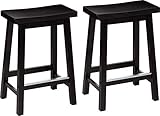
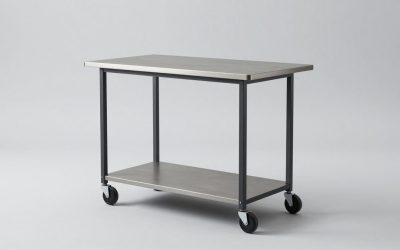
 Flashpoint Photography Posing Table and Posing Stool
- Effortless Assembly and Portability: Experience the convenience of…
- Superior Height Adjustment: The Flashpoint Posing Table and…
- Uncompromised Stability and Comfort: The Flashpoint photography stool…
 Flashpoint 20-30" Posing Stool
- Capture Flawless Portraits: Make your photography sessions a…
- Effortless Height Adjustment: This height adjustable stool features…
- Experience Comfort: The 14" diameter padded seat ensures…
 HEYZAKKA Newborns Photography Props Small Wooden Stool
- This newborns photography accessory is a must have…
- Great for professional photographers, child photography enthusiasts, and…
- Craft from wood, which ensures and stability while…
| Product | Key specs | |
|---|---|---|
| Flashpoint Photography Posing Table and Posing Stool | Effortless Assembly and Portability: Experience the convenience of… Superior Height Adjustment: The Flashpoint Posing Table and… Uncompromised Stability and Comfort: The Flashpoint photography stool… | Check price |
| Flashpoint 20-30" Posing Stool | Capture Flawless Portraits: Make your photography sessions a… Effortless Height Adjustment: This height adjustable stool features… Experience Comfort: The 14" diameter padded seat ensures… | Check price |
| HEYZAKKA Newborns Photography Props Small Wooden Stool | This newborns photography accessory is a must have… Great for professional photographers, child photography enthusiasts, and… Craft from wood, which ensures and stability while… | Check price |
 ZEXKENS Baby Photography Wooden Round Stool Props ZEXKENS Baby Photography Wooden Round Stool Props | This newborns photography accessory is a must have… Record your baby most lovely moment with our… Great for professional photographers, child photography enthusiasts, and… | Check price |
As an Amazon Associate we earn from qualifying purchases at no extra cost to you.
Why Studio Furniture Is Measured, Not Browsed
Photography furniture fails in ways that have nothing to do with how it looks in a photograph of a showroom. It fails because the table is 2 inches too high for a seated subject’s feet to reach the floor. It fails because the stool’s gas cylinder sinks under a heavier client. It fails because the table is 30 inches wide and the studio doorway is 30 inches wide. It fails because a 62-inch shipping box will not turn the corner at the top of a stairwell.
Retail listings for studio furniture typically publish three numbers — length, width, and a vague weight rating. The numbers that determine whether the piece works in your space are almost never published: clearance needed on each side, the height range in inches rather than “adjustable,” the box dimensions and shipping weight, the foam density, and whether the frame is rated for static or dynamic load. This guide supplies those numbers as ranges you can verify against any specific product.
The Numbers That Decide Every Purchase
Table height, stool height, and the 10–12 inch rule
For a seated subject, the vertical gap between the top of the seat and the top of the table should be roughly 10 to 12 inches. That single relationship drives every other measurement. A standard 18-inch stool pairs with a 28–30 inch table. A 24-inch stool pairs with a 34–36 inch table. A 26-inch stool pairs with a 36–38 inch table.
Get this wrong and the subject’s elbows float above the surface, their shoulders creep upward, and every portrait session turns into repeated repositioning. Get it right and posing becomes a matter of nudging a hand or a chin rather than rebuilding the pose.
Working heights you will encounter in real studio furniture:
- Low posing benches: 14–18 inches — newborns, reclining poses, pet work
- Standard posing stools: 17–24 inches, most commonly 18 and 24
- Standard posing tables: 26–32 inches, most commonly 28 and 30
- Counter-height studio tables: 34–36 inches — product, tabletop, tethered laptop stations
- Drafting/standing height: 38–42 inches — stool seats to match at 28–32 inches
If you buy one adjustable table, look for a range that spans at least 6 inches, not 3. A table that adjusts from 27 to 33 inches covers newborn-height work with a booster, seated adult work, and standing product work. A table that adjusts 28–31 inches covers seated work and nothing else.
Clearance around a posing table
The table itself is the smallest part of the footprint. Real working clearance:
- Behind the table (photographer side): 30–36 inches minimum to stand and lean; 48 inches if you shoot with a tripod and a tethering cart
- Front of the table (lighting side): 36–48 inches for a light stand and modifier; 60 inches if you use a large softbox or an umbrella
- Side access: 24 inches minimum on at least one side so you can reach a subject’s arm or reposition a hand
- Ceiling: 8 ft minimum; 9–10 ft if you raise a boom or shoot standing subjects on a table
Add those to the table dimensions and a 24 × 48 inch table consumes roughly 7 × 9 ft of working floor once you are actually shooting. A 30 × 60 inch table consumes roughly 8 × 11 ft.
Room-size fit: 10 × 10, 10 × 12, 12 × 15, 20 × 20
| Room size | Realistic posing table | Stool | What you give up |
|---|---|---|---|
| 8 × 10 ft (spare bedroom) | 24 × 36 in folding, or wall-mounted 20 × 48 in fold-down | Backless 18 in, folding | No full-body standing shots; one light only |
| 10 × 10 ft | 24 × 48 in, nesting or folding | 18–24 in gas lift | No room for a second table or a tethering cart |
| 10 × 12 ft | 24 × 48 in adjustable, or 30 × 48 in fixed | 24 in with foot ring | Tight for a 60 in softbox at full extension |
| 12 × 15 ft | 30 × 60 in fixed maple, or 24 × 60 in adjustable | 24–26 in with backrest | Nothing significant; this is the practical sweet spot |
| 16 × 20 ft | Two tables (one low, one standard height) | Two stools plus a technician stool | Nothing; add a storage ottoman bench |
| 20 × 20 ft and up | 30 × 72 in or modular cubes plus a table | Three or more, mixed heights | Nothing; consider dedicated set zones |
Note that these figures assume a single shooting zone with no permanent backdrop wall. If you keep a seamless paper setup mounted permanently, subtract 4–5 ft from the long dimension, because a 107-inch roll and its stands occupy real floor.
Posing Table Dimensions by Use Case
The table length matters more than the width for most studio work, because a subject reclining or a product arrangement spreads horizontally. A 48-inch table seats one adult comfortably; a 60-inch table seats one adult plus props or a second small subject; a 72-inch table is really two workstations.
| Use case | Typical surface | Working height | Capacity needed |
|---|---|---|---|
| Newborn posing | 20 × 30 in to 24 × 36 in, recessed bowl option | 26–30 in (parent standing) | 30–50 lb dynamic, but high edge stiffness |
| Seated adult portrait | 24 × 48 in to 30 × 60 in | 28–30 in | 300 lb static minimum |
| Boudoir / reclining | 30 × 60 in to 30 × 72 in | 24–26 in (lower reads better) | 350–400 lb static |
| Tabletop product | 24 × 48 in, or 30 × 48 in with a lip | 34–36 in standing, 30 in seated | 150 lb, stiffness over capacity |
| Pet photography | 24 × 36 in with a non-slip top | 18–22 in | 150 lb with a scratch-resistant surface |
| Family / sibling groups | 30 × 60 in plus a bench and riser | 26–30 in | 400 lb static across the span |
Weight Capacity: What the Rating Actually Means
Nearly every posing table sold to photographers publishes a static rating — the load the table holds when weight is applied gently and stays put. A person sitting down is a dynamic load, and dynamic capacity is typically 50–65 percent of the static figure. A table rated 300 lb static is realistically good for a 175–195 lb person sitting down normally.
Three other things the rating hides:
- Center vs edge loading. A 300 lb rating usually assumes center load. Put 150 lb on the last 6 inches of a 48-inch span and a lightweight frame will flex visibly. If you pose people sitting on the table edge, look for a frame with a center rail or a leg directly under the edge.
- Adjustment mechanism derating. Lift columns, scissor mechanisms, and locking pins all reduce capacity compared with a fixed-height leg. A 300 lb fixed table and a 300 lb adjustable table are not equivalent.
- Caster derating. Rolling tables are rated for load in motion, which is roughly half of stationary capacity. Lock the casters before a subject sits, every time.
Practical target figures for a working studio: 350 lb static minimum for a table used by adults, 250 lb static for a table used only for children and newborns, and 250 lb static for a stool with a gas cylinder — which means the cylinder itself should be rated 250 lb or better, since a cheap cylinder that sinks under load is the single most common failure in studio seating.
Materials: The Real Trade-Offs
Solid hardwood vs Baltic birch vs MDF vs particleboard
| Material | Janka hardness (approx.) | Weight for a 30 × 60 in top | Strengths | Failure mode |
|---|---|---|---|---|
| Hard maple | 1,450 | 45–60 lb | Takes threaded inserts and repeated disassembly; resists dents | Expensive; moves with humidity if not sealed |
| White oak | 1,360 | 45–58 lb | Water resistance; strong grain | Heavy; open grain traps dust in unsealed finishes |
| Birch plywood (Baltic, 13–18 ply) | ~1,200 face | 30–40 lb | Best strength-to-weight; dimensionally stable | Edge chipping if unbanded; screw threads strip on repeat assembly |
| MDF | ~1,000 | 40–55 lb | Perfectly flat; paints and laminates cleanly | Swells permanently if water reaches an unsealed edge; sags on long unsupported spans |
| Particleboard | ~600 | 45–60 lb | Cheap; rigid when new | Crumbles at fastener points; one wet event ruins it |
| Steel frame + laminate top | n/a | 35–50 lb | Highest capacity per pound; wipes clean | Cold to the touch; frame scratches floors without pads |
| Aluminum frame | n/a | 20–30 lb | Lightest; corrosion-proof | Flexes more; costs more per unit of rigidity |
The practical read: Baltic birch plywood is the best value for a table that will be moved, solid maple is the best choice for a table that will be disassembled repeatedly or used hard for a decade, and MDF is acceptable only for a tabletop with a sealed laminate surface that never gets wet. Particleboard belongs in a fixed, dry, low-load installation and nowhere else in a photography studio, because studios have humidity swings from lighting heat and people.
Metal frames, legs, and hardware
Steel gauge is the number that matters. 14-gauge (about 0.075 in) is commercial furniture grade and will not flex under a 300 lb load. 16-gauge (about 0.060 in) is fine for tables up to 48 inches with a center support. 18-gauge (about 0.048 in) is consumer grade and will flex on a 60-inch span.
For height adjustment, a three-stage lift column is more stable at full extension than a two-stage column, but it has more wobble at low heights. A pin-lock mechanism is the most stable and the least convenient. A scissor lift gives the greatest rigidity across a wide top but adds a mechanism that can pinch fingers and collects dust.
Threaded inserts (T-nuts or metal inserts) rather than wood screws into bare material are the difference between a table that survives five moves and one that does not. If a listing does not mention inserts, assume screws.
Foam density and upholstery
| Foam density | Feel | Realistic lifespan at 3 sessions/week | Where it belongs |
|---|---|---|---|
| 1.2–1.5 lb/ft³ | Soft, bottoms out quickly | 6–12 months | Display only; avoid for seating |
| 1.8 lb/ft³ | Standard furniture feel | 2–3 years | Occasional-use stools |
| 2.5 lb/ft³ (high-resilience) | Firm, springs back | 4–6 years | Daily-use posing stools and table pads |
| 3.0–4.0 lb/ft³ | Very firm | 6–10 years | Reclining surfaces, newborn bowls, bench tops |
| Memory foam | Soft, warm | 3–5 years | Short sessions only; traps heat in long shoots |
Covering matters as much as foam. A 13–18 oz vinyl (roughly 30 mil) wipes clean with a damp cloth and survives disinfectant, which matters for newborn and family work. Bonded leather looks better in photographs but cracks at the flex points within two to three years of daily use. Top-grain leather outlasts vinyl by a wide margin but costs two to three times as much and needs conditioning twice a year. Woven performance fabrics resist staining but trap lint, which shows up on a black backdrop faster than you expect.
Wood vs Upholstered Finishes: Which Belongs in Your Studio
This is usually framed as an aesthetic choice. It is actually a workflow choice.
Wood finishes — oiled maple, sealed oak, matte lacquer — give you a hard, reflective-free surface that works for product photography, holds clamps and small grip, and shows no fabric texture in the background of a tight crop. A wood table can be wiped with a general-purpose cleaner, does not absorb spills, and does not collect hair. Its weakness is comfort: a client sitting on a bare wood bench for a 90-minute boudoir session will shift constantly, and shifting subjects cost you frames.
Upholstered finishes — vinyl over high-resilience foam, leather over a firm core — hold a pose, reduce micro-movement, and photograph warmer in skin tones because the surface reflects less harsh light. Their weakness is hygiene and durability: every seam is a place where powder, glitter, and pet hair accumulate, and a seam that opens under a 250 lb client is not repairable with tape.
The working answer for most studios is a hybrid: upholstered top surface on a hardwood or steel base. You get the comfortable, quiet posing surface and the structural rigidity of a hard frame. Buy a table with a removable, replaceable pad if you can find one — pads wear out two to three times faster than frames, and a replaceable pad turns a 4-year lifespan into a 10-year one.
Storage Footprint: The Small-Studio Math
In a 10 × 12 ft room, storage behavior is worth more than 6 inches of table length. The numbers to compare:
| Configuration | Stored depth | Stored height | Floor footprint |
|---|---|---|---|
| Fixed table, legs attached | 30 in | 30 in | Full table footprint, permanently |
| Legs folded flat | 4–6 in | 48 in (leaning) | ~2 sq ft against a wall |
| Flat-pack disassembled | 6–8 in | 36 in | ~2 sq ft in a closet |
| Nesting tables | 24 in (largest) | 30 in | One table footprint for two to three tables |
| Wall-mounted fold-down | 4 in | 20 in | Zero floor footprint |
| Stacking stools (4) | 18 in | 26 in | ~2.5 sq ft |
| Nesting stools (2) | 18 in | 24 in | ~2 sq ft |
A fixed 30 × 60 inch table plus a stool consumes about 15 sq ft of permanent floor in a room that may only have 120 sq ft. That is 12 percent of the studio gone before you place a light. A folding 24 × 48 inch table plus a nesting stool consumes about 4.5 sq ft of stored floor and gives you back roughly 10 sq ft of shooting space on the days you are not using it.
Assembly, Moving, and Doorway Realities
Before you buy, measure three things: your narrowest doorway, your stairwell turn, and your elevator interior.
- Standard interior doorway: 30–32 inches clear for a 32-inch door; 34–36 inches clear for a 36-inch door. A 30 × 60 inch tabletop cannot pass through a 30-inch doorway flat — it must go through on edge, which requires 60 inches of diagonal clearance.
- Box dimensions: a 30 × 60 inch table typically ships in a carton around 64 × 34 × 8 inches weighing 55–85 lb. A 24 × 48 inch folding table ships around 52 × 28 × 6 inches at 35–50 lb. A gas-lift stool ships around 20 × 20 × 8 inches at 12–20 lb.
- One-person carry limits: a box over 50 lb and longer than 4 ft is genuinely a two-person carry on stairs. Plan for that or pay for placement.
Assembly times, realistically: a folding table with pre-attached legs is 5 minutes. A flat-pack table with 12 bolts and threaded inserts is 30–45 minutes. A gas-lift stool is 2 minutes — press the base on, drop the cylinder in, set the seat. Anything that requires you to align more than two pieces simultaneously without a second pair of hands will take twice the listed time.
Moving realities that show up years later: the first things to loosen are the bolts at the leg-to-apron joint. Re-tighten them every six months, and use a thread-locking compound if the table has been moved more than twice. The first things to break are plastic caster housings and plastic leg-lock collars.
What Wears First
Knowing the failure order tells you where to spend money.
- Upholstery at the front edge. Clients slide forward off the table edge. This is the first thing to go, usually within 18 months of regular use.
- Gas cylinders in stools. A cheap cylinder starts sinking under load in 12–24 months. Cylinders are usually replaceable for a modest cost; check before buying.
- Caster wheels and housings. Hair, powder, and studio dust wrap around axles. Soft rubber casters pick up less debris than hard plastic but flat-spot if left loaded.
- Leg-lock pins and collars. Plastic collars crack. Metal pins wear their holes oval over years of adjustment.
- Foam compression set. Foam loses roughly 15–25 percent of its height over 3–5 years of daily use. This is why a 24-inch stool starts to feel like a 22-inch stool.
- Finish wear on wood tops. Oiled finishes need re-oiling annually; lacquer and laminate last far longer but show scratches more.
Structural frames are almost never the first failure. If you are choosing between a heavier frame and better upholstery at the same price, choose the upholstery.
Decision Matrix: Match the Set to Your Situation
| Your situation | Table spec | Stool spec | Key reason |
|---|---|---|---|
| Small apartment studio, shared room | 24 × 48 in folding or wall-mounted fold-down | 18 in backless, nesting | Stored footprint under 5 sq ft; no permanent floor loss |
| Renter, moving every 1–2 years | Flat-pack Baltic birch with threaded inserts | Two-piece stool, no glued joints | Disassembles without stripping fasteners |
| Kids and pets in the household | Sealed laminate or steel top, no fabric skirt | Vinyl over 2.5 lb foam | Wipes clean; nothing to chew or stain |
| Photographer with back pain | 34–36 in counter-height table, seated work | Drafting stool 28–32 in with foot ring | Removes repeated bending to low tables |
| Newborn specialist | 20 × 36 in low table, 26–28 in, recessed bowl | 18 in stool for parent, plus a technician stool | Parent seated at table height; photographer mobile |
| Headshot volume work | Fixed 24 × 48 in at 30 in | 24 in with low backrest | Zero setup time between clients |
| Product and tabletop | 30 × 48 in at 34–36 in with a lip | 28–32 in drafting stool | Standing eye line; edge lip stops roll-offs |
| Boudoir and reclining work | 30 × 60 in at 24–26 in, 400 lb static | Low 14–16 in bench or ottoman | Lower surface reads better and is safer to get on and off |
| Pet photography | 24 × 36 in at 18–22 in, non-slip top | None required | Low, stable, scratch-resistant |
| Two-shooter team | Two tables: 24 × 48 in and a 20 × 30 in side table | Two stools, mixed heights | One person poses, one tethers and adjusts lights |
The Picks: Posing Tables and Stools by Spec Profile
Each entry below is a specification profile rather than a single model, because studio furniture inventory turns over constantly and the same factory spec appears under several names. Match the numbers.
1. The 24 × 48 Inch Height-Adjustable Posing Table — best overall for small studios
Spec: 24 × 48 in top, 1.5 in thick; height range 27–33 in; steel frame, 16-gauge; 300 lb static / 180 lb dynamic; unit weight 48 lb; stored depth with legs folded 6 in.
This is the default recommendation because it satisfies the 10–12 inch seat-to-table rule with a standard 18-inch stool at its low setting and with a 24-inch stool at its high setting. It fits a 10 × 12 ft room with a 7 × 9 ft working zone and still leaves floor for two lights. The 1.5-inch top thickness matters: a 1-inch top will flex under a 200 lb subject when it spans 48 inches without a center rail.
Buy this if you shoot more than one genre. Skip it if you shoot only seated adult portraits, where a heavier fixed table is more stable, or only newborns, where a 24 × 36 inch surface at 26 inches is better proportioned.
2. The 30 × 60 Inch Solid Maple Fixed-Height Posing Table — best for seated adult portraits
Spec: 30 × 60 in hard maple top, 1.75 in thick; fixed at 30 in; 4 × 4 in maple legs with a center stretcher; 400 lb static; unit weight 85 lb.
A fixed table removes the flex, wobble, and failure point of every adjustment mechanism. The center stretcher is the part most listings omit and the part that keeps a 60-inch span from bowing. At 85 lb it does not move, which is an advantage in a dedicated studio and a serious problem in a shared room.
Skip it if you need two heights or if your doorway is under 32 inches clear — the carton will not pass.
3. The 20 × 36 Inch Newborn Posing Table with Recessed Bowl
Spec: 20 × 36 in top at 26–28 in; recessed bowl 16 × 16 in, 2.5 in deep; 3 lb/ft³ foam; medical-grade vinyl; 50 lb static but with a reinforced edge frame.
Newborn work cares about edge stiffness, not total capacity. A 20 lb infant placed near the edge of a soft table produces a localized load that collapses cheap foam and lets the baby roll. The recessed bowl keeps the pose without props, and the 26-inch height lets a seated parent keep hands on the baby without bending. Vinyl is not optional here; it is the only covering that survives the cleaning routine.
4. The Flip-Top Convertible Bench-to-Table
Spec: 24 × 48 in; flips between 18 in (bench) and 30 in (table); 350 lb static in both positions; 55 lb unit weight.
One piece of furniture covering newborn-height reclining work and seated portrait work is the highest-value configuration for a one-room studio. The trade-off is that flip mechanisms introduce a hinge line, and hinge lines are where upholstery and hardware wear. Check that the hinge is a full-length piano hinge rather than two small brackets, and that the locked position is secured by a pin rather than friction alone.
5. The Rolling Posing Table with Locking Casters
Spec: 24 × 48 in at 28–32 in; 4 × 3 in locking casters; 250 lb static / 125 lb in motion; 52 lb unit weight.
Worth it only if your studio doubles as something else and the table has to move weekly. Rolling tables derate hard: the same frame that holds 250 lb stationary should be treated as 125 lb in motion, and casters must be locked before anyone sits. Soft rubber casters protect hardwood floors; hard nylon casters roll better over carpet. Both collect hair on the axle.
6. The Flat-Pack Folding Posing Table Under 40 lb
Spec: 24 × 48 in; legs fold flat, top detaches; 38 lb; 250 lb static; stored depth 5 in; carton 52 × 28 × 6 in.
The renter’s pick. At under 40 lb it is a one-person carry and passes through a 30-inch doorway on edge. The 250 lb rating means it suits children, newborns, and lighter adult subjects — for a 220 lb client, choose the adjustable steel frame instead. The weak point on this class is the leg-lock bracket, which is usually plastic; look for a metal bracket or accept a shorter service life.
7. The Nesting Table Trio
Spec: Three tables at 24 × 48 in, 20 × 36 in, and 14 × 24 in; heights 30, 26, and 22 in; nesting rails; combined stored footprint equal to the largest table.
Three surfaces for the floor space of one is the most space-efficient configuration available for a studio under 120 sq ft. The small table becomes a prop surface, a tethered-laptop stand, or a newborn platform. The cost is stability: nested tables are lighter by design, typically 200–250 lb static, and the rails that let them nest are also the parts that rattle.
8. The Round Upholstered Backless Posing Stool with Gas Lift
Spec: 24 in seat height, 16–18 in diameter, 3 in foam at 2.5 lb/ft³, vinyl cover, 250 lb cylinder rating, 15 lb.
The workhorse. A round backless stool reads cleanly in frame, forces the subject to sit upright with engaged posture, and disappears under a table when not in use. Insist on a cylinder rated at least 250 lb and confirm it is replaceable — a stool with a press-fit non-replaceable cylinder becomes landfill when the gas leaks.
9. The Saddle Stool with Foot Ring
Spec: 22–32 in adjustable, 16 × 12 in saddle seat, 3 in foam, 300 lb static, foot ring at 8 in below the seat.
The saddle shape spreads weight across the sit bones and holds a pose longer than a flat round seat, which matters for boudoir and long portrait sessions. The foot ring is not decorative: without it, subjects dangle their feet, which shortens the torso and changes the whole silhouette. Set the ring so the subject’s thighs are roughly parallel to the floor.
10. The Adjustable Posing Stool with a Low Backrest
Spec: 18–26 in adjustable, 15 × 15 in seat, 12 in wide backrest, 250 lb static, 18 lb.
A backrest helps with older clients and long sessions but limits posing — it physically blocks shoulder rotation and reclining poses. For volume headshot work it is a net gain because it keeps clients still between frames. For creative portrait and boudoir work, buy backless and add a separate low bench instead.
11. The Drafting-Height Stool for Tethered Shooting
Spec: 28–32 in adjustable, 16 in round seat, 300 lb static, foot ring, 20 lb.
Pair this with a 34–36 inch counter-height table. The photographer sits at a laptop while the client is at the posing table, and both surfaces are within arm’s reach. This is the configuration that removes most of the bending from a product-photography day.
12. The Rolling Technician Stool with a Tray
Spec: 20–28 in adjustable, 15 in seat, under-seat tray 12 × 9 in, 5 casters, 200 lb static.
A five-caster base is more stable than four when you are leaning sideways to adjust a light. The tray holds a lens cloth, a tether cable, and gaffer tape. Look for casters with a brake; a technician stool that rolls while you are leaning is a genuine hazard.
13. The Stacking Hardwood Studio Stool
Spec: Fixed 18 in or 24 in, solid maple or birch, 12 × 12 in seat, 300 lb static, 7–9 lb, stacks four high.
The cheapest useful piece of studio furniture, and the one most studios should own two of. Fixed height means no cylinder to fail, hardwood means no wobble, and stacking means the storage footprint is a 12-inch square when not in use. Set one at 18 inches for table-height seated work and one at 24 inches for counter-height work.
14. The Folding Step Stool and Riser Set
Spec: Riser platform 20 × 12 in, heights 8, 12, and 16 in in a nested set; 400 lb static; 12–20 lb per piece; maple or birch plywood.
Grip-industry risers — the boxes used to raise a subject or a light — come in standard sizes and are far more useful in a posing context than most studio furniture listings suggest. A 16-inch riser turns a seated pose into a standing three-quarter pose without changing tables. Buy the nested set rather than three separate pieces; the storage difference is significant. Check the load rating on the smallest piece, which is the one that usually has the lowest capacity.
15. The Upholstered Storage Ottoman-Bench
Spec: 18 × 48 in at 17 in high; 3 lb/ft³ foam over a hinged lid; internal volume around 4 cu ft; 400 lb static on the lid; 45 lb.
Doubles as seating, a low posing bench, and the place the light stands live when they are not set up. The lid rating is the number that matters — a storage ottoman with a 150 lb lid rating is not a posing bench, no matter how it looks. Ask specifically whether the rating is for the lid or the base.
16. The Wall-Mounted Fold-Down Posing Table
Spec: 20 × 48 in top; folds to 4 in deep; 200 lb static when fully deployed with both brackets locked; requires fixing into studs or a plywood backer at 300 lb pull-out resistance.
The only configuration that adds zero permanent floor footprint. It suits very small rooms and multi-use spaces. It is not a substitute for a freestanding table if you shoot adults regularly, because the load path goes into your wall, and a wall that flexes will telegraph movement into the table. Install it into studs, not drywall anchors, and use two brackets minimum.
Building a Matching Set: Finish, Height, and Color
Sets sell on visual consistency, but the consistency that matters is dimensional. Match three things:
- Seat-to-table gap of 10–12 inches at the height you will actually use most often. If you shoot at two heights, either buy an adjustable table or buy two stools at different fixed heights.
- Finish sheen. A matte table with a glossy stool produces mismatched reflections in tight crops. Matte finishes photograph better in almost every studio situation because they do not throw a hot spot from a softbox.
- Surface color. Light tables bounce light onto a subject’s face from below, which is flattering at a 24-inch height and less so at a 36-inch standing height. Dark wood and mid-gray upholstery are the safest all-purpose choices.
Care and Maintenance Schedule
- After every session: wipe vinyl with a damp cloth; brush hair out of caster axles.
- Monthly: check and re-tighten leg bolts; test the stool cylinder under load; check caster brakes.
- Quarterly: inspect upholstery seams at the front edge; treat leather with conditioner; check wall-mounted bracket fixings.
- Annually: re-oil oiled wood finishes; rotate foam pads if the table is used from one side; replace worn casters.
- Every 2–4 years: replace stool cylinders and seat foam; replace table pads rather than whole tables.
Budget Ranges in 2026
- Folding posing table, 24 × 48 in: usually $150–$350
- Height-adjustable steel-frame posing table: usually $300–$650
- Solid maple fixed table, 30 × 60 in: usually $600–$1,200
- Newborn posing table with recessed bowl: usually $250–$600
- Backless gas-lift stool: usually $80–$220
- Saddle stool with foot ring: usually $150–$400
- Stacking hardwood stool: usually $60–$160
- Upholstered storage bench: usually $200–$500
- Nested riser set (three pieces): usually $120–$300
Below these ranges you are generally buying thinner steel, lower-density foam, and plastic fasteners. Above them you are buying finish quality, brand, and occasionally a genuinely better mechanism.
Frequently Asked Questions
What height should a posing table be?
28–30 inches for seated adult portraits, 26–28 inches for newborn work, 24–26 inches for reclining and boudoir poses, and 34–36 inches for standing product work. The number only matters relative to the stool: keep the seat-to-table gap at 10–12 inches.
How much weight should a posing table hold?
Look for 350 lb static for adult use and treat dynamic capacity as roughly 60 percent of that, so a 350 lb table realistically handles a 210 lb person sitting down normally. Adjustable and rolling tables should be derated further.
Can I use a massage table as a posing table?
Yes, for reclining poses. A folding massage table typically rates 400–600 lb static, weighs 25–35 lb, and folds to about 6 inches deep, which makes it the most portable reclining surface available. Its limitations are a narrow 28–30 inch width and a face cradle cutout that shows in frame if you do not cover it.
Is vinyl or fabric better for a studio stool?
Vinyl for newborn, family, and pet work because it wipes clean and tolerates disinfectant. Performance fabric or leather for adult portrait work where appearance matters more than hygiene. Avoid untreated woven fabric in any studio that photographs pets or children.
How much space do I need around a posing table?
Roughly 7 × 9 ft of working floor for a 24 × 48 inch table, including 30–36 inches behind for the photographer and 36–48 inches in front for lighting. A 30 × 60 inch table needs about 8 × 11 ft.
What wears out first on studio furniture?
Upholstery at the front edge, then stool gas cylinders, then caster wheels. Frames and tabletops are rarely the first failure, which is why replaceable pads and replaceable cylinders are worth more than a heavier frame at the same price.
Final Checklist Before You Buy
- Measure the narrowest doorway, the stairwell turn, and the elevator. Compare against the carton dimensions, not the assembled dimensions.
- Confirm the seat-to-table gap will be 10–12 inches at your most-used height.
- Check whether the weight rating is static or dynamic, and whether it applies to center or edge loading.
- Confirm the frame gauge is 14 or 16, not 18.
- Confirm the stool cylinder is rated 250 lb or better and is replaceable.
- Ask for foam density. Below 1.8 lb/ft³ is a display piece, not a working piece.
- Check the stored depth. In a room under 120 sq ft, storage behavior beats surface size.
- Verify threaded inserts at every joint you might ever disassemble.
- Decide whether you need one adjustable surface or two fixed surfaces — they cost about the same and the two-fixed option is more stable.
Get those nine answers and the choice between any two sets becomes arithmetic rather than taste.