Key takeaways
- Firmness first: Press the center with your palm. It should barely give and spring back instantly. For infants under 12 months, firm is a safety specification, not a comfort preference.
- Certifications that mean something: GREENGUARD Gold and CertiPUR-US cover chemical emissions and foam content; OEKO-TEX Standard 100 covers the fabric touching your baby. Look for the certificate, not the phrase “non-toxic.”
- Two-stage or single-stage: Dual-sided models pair a firm infant face with a softer toddler face, stretching the purchase across three or four years. Single-stage foam is lighter and cheaper but has a shorter runway.
- Cover mechanics: A sealed waterproof layer protects the core; a removable, machine-washable outer cover protects your sanity. The best designs offer both, with a zipper that opens on three sides.
- Fit and thickness: Standard cribs want roughly 52″ x 27.5″, with no more than two fingers of gap at the rail. Thicker isn’t safer, and anything over 6″ can compromise rail height as your child begins pulling up.
What's inside
A nursery comes together in layers: the paint sample taped to the wall, the rug that softens the floor, the lamp that makes 3 a.m. bearable. The mattress is the one piece nobody photographs and everybody gets wrong. It hides under a fitted sheet, so shoppers default to whatever feels plush in the store aisle, which is precisely backwards. Infant sleep surfaces need to be flat, firm, and unyielding, and the softness you instinctively reach for is the thing safe-sleep guidance tells you to skip.
This guide approaches nursery mattresses the way we’d approach any other piece of furniture in the room: what it’s made of, how long it earns its footprint, and whether it holds up to real use. We’ve focused on standard-size crib mattresses that convert to a toddler bed, with attention to emissions certifications, foam density, cover construction, and how easily each one survives a midnight cleanup. Below you’ll find current picks, followed by the criteria worth weighing before you commit.
As an Amazon Associate we earn from qualifying purchases.



How to Choose a Nursery Mattress (2026)
- Firmness first: Press the center with your palm. It should barely give and spring back instantly. For infants under 12 months, firm is a safety specification, not a comfort preference.
- Certifications that mean something: GREENGUARD Gold and CertiPUR-US cover chemical emissions and foam content; OEKO-TEX Standard 100 covers the fabric touching your baby. Look for the certificate, not the phrase “non-toxic.”
- Two-stage or single-stage: Dual-sided models pair a firm infant face with a softer toddler face, stretching the purchase across three or four years. Single-stage foam is lighter and cheaper but has a shorter runway.
- Cover mechanics: A sealed waterproof layer protects the core; a removable, machine-washable outer cover protects your sanity. The best designs offer both, with a zipper that opens on three sides.
- Fit and thickness: Standard cribs want roughly 52″ x 27.5″, with no more than two fingers of gap at the rail. Thicker isn’t safer, and anything over 6″ can compromise rail height as your child begins pulling up.
The Best Nursery Mattresses (2026), Reviewed
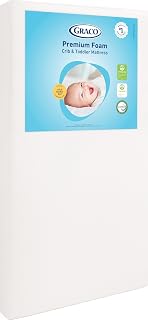
Graco Premium Foam Crib & Toddler Mattress
The reference point for value, and it clears the certifications that actually matter, GREENGUARD Gold for emissions plus an OEKO-TEX cover that goes in the washing machine. Genuinely firm and light enough for one-handed sheet changes, which is worth more at 3 a.m. than any spec sheet.
Letmxiu Premium Crib & Toddler Mattress
A knitted fabric shell over a fleece surface gives this one a more finished, textile-forward look than the vinyl-wrapped norm, closer to bedding than a hospital pad. The 5″ profile sits well in standard cribs, and the hypoallergenic build suits nurseries where dust sensitivity is a known factor.
Organic Cotton Dual-Sided 2-Stage Crib Mattress
The most considered construction here: CertiPUR-US memory foam with a firm infant side and a cooling-gel toddler side, wrapped in organic cotton. At 52 x 27.5 x 5.5, it fits standard cribs cleanly, and the waterproof washable cover means the organic layer isn’t sacrificed to the first stomach bug.
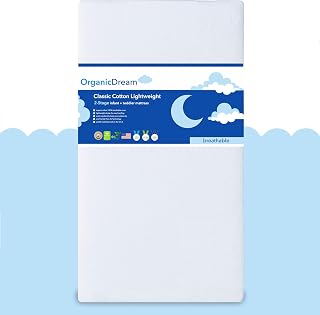
ORGANICDREAM Breathable 2-Stage Crib Mattress
Built around airflow rather than barrier layers, with a breathable structure tested to reduce suffocation risk, which puts it at the top of the list for anxious first-time parents. The 6″ deluxe profile feels substantial while staying light, and the removable two-stage cover handles the transition to a toddler bed without a second purchase.
Premium Hypoallergenic Crib & Toddler Mattress
A straightforward, well-proportioned 52″ x 27.6″ x 5″ slab that hits the firm-but-not-brutal middle and breathes better than budget foam. A sensible pick for a second crib, a grandparent’s spare room, or a nursery where the design budget went to the rug.
Frequently Asked Questions
How firm should a newborn mattress be?
Firm enough that your hand leaves no lasting impression. Safe-sleep guidance calls for a flat, firm surface with a tight-fitting sheet and nothing else in the crib, no pads, bumpers, or blankets.
When do I flip a dual-sided mattress?
Around the first birthday, when your child is confidently rolling, sitting, and pulling up. There’s no penalty for waiting; the softer side is a comfort upgrade, not a developmental milestone.
Do I need a separate mattress protector?
If the cover is already waterproof and washable, a thin protector is optional and mostly saves you laundry cycles. Skip thick quilted pads, which reintroduce exactly the softness you paid to avoid.
What about travel cribs and playards?
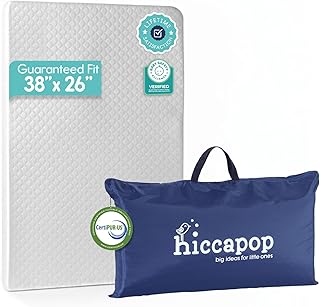
Standard crib mattresses don’t fit playards, and forcing one in creates dangerous gaps. A purpose-made pad like the Hiccapop Playard Mattress Pad, with its 1.25″ profile and carry bag, is the right tool for that job.
Final Thoughts
For most nurseries, the ORGANICDREAM Breathable 2-Stage is the pick worth stretching for, combining airflow-led safety design with genuine longevity. The Organic Cotton Dual-Sided 2-Stage is the better-looking, better-materialed alternative if organic textiles rank higher than breathability on your list, and the Graco Premium Foam remains the smartest certified option when the budget is doing work elsewhere in the room.