
Our Top Picks
 2x6 Hallway Washable Runner Rug : Vintage Soft2' x 6' (Rectangular)72 x 24 x 0.14 inches2.64 PoundsCheck on Amazon
The short answer: the best hallway runner is long and narrow enough to fit the space with a visible border of floor on each side, flat enough to clear doors and avoid trips, and durable enough for constant footsteps. Measure the corridor first, pick a low-profile weave in a forgiving color, and anchor it with a pad cut slightly smaller than the rug. Hallways are traffic lanes, so safety and practicality count for more than softness here.
In this guide
- What a hallway runner does
- How to measure and size a runner
- Materials compared
- Weaves and pile heights compared
- Color, pattern and layout
- Pads and keeping it in place
- Placement details
- Cleaning and care
- Safety
- Mistakes to avoid
- Who should choose what
- Checklist
- FAQ
What a hallway runner does
A runner is a long, narrow rug designed for corridors, entry passages, galleries and similar tight spaces. It does three jobs at once. First, it protects the floor in the busiest strip of the house from scuffs, grit and wear. Second, it softens sound, which matters in homes with hard floors and echoing corridors. Third, it brings color and pattern into a space that often has no furniture to carry the design.
Because hallways connect rooms, whatever you put there sets a first impression and a visual thread. A runner can lead the eye toward the end of the corridor, make a short hall feel longer, or add warmth to a stretch that might otherwise feel like a pass-through. It can also bring problems if it is the wrong size or type: a sliding rug in a narrow passage is an obvious trip risk, and a rug that is too thick jams doors.
Hallways also take the heaviest wear in most homes. Shoes, bags, pets and cleaning equipment all pass through. That is why the typical shopper’s priorities, such as soft pile and delicate colors, often have to give way to resilience and ease of care. The goal is not the plushest option but the one that will still look good after a year of daily use.
How to measure and size a runner
Sizing is the most common source of regret, so spend time on it. Grab a tape measure and a notepad, and take the following steps before shopping.
- Measure length and width of the open floor, from the first doorway to the last, excluding thresholds and built-in features.
- Note obstacles such as floor vents, radiators, baseboard heaters, door swings and stair openings.
- Check door clearance by comparing the gap under each door with the runner’s stated thickness plus any pad.
- Decide your border. Most people leave a visible strip of floor on each side, often a few inches in a narrow hall and more in a wide one. This frames the rug and keeps it from looking cramped.
- Decide the end gap. Leaving some bare floor at each end generally looks tidier than running the rug wall to wall.
Common runner proportions
Runners are sold in a wide range of lengths and widths, and exact sizes vary by maker. As a general guide, a narrow runner suits a tight hallway or a small gap beside a bed, a medium width suits average corridors, and a wider runner suits generous halls. The best fit is the one with a balanced border on both sides. Subtract your desired border from the hall width to find a suitable rug width, then choose the nearest available size.
Long halls and multiple rugs
In a very long corridor you can use one long runner or two or three shorter ones with equal gaps. Several runners can look intentional if they match in style, but they create more edges and more potential trip points. A single long rug is generally safer and cleaner looking if a suitable length exists. Avoid laying runners end to end with no gap, which creates a visible seam and a possible lip.
Materials compared
Fiber is the second big decision. The table summarizes typical traits. Real products vary, so check the specific listing and label.
| Material | Strengths | Limits | Hallway fit |
|---|---|---|---|
| Polypropylene (olefin) | Resists moisture and many stains; often easy to clean | Can feel firmer; may crush over time | Good for busy, dirty entry halls |
| Polyester | Soft, wide range of colors | Can mat in high traffic; may hold oils | Fine for moderate traffic if pile is short |
| Nylon | Springy and resilient | Often higher priced; some dyes can stain | Strong for heavy-traffic strips |
| Wool | Resilient, warm, natural; hides wear well | Sheds early; absorbs spills; usually costs more | Strong choice for quiet interior halls |
| Cotton | Casual, flat, often washable by label | Can flatten, fade or shrink; absorbs moisture | Works for light-traffic halls; check care label |
| Jute, sisal and other natural plant fibers | Textured, neutral look | Dislike moisture; can shed or stain; some are coarse | Better for dry interior halls, poor near wet entries |
| Blends | Balance of feel and durability | Behavior depends on proportions | Read fiber percentages in the listing |
Think about what actually lands in the hall
If the hallway leads from the front door, grit and wet shoes are the real enemy, and a moisture-resistant synthetic is the practical choice. If the hall is an interior passage between bedrooms, you can afford to prioritize feel. Households with pets should think about claws, hair and accidents. A tightly woven surface releases hair more easily than loose loops that can catch claws.
Backing
Check what the backing is made of and whether it is meant to grip. Some backings can mark floors, harden with age or release residue, and a rug with built-in grip may still need a pad to protect the floor. If the listing says nothing about backing, ask or look elsewhere.
Weaves and pile heights compared
The construction determines thickness, dirt-hiding ability and how well the rug lies flat. In a corridor, flat and low are usually the safest bets.
| Construction | Profile | Pros | Cons |
|---|---|---|---|
| Flat weave (kilim or dhurrie style) | Very low | Clears doors; easy to vacuum; lies flat | Less cushion; can slide without a pad |
| Low pile cut | Low to medium | Softer underfoot; common and versatile | Shows footprints and vacuum lines |
| Loop pile | Low to medium | Hides dirt; textured | Loops can snag on claws or rough vacuum brushes |
| Medium or high pile | Thicker | Cozy | Traps debris; tough to vacuum; edge trips and door clearance issues |
| Shag | Deep | Plush | Generally a poor fit for a high-traffic corridor |
| Braided or chunky natural | Medium | Casual look | Raised ridges and moisture sensitivity |
Why flatter is safer
People walk through hallways without thinking, carrying laundry, bags or children. A thick edge or a rippled surface is easy to catch with a toe. A flat weave sits close to the floor, stays put more easily with a pad, and slides under door gaps. If you love the look of a plush rug, consider putting it in a bedroom instead and keep the corridor practical.
Color, pattern and layout
Because a runner is long, pattern and color have a strong effect. A bold pattern can add rhythm to a plain corridor, while a quiet solid tone can let artwork on the walls take center stage.
- Mid-tone and mottled colors hide dirt, hair and wear best. Very pale or very dark solids show more marks.
- Stripes running lengthwise tend to emphasize length, while crosswise patterns may make a hall feel shorter and wider. These are general design tendencies, not rules.
- Repeating geometric or traditional patterns are forgiving and disguise crumbs.
- Medallions and directional designs need alignment with the hall, so check that the pattern is symmetrical or intended for your layout.
- Sun exposure from windows or glazed doors can fade dyes, so rotate the rug occasionally.
Pads and keeping it in place
In a hallway, a sliding rug is a hazard, so a good pad is not optional. It anchors the rug, protects the floor and adds some cushioning. In narrow corridors, even small movements push the rug toward the walls and make it bunch.
| Pad type | Good for | Watch-outs |
|---|---|---|
| Thin rubber or grip mesh | Flat weaves needing low height | Check floor compatibility; minimal cushion |
| Felt | Comfort and sound dampening | Less grip alone; thicker versions reduce door clearance |
| Felt and rubber combination | General-purpose grip with cushion | Trim to size; confirm floor safety |
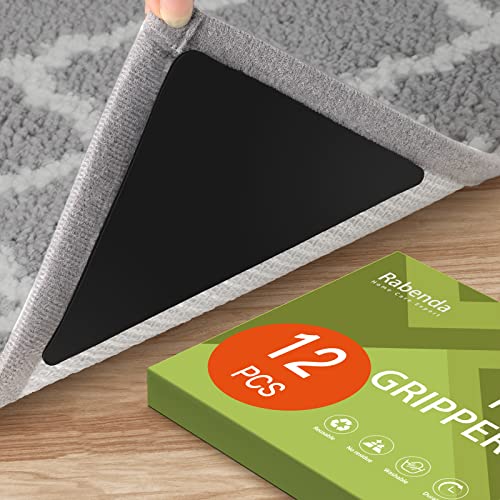
| Double-sided tape or gripper strips | Holding edges and ends | Adhesive can damage some finishes; test first |
| Carpet-specific gripper | Rug laid over wall-to-wall carpet | Follow product instructions; avoid bulky stacks |
Cut the pad about an inch inside the rug’s edge so it stays hidden and the rug edges do not curl. Match the pad to your floor, since hardwood, vinyl, laminate and tile react differently. If you have underfloor heating, confirm that both the rug and the pad are suitable. Replace a pad if it hardens, flattens or stops gripping, and check regularly for creeping.
Placement details
Centered or offset
Centering the runner usually looks balanced. If the hallway has a door on one side or a console table, you may offset the rug slightly, but keep the border consistent along the length so it looks intentional.
Doors and thresholds
Check each door that opens over the rug. A rug and pad that together are thicker than the gap under the door will catch on every opening. Also check thresholds and transitions between floor types, where the runner should lie flat or stop short.
Stairs and landings
A hallway runner is not a stair runner. Stair runners are designed and installed differently, usually fixed in place with proper hardware. Do not put a loose hallway runner on stairs, and be careful about placing one right at the top or bottom of a staircase, where a slip could be serious.
Cleaning and care
A hallway runner takes constant abuse, so a simple routine saves trouble later. Follow the care label for your specific rug.
- Vacuum often, ideally several times a week in busy homes. Use suction-only on loop pile and fringed edges, since beater bars can pull and fray.
- Vacuum underneath occasionally. Grit under a rug can scratch floors and wear the backing.
- Rotate end for end every few months so wear is even and sun fading is balanced.
- Blot spills immediately with a clean cloth, working inward from the edges. Do not rub.
- Test cleaners in a hidden corner first, and use only what the label permits.
- Dry thoroughly. A damp rug on a closed floor can encourage mildew and damage finishes.
Washable runners can often be machine washed on a gentle cycle, but only if the label says so, and long rugs may exceed your machine’s capacity. Wool and some natural fiber rugs generally require professional care. Fringe should be combed gently and never vacuumed with a rotating brush.
Safety
Slips and trips
Hallways are where people walk fast, often in socks, often carrying things. Use a grip pad, keep corners flat and replace any rug that curls, ripples or has a worn backing. Avoid thick, tall-pile runners in narrow passages. If someone in the home uses a walker, cane or wheelchair, or has balance problems, consider whether a rug should be there at all, and if so, choose the flattest and best-anchored option.
Pets and children
Running pets can slide on a loose rug and send it skidding, so anchoring matters. Check fringe for chewing risks and keep tassels out of reach of small mouths. Clean accidents promptly and thoroughly.
Allergies and fire
Runners collect dust in high-traffic zones, so frequent vacuuming matters for allergy-prone households. Treat hypoallergenic claims cautiously. Never assume a rug is flame retardant. If that matters in your home, check the label for any stated standard, and keep rugs away from open flames and heaters.
Mistakes to avoid
- Buying a runner that is too short, leaving it looking like a mat lost in a big hall.
- Making it too wide, so there is no border and the rug looks squeezed against the walls.
- Ignoring door clearance, which leads to catching, scraping and fraying.
- Skipping the pad, and then fighting a sliding, bunching rug.
- Choosing plush pile for a traffic lane, which flattens and traps dirt.
- Putting a hallway runner on stairs, where it can slide and cause a serious fall.
- Using several runners end to end without gaps, creating lips and seams.
- Picking pale solids in a dirty-entry corridor, which show every mark.
Who should choose what
| Your hallway | Consider | Reason |
|---|---|---|
| Front entry corridor with grit and wet shoes | Polypropylene or nylon flat weave in a mid-tone | Handles moisture and cleans easily |
| Quiet upstairs hall | Wool or low pile blend | Comfort and quiet underfoot |
| Household with pets | Tight flat weave, patterned, with a grip pad | Releases hair and hides wear |
| Hall with kids and spills | Washable runner with suitable backing | Easier to refresh, within machine limits |
| Dry hall with a natural aesthetic | Jute or sisal flat weave | Textured look; keep it dry |
| Low door clearance | Thin flat weave and slim pad | Avoids jamming doors |
| Anyone with mobility concerns | Firmly anchored, flat runner or no rug | Reduces fall risk |
When you begin shopping, browse hallway runner rugs by size and weave, then check the thickness and backing before choosing. To keep it anchored, see non-slip pads for runners that suit your floor, and for corners that curl, look at rug gripper strips.
Checklist
- Measure the hallway length, width and any obstacles.
- Decide the border you want on each side and at each end.
- Check the clearance under every door that swings over the rug.
- Choose a flat or low pile construction suited to heavy traffic.
- Match the fiber to the entry conditions, such as grit and moisture.
- Pick a mid-tone or patterned design that hides marks.
- Select a pad suited to your floor and trim it smaller than the rug.
- Read the care label before purchasing.
- Confirm the return policy in case the size is wrong.
- Test the rug after laying it for ripples, creep and curling edges.
Frequently asked questions
How wide should a hallway runner be?
Wide enough to leave a visible strip of floor on each side. Many people leave a few inches in narrow halls and more in wider ones. Measure the hall and subtract your preferred border from the width.
How long should a hallway runner be?
Usually a little shorter than the hall so some floor shows at each end. Check door swings and thresholds, and avoid running the rug into a doorway where it can catch.
Do hallway runners need a rug pad?
Yes in most cases. A pad prevents sliding and bunching, which are real trip hazards in a corridor. Choose one that suits your floor and cut it slightly smaller than the rug.
What material is best for a high-traffic hallway?
Resilient, easy-clean materials such as nylon, polypropylene and wool are common choices. The right one depends on moisture, pets and budget, so read fiber content and care instructions.
Can I use a runner on stairs?
Not a loose hallway runner. Stair runners are made and fitted differently, usually with proper fixings. A loose rug on stairs is a serious slip hazard.
Can I put two runners side by side in a wide hallway?
Yes, if the hall is wide enough and the rugs are matched, with a consistent gap. More edges mean more potential trip points, so a single wider rug may be simpler and safer.
How do I stop a runner from curling at the ends?
Use a good pad and gripper strips, and make sure the rug is fully unrolled and relaxed. Some curl settles after a while under weight. If a rug still curls, it may be the wrong backing or quality.
How often should I clean a hallway runner?
Vacuum frequently, since the hallway sees constant traffic, and blot spills at once. Do deeper cleaning according to the care label, and rotate the rug end for end every few months.
Conclusion
A hallway runner is as much about function as looks. The best choice fits the corridor with a balanced border, clears every door, lies flat on a good pad and uses a fiber and color suited to the dirt and traffic it will meet. Keep the profile low, keep it anchored and treat stairs as a separate case entirely. With sensible measuring and honest thinking about how the space is used, a runner can protect your floor and make the passage feel finished. When you are ready, compare runner rug options and check dimensions, thickness and care details carefully.
Disclosure: As an Amazon Associate we earn from qualifying purchases. If you click a link and buy, we may receive a small commission at no extra cost to you.
