Key takeaways
- Profile height: Measure from your slats to the top edge of the guardrail and subtract five inches. That number is your maximum thickness. Five-inch models suit most metal and low-rail wood frames; six inches works when the rails sit taller.
- Firmness calibration: Medium-firm is the sweet spot for lighter bodies. Children and teens don’t generate enough pressure to sink into a plush surface, so a softer build simply reads as unsupportive and sags at the hips.
- Heat management: Top bunks trap warm air near the ceiling. Gel beads, graphite, and open-cell foams all move heat laterally, which matters more here than in any other sleeping position in the house.
- Verified safety credentials: Look for CertiPUR-US foam certification and an explicit fiberglass-free statement. Fiberglass is a common flame barrier in budget mattresses and it migrates once a cover tears.
- Cover and support surface: A removable, washable cover earns its keep in a kid’s room. Pair any foam mattress with closely spaced slats or a bunkie board, never a box spring, which defeats the point of a slim profile.
What's inside
Bunk beds ask a mattress to do something unusual: disappear. The frame’s guardrails were engineered around a specific ceiling height, and the moment you drop in a standard 10- or 12-inch twin, that safety margin vanishes and the whole silhouette starts to look bloated. Most manufacturers want at least five inches of rail standing proud above the sleep surface, which puts you in a narrow band of five- and six-inch profiles. The trouble is that thin mattresses have historically meant thin comfort, so parents end up choosing between a bed that looks right and a bed that actually sleeps well.
The good news for 2026 is that low-profile foam has quietly gotten better. Dual-layer builds, gel and graphite infusions, and tighter density specs mean a five-inch slab can now support a growing kid without collapsing into a hammock by spring. Below are the low-profile twins worth putting on a bunk, trundle, or daybed this year, along with the measurements and certifications to check before you click buy.
As an Amazon Associate we earn from qualifying purchases.



How to Choose a Bunk Bed Mattress (2026)
- Profile height: Measure from your slats to the top edge of the guardrail and subtract five inches. That number is your maximum thickness. Five-inch models suit most metal and low-rail wood frames; six inches works when the rails sit taller.
- Firmness calibration: Medium-firm is the sweet spot for lighter bodies. Children and teens don’t generate enough pressure to sink into a plush surface, so a softer build simply reads as unsupportive and sags at the hips.
- Heat management: Top bunks trap warm air near the ceiling. Gel beads, graphite, and open-cell foams all move heat laterally, which matters more here than in any other sleeping position in the house.
- Verified safety credentials: Look for CertiPUR-US foam certification and an explicit fiberglass-free statement. Fiberglass is a common flame barrier in budget mattresses and it migrates once a cover tears.
- Cover and support surface: A removable, washable cover earns its keep in a kid’s room. Pair any foam mattress with closely spaced slats or a bunkie board, never a box spring, which defeats the point of a slim profile.
The Best Bunk Bed Mattresses (2026) Reviewed
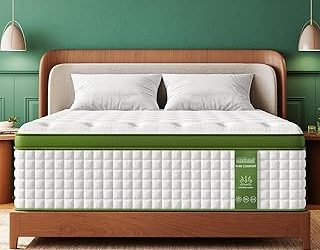
FDW 5 Inch Twin Gel Memory Foam Mattress
FDW’s dual-construction approach layers gel memory foam over a firmer base, giving it more structure than the single-density slabs that dominate this price tier. The removable, machine-washable cover and CertiPUR-US certification make it a practical choice for a bottom bunk that sees spills and sleepovers.
Fiberglass-Free 5 Inch Cooling Gel Twin
This one leads with the reassurance most parents are actually shopping for: a certified fiberglass-free build with a cooling gel memory foam comfort layer. At five inches it clears low guardrails comfortably and works equally well on a trundle or daybed where storage clearance is tight.
MLILY 5 Inch Twin Made in USA
MLILY brings genuine mattress engineering to a low-profile format, with green tea gel infusion for odor control and heat dissipation, plus domestic manufacturing that tends to mean tighter foam quality control. The 75″ x 38″ cut is worth noting: slightly narrower than a standard 39″ twin, so check your frame before ordering.
Dopinmin 6 Inch Twin for Bunk Beds
If your rails allow the extra inch, that sixth inch buys meaningful support depth, and Dopinmin uses it well with a medium-firm gel memory foam build aimed squarely at bunk and daybed use. It’s the pick for an older child or teen who has outgrown the feel of a five-inch mattress.
LIFEMENT 6 Inch Graphite Cooling Twin
Graphite conducts heat away faster than gel alone, and LIFEMENT builds its six-inch twins around that advantage in both the Basic and Essential versions, the latter adding motion isolation that keeps a restless sleeper from broadcasting movement through the frame. Both measure a true 75″ x 39″ and carry CertiPUR-US certification.
Frequently Asked Questions
How thick should a bunk bed mattress be?
Six inches or less in most cases. The governing rule is guardrail clearance: at least five inches of rail should remain above the finished mattress surface. Always confirm the maximum thickness listed in your frame’s manual, since rail heights vary.
Is memory foam safe for young children?
Certified foam is generally considered appropriate for children over one year old. Look for CertiPUR-US certification, which limits VOCs and restricted chemicals, and confirm the mattress is fiberglass-free. Toddlers transitioning from a crib should stay in a floor or low bed rather than a bunk.
Do I need a bunkie board or box spring?
No box spring. Foam mattresses need a flat, continuous surface, so if your slats sit more than about three inches apart, add a thin bunkie board or plywood panel to prevent uneven compression.
How long until a compressed mattress is ready to sleep on?
Most bed-in-a-box models reach full loft within 24 to 72 hours. Unbox in a ventilated room and give any new-foam smell a day or two to clear before making the bed.
Final Thoughts
For most bunks, the MLILY 5 Inch Twin is the strongest all-around pick, combining genuine cooling technology with domestic manufacturing at a low profile that fits nearly any frame. Where guardrails allow six inches, the LIFEMENT Graphite Cooling Twin delivers the best thermal performance of the group, while the FDW 5 Inch Gel Memory Foam remains the smart, washable-cover option for a busy bottom bunk.