Our Short List of 3
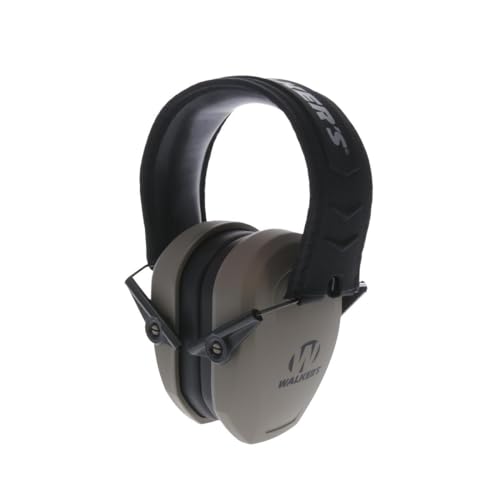
- Best for: Solo shooters and indoor ranges, where the highest passive rating and total simplicity matter most.
- Specs:
- Brand: Walker’s
- Type: Passive ear muff
- Noise Reduction Rating: 27 dB NRR

- Best for: Shooters who train with others, take instruction, or work a firing line where hearing commands is part of staying safe.
- Specs:
- Brand: Walker’s
- Type: Electronic ear muff
- Noise Reduction Rating: 23 dB NRR

- Best for: Regular range users who value voice clarity, simple controls, and a protector designed for the firing line.
- Specs:
- Brand: 3M Peltor
- Model: RangeGuard
- Type: Electronic hearing protector
All 4 Picks at a Glance
| Product | Specs | Action |
|---|---|---|
| Walker’s Razor Slim Passive Muff |
| Check price on Amazon |
| Walker’s Razor Slim Electronic Muff |
| Check price on Amazon |
| Peltor Sport RangeGuard Electronic Hearing Protector |
| Check price on Amazon |
 Walker’s Razor Slim X-TRM Electronic Muff |
| Check price on Amazon |
Key takeaways
- Shooting range ear muffs compared by NRR: a high-rated passive muff, two electronic slim muffs for conversation, and a range-specific electronic protector.
First, the interpretation, because “range” does double duty in product names: in this guide it means the shooting range. These are hearing protection ear muffs for gunfire — the kind sold with a Noise Reduction Rating, or NRR, measured in decibels — not kitchen ranges, not driving ranges, and not the shooting accessories themselves. That reading fits the keyword’s usual intent, and it also fits this site, which already covers range bags for shooters. Every muff below is a shooting muff whose listing states an NRR, because that number is the only honest basis for comparing hearing protection.
The four picks divide into two philosophies. Passive muffs are simple cups and foam with the highest ratings and nothing to charge or fail. Electronic muffs add microphones and circuitry that pass through conversation and range commands at a safe level while clamping gunshot noise, and their NRR figures run a little lower in exchange for awareness. Both approaches appear here, including a passive muff with the strongest rating in the group and electronic models built slim so they clear a rifle stock. The right choice depends on what you shoot and whether you need to hear the people around you.
Quick Picks
As an Amazon Associate we earn from qualifying purchases.
| Product | Best for | Key spec from title |
|---|---|---|
| Walker’s Razor Slim Passive Muff | Highest protection, simplest design | 27 dB NRR ultra low-profile passive earmuff |
| Walker’s Razor Slim Electronic Muff | Hearing range commands clearly | 23 dB NRR, sound-activated compression |
| Peltor Sport RangeGuard | Range-specific electronic protection | NRR 21 dB electronic hearing protector |
| Walker’s Razor Slim X-TRM | Long sessions in comfort | NRR 21 dB, gel earpads, cooling mesh headband |
How to Choose
Start with the NRR, and understand what it promises
The Noise Reduction Rating is the listing figure that matters most, stated in decibels, and higher is more protection. Gunfire is impulse noise at levels that can damage hearing in a single unprotected shot, so the rating is not a comfort feature. Passive muffs in this guide reach the high twenties, while electronic models sit lower because their cups must house speakers and microphones. Read the rating for the exact variant you are buying, because the same muff family often includes several colours and editions with different stated figures, and a listing’s headline model and its specification table do not always describe the same configuration.
Choose passive or electronic by how you shoot
Passive muffs do one thing completely: block sound, all the time, with no batteries and no failure mode. They suit solo practice, indoor ranges where echoes multiply the noise, and shooters who want maximum rating per purchase. Electronic muffs use external microphones to reproduce ambient sound inside the cups at a safe volume and compress sudden loud noise in a fraction of a second, so you can hear an instructor, a range safety officer, or a shooting partner without lifting a cup. That awareness is a safety feature in itself on a shared firing line. If you shoot alone, passive is simpler and stronger; if you shoot with others, electronic earns its place.
Profile and seal decide whether the rating is real
An NRR is measured with a proper seal around the ear, and anything that breaks that seal — thick glasses arms, a hat brim, a cup pushed aside by a rifle stock — leaks noise past the rating. Slim, low-profile cups exist precisely because a rifle or shotgun stock needs room against the cheek, and bulky cups get knocked loose at the worst moment. Gel earpads, offered on one model here, seal more forgivingly around glasses and hold comfort through a long session. When you read listings, treat cup profile, earpad material, and folding design as protection specifications, not cosmetics, because in use they are.
Consider power and controls for electronic models
Electronic muffs run on batteries, commonly a pair of AAA cells, and the details differ: some include the batteries, some shut themselves off after a few hours to save them, and control layouts range from a single combined dial to recessed knobs meant to survive a range bag. An audio input jack, present on one pick here, lets the muff double as a listener for music or a phone during downtime. None of this changes the NRR, but it changes whether the muff is charged and working on the day. Passive buyers can skip this entire section, which is, of course, the passive argument in miniature.
The 4 Best Options
Walker’s Razor Slim Passive Muff
- Best for: Solo shooters and indoor ranges, where the highest passive rating and total simplicity matter most.
- Specs:
- Brand: Walker’s
- Type: Passive ear muff
- Noise Reduction Rating: 27 dB NRR
Solo shooters and indoor ranges, where the highest passive rating and total simplicity matter most.
You will lift a cup or shout to hold a conversation, because it blocks voices as faithfully as gunfire.
This is the maximum-protection, zero-complexity pick. The passive Razor Slim’s listing states an NRR of twenty-seven decibels, the highest figure in this guide, achieved the old-fashioned way with sound-dampening cups and no electronics at all. The ultra low-profile design keeps the cups clear of a rifle stock, and the slim shape folds compactly for a range bag. Because there is nothing to power, it is always ready, always at full rating, and immune to the dead-battery disappointment that can end a range day. For indoor ranges and for shooters who practise alone or with hand signals and ceasefire discipline already established, it is the rational default.
Walker’s Razor Slim Electronic Muff
- Best for: Shooters who train with others, take instruction, or work a firing line where hearing commands is part of staying safe.
- Specs:
- Brand: Walker’s
- Type: Electronic ear muff
- Noise Reduction Rating: 23 dB NRR
Shooters who train with others, take instruction, or work a firing line where hearing commands is part of staying safe.
The rating is lower than the passive model’s, and the electronics need batteries that passive muffs never ask for.
The electronic Razor Slim is the awareness pick. Its listing states an NRR of twenty-three decibels and sound-activated compression that reacts in a stated 0.02 seconds, passing ordinary sound through its microphones while clamping the impulse of a shot. That combination is why instructors and newer shooters gravitate to electronic muffs: range commands, coaching, and the normal sounds of a firing line stay audible, so nobody is tempted to push a cup aside to hear — the moment when protection is most often lost. The slim profile keeps the cups out of the stock’s way, and the design folds down for transport like its passive sibling.
Peltor Sport RangeGuard Electronic Hearing Protector
- Best for: Regular range users who value voice clarity, simple controls, and a protector designed for the firing line.
- Specs:
- Brand: 3M Peltor
- Model: RangeGuard
- Type: Electronic hearing protector
Regular range users who value voice clarity, simple controls, and a protector designed for the firing line.
Its NRR is lower than both the passive leader and its electronic Walker’s rival, so indoor magnum shooters may want more rating.
The RangeGuard is the specialist: a 3M Peltor product designed specifically for the range rather than adapted to it. Its listing states an NRR of twenty-one decibels, with electronics that suppress gunshot noise while amplifying voices for communication, a single on, off, and volume control that is easy to work by feel, an easy-access battery door, and a four-hour auto shut-off that saves the batteries when the muff is forgotten in a bag. Peltor’s long history in industrial and military hearing protection shows in those practical touches. The rating is the joint lowest here, which is the honest price of its electronic design, and buyers should weigh that against its communication clarity.
Walker’s Razor Slim X-TRM Electronic Muff
- Best for: Long range days, classes, and warm weather, where comfort and a glasses-friendly seal keep protection on your head.
- Specs:
- Brand: Walker’s
- Model: Razor Slim X-TRM
- Type: Electronic ear muff
Long range days, classes, and warm weather, where comfort and a glasses-friendly seal keep protection on your head.
The rating matches the lowest here, and gel pads are a wear item that will eventually need replacement.
The X-TRM is the comfort version of the electronic Razor line, built for sessions measured in hours. The listing states an NRR of twenty-one decibels, two hi-gain omni-directional microphones, comfort gel earpads, and a cool mesh headband with moisture-wicking intent — details aimed squarely at the two reasons shooters remove protection mid-session: heat and pressure. It runs on two AAA batteries, which are included, offers an audio input jack for downtime listening, and folds compactly. Gel pads also seal more kindly around shooting glasses, which protects the rating in the real world where most shooters wear eye protection over or under the cups.
Which One Fits Your Situation
Indoor range, pistol shooting, mostly alone
Choose the passive Razor Slim. Indoor ranges are the loudest environment most shooters meet, with concrete reflecting every shot back at the line, and the twenty-seven decibel rating is the strongest tool here for exactly that problem. Shooting alone removes the electronic models’ main advantage, since there is nobody to talk to, and the passive muff’s total reliability means it lives in the range bag ready at any moment. Many indoor pistol shooters pair muffs with earplugs underneath for the loudest calibres, and a simple passive muff is the easiest partner for that doubling-up.
Lessons, clubs, and shooting with a partner
Choose the electronic Razor Slim. Instruction only works when the student can hear it, and a new shooter who keeps lifting a passive cup to catch a command is unprotected at the exact moment neighbouring lanes are firing. The electronic model’s compression keeps speech natural while shots are clamped, and its higher rating among the electronic picks here suits mixed company. Club shooters who spend as much time talking between relays as shooting will also find the day simply more sociable with ambient sound left switched on.
All-day events and summer heat
Choose the Razor Slim X-TRM. Comfort is a protection feature across a long day: a muff that hurts by lunchtime spends the afternoon around a neck instead of over ears. Gel earpads spread the pressure, seal around the arms of shooting glasses, and the mesh headband addresses the heat build-up that makes standard muffs miserable in July. The included batteries and audio jack round out a muff designed to be worn, not endured, from the first relay to the last.
A dedicated range kit from an established protection maker
Choose the Peltor Sport RangeGuard. Buyers who keep a standing range bag and value equipment designed for one job will appreciate its single-glance controls, battery-saving shut-off, and easy battery access — the small features that separate a range-specific protector from a general one. Its voice amplification is tuned for the firing line’s exact problem. The lower NRR is the trade to accept knowingly, and shooters who frequent indoor ranges with large calibres may still prefer to reach for the passive muff on those days.
Common Mistakes
- Reading “range” products carelessly and buying muffs with no stated NRR, when the rating is the entire basis of hearing protection.
- Breaking the ear seal with thick glasses arms or a hat and assuming the listed rating still applies in full.
- Choosing bulky cups for rifle or shotgun shooting, then having the stock knock the muff loose on every shot.
- Lifting one cup to hear a conversation on a live firing line, instead of using electronic muffs or waiting for a ceasefire.
- Storing electronic muffs with dying batteries and discovering it at the range, when a spare pair of cells costs almost nothing.
Frequently Asked Questions
What NRR do I need for shooting?
Gunfire reaches levels that can injure hearing with a single exposure, so more rating is genuinely better, and the muffs here span twenty-one to twenty-seven decibels. Outdoor shooting with moderate calibres is the least demanding case; indoor ranges and large calibres are the most, and many shooters there wear earplugs under their muffs for combined protection. Whichever muff you choose, the rating only counts when the seal is complete and the muff stays on for every shot fired near you, including other people’s.
Are electronic ear muffs safe, since they let sound in?
Yes, when they are proper shooting muffs like the ones listed here. Their microphones reproduce ambient sound at a controlled, safe level, and sound-activated compression reacts in a tiny fraction of a second to suppress the impulse of a shot. What you hear through them is a managed version of the range, not an open channel. The distinction to check in any listing is that the model states both an NRR and a compression feature; ordinary headphones and consumer noise-cancelling products are not hearing protection and should never be used as such.
Can I wear earplugs under ear muffs as well?
Yes, and for the loudest situations it is a well-established practice. The combination adds protection beyond either device alone, though not a simple sum of the two ratings, and it is the standard answer for indoor ranges, magnum calibres, and shooters who are especially cautious about cumulative damage. Foam plugs worn correctly, deep in the canal, plus a well-sealed muff is the pairing most instructors recommend. Electronic muffs still work over plugs for many users, since their amplified speech can be turned up to remain audible.
How do I know if the muff’s seal is working?
A good seal feels like gentle, even pressure all the way around the ear, with no gap you can slip a fingertip into, and outside sound drops noticeably and evenly on both sides. Glasses with thin arms disturb the seal least; gel earpads help where arms are thick. If one side sounds louder than the other, or the muff shifts when you mount the rifle, reseat it before firing. Treat the first shots of any session as a check: protection that is working should make gunfire feel like a thump, never a crack that makes you flinch.
More from Amazon
Programs that pair well with the guide above. Offers and eligibility are set by Amazon and may change.
Collect the home and kitchen items you want in one registry that guests can shop from.
Create a wedding registrySet up recurring deliveries of everyday items on eligible products. Terms and savings are set by Amazon.
Explore Subscribe & SaveFree shipping on eligible items, Prime Video and more. Eligible new members can start with a free trial.
Start a Prime free trialAudiobooks and podcasts to listen to on the go. Eligible new members can start with a free trial.
Try Audible freeAs an Amazon Associate we earn from qualifying purchases.