Key takeaways
- Down versus feather ratio: Down clusters give softness and insulation; feather quills give height and springback. A blend leaning feather holds loft longer, while a down-heavy fill feels cloud-like but compresses faster. Fusion or dual-layer designs stack both — feather below for structure, down above for surface feel.
- Baffle box construction: Sewn-through channels are cheaper but create thin seams you can feel. Baffled boxes use internal fabric walls to hold fill in place, which keeps the loft even across the whole surface and prevents the migration that turns a topper lumpy by month three.
- Cover fabric and breathability: A 100% cotton shell — ideally with a tight downproof weave — vents heat far better than polyester microfiber. Organic cotton is worth the premium if you’re sensitive to finishes. Skip anything with a laminate or waterproof backing unless you specifically need protection.
- Anchoring system: Elastic corner straps are the minimum; deep-pocket skirts that stretch over the mattress are better for restless sleepers and adjustable bases. Check the depth rating against your mattress plus any existing pad, since a 14-inch skirt on a 16-inch mattress will pop off nightly.
- Loft versus support: Two inches softens a firm mattress. Three inches is the sweet spot for pressure relief at the hips and shoulders. Five inches, especially with a foam core underneath, is a genuine comfort rebuild — useful over a sagging mattress, but it can feel unstable if you sleep on your back and want a defined surface.
What's inside
Most mattresses are engineered to a spec, not to a body. Manufacturers hedge toward firm because firm reads as supportive on a showroom floor and survives a decade of warranty claims. The result is a bed that technically does its job while your hips and shoulders negotiate with it every night. A down feather topper is the cheapest, least disruptive correction available: two to five inches of clustered fill that lets you sink slightly instead of pressing back, without replacing anything underneath.
The category is muddier than it looks. Labels blur down and feather, “pillow top” gets applied to everything from a quilted pad to a genuine baffled featherbed, and fill weight is often unlisted. This guide sorts the current 2026 lineup by construction, loft, and who each one actually suits, then covers the practical questions buyers ask after the box arrives.
As an Amazon Associate we earn from qualifying purchases.



How to Choose a/an Down Feather Mattress Topper (2026)
- Down versus feather ratio: Down clusters give softness and insulation; feather quills give height and springback. A blend leaning feather holds loft longer, while a down-heavy fill feels cloud-like but compresses faster. Fusion or dual-layer designs stack both — feather below for structure, down above for surface feel.
- Baffle box construction: Sewn-through channels are cheaper but create thin seams you can feel. Baffled boxes use internal fabric walls to hold fill in place, which keeps the loft even across the whole surface and prevents the migration that turns a topper lumpy by month three.
- Cover fabric and breathability: A 100% cotton shell — ideally with a tight downproof weave — vents heat far better than polyester microfiber. Organic cotton is worth the premium if you’re sensitive to finishes. Skip anything with a laminate or waterproof backing unless you specifically need protection.
- Anchoring system: Elastic corner straps are the minimum; deep-pocket skirts that stretch over the mattress are better for restless sleepers and adjustable bases. Check the depth rating against your mattress plus any existing pad, since a 14-inch skirt on a 16-inch mattress will pop off nightly.
- Loft versus support: Two inches softens a firm mattress. Three inches is the sweet spot for pressure relief at the hips and shoulders. Five inches, especially with a foam core underneath, is a genuine comfort rebuild — useful over a sagging mattress, but it can feel unstable if you sleep on your back and want a defined surface.
The Best Down Feather Mattress Topper (2026)s Reviewed
ELEMUSE Queen Goose Down Feather Topper
The fusion fill here is the appeal: goose down softens the surface while feather content keeps it from bottoming out under a hip. The deep-pocket design is genuinely accommodating, which matters for couples sharing a thicker queen mattress where thinner skirts tend to ride up.
Goose Down Feather Topper with Straps (60×80)
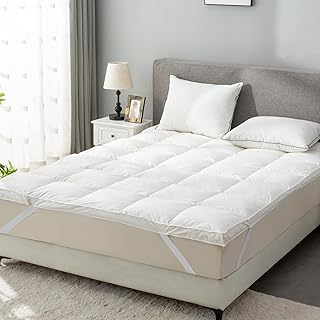
A baffled pillowtop at a sensible price, with a hypoallergenic fill treatment and corner straps that hold position better than the elastic-band alternatives. This is the pick if you want plush surface feel and all-season breathability without committing to a thick rebuild of your bed.
Dual Layer Goose Feather Down Topper
The two-chamber build is the smartest engineering in this roundup — a feather base carries weight while a down top layer handles softness, so you get loft that doesn’t collapse into a flat pad. The organic cotton shell is a real upgrade in breathability and hand feel.
3 Inch Goose Feather Topper, King
Three inches of dense feather fill with a cotton cover and anti-slip backing, aimed squarely at pressure-point relief. If your complaint is lower-back ache on a too-firm mattress, this thickness does more useful work than any two-inch option.
Queen Cotton Extra Thick Pillow Top Pad
Not a featherbed, but worth knowing about: an all-cotton alternative for anyone with down sensitivities or a strong preference against animal fill. It sleeps notably cool and doubles as a washable protector, though it won’t deliver the same enveloping loft.
Frequently Asked Questions
Will a feather topper make me sleep hot?
Less than foam. Down and feather clusters trap air but also move it, and a cotton shell vents well. Heat complaints usually trace back to a synthetic cover or a memory foam core, as in thicker hybrid builds like the WhatsBedding 5-inch model.
How do I stop the fill from clumping?
Shake and fluff weekly, rotate the topper end to end monthly, and avoid compressing it under heavy bedding. Baffled construction does most of this work for you; sewn-through designs need more attention.
Can I wash it at home?
Most feather toppers require commercial-size machines or spot cleaning only. The practical answer is to use a washable mattress protector over the top and clean that instead.
Do feathers poke through?
A few quills will work loose over time on any featherbed. A high-thread-count downproof cotton shell minimizes it substantially.
Final Thoughts
For most sleepers, the Dual Layer Goose Feather Down Topper offers the best construction for the money, with its stacked feather-and-down chambers and organic cotton shell. Choose the 3 Inch Goose Feather Topper if pressure relief and back comfort are the priority, or the ELEMUSE Queen if you want plush softness with a deep pocket that actually fits a modern mattress.