Key takeaways
- Fill composition: Pure feather gives structure and springs back; down adds softness but compresses faster. A blend — roughly 70/30 feather to down — is the sweet spot for people who want cushion without sinking into a trough. Down-alternative fills mimic the feel and wash more easily.
- Loft and baffling: Anything under two inches is a mattress pad, not a featherbed. Look for baffle-box or gusseted construction that holds fill in place; sewn-through channels are cheaper but let clusters migrate toward the edges over a season.
- Shell fabric: A 100% cotton cover with a tight thread count keeps quills contained while staying breathable. Synthetic shells trap heat, and downproof cambric is worth seeking out if you’re sensitive to feather tips.
- Skirt depth and anchoring: Modern mattresses run 12 to 16 inches, and pillow tops push past that. Check the deep-pocket rating and choose elastic corner bands or a full fitted skirt — a topper that slides is a topper you’ll stop using.
- Maintenance realities: Feather fills need regular fluffing and spot cleaning, not machine washing. If low effort matters more than authenticity, a 1000GSM down-alternative build delivers a similar feel with far fewer rules.
What's inside
A mattress that reads “medium-firm” in a showroom can feel like plywood at 3 a.m. That gap between the bed you bought and the bed you actually want is where featherbeds earn their keep — a few inches of loft that soften pressure points without changing the support underneath. The catch is that the category is crowded with lookalikes: thin pads marketed as pillow tops, quill-heavy fills that flatten by week three, and shells so tightly woven the fill can’t breathe.
This guide sorts the genuinely plush from the merely puffy. We look at fill composition, loft construction, shell fabric, and how each topper anchors to a deep mattress, then walk through the standouts for 2026 across duck feather, goose down blends, and hybrid feather-foam builds. Whether you’re rescuing a too-firm platform bed or making a guest room feel considered, there’s a match below.
As an Amazon Associate we earn from qualifying purchases.



How to Choose a Featherbed Mattress Topper (2026)
- Fill composition: Pure feather gives structure and springs back; down adds softness but compresses faster. A blend — roughly 70/30 feather to down — is the sweet spot for people who want cushion without sinking into a trough. Down-alternative fills mimic the feel and wash more easily.
- Loft and baffling: Anything under two inches is a mattress pad, not a featherbed. Look for baffle-box or gusseted construction that holds fill in place; sewn-through channels are cheaper but let clusters migrate toward the edges over a season.
- Shell fabric: A 100% cotton cover with a tight thread count keeps quills contained while staying breathable. Synthetic shells trap heat, and downproof cambric is worth seeking out if you’re sensitive to feather tips.
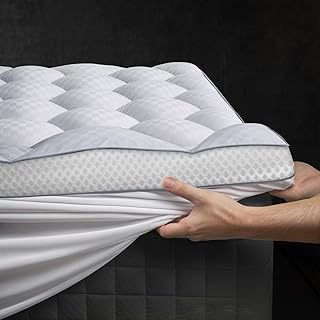
- Skirt depth and anchoring: Modern mattresses run 12 to 16 inches, and pillow tops push past that. Check the deep-pocket rating and choose elastic corner bands or a full fitted skirt — a topper that slides is a topper you’ll stop using.
- Maintenance realities: Feather fills need regular fluffing and spot cleaning, not machine washing. If low effort matters more than authenticity, a 1000GSM down-alternative build delivers a similar feel with far fewer rules.
The Best Featherbed Mattress Toppers Reviewed
WhatsBedding 5″ Duck Feather & Memory Foam Topper
The smartest hybrid in the group: a duck feather chamber layered over memory foam, so you get cloudlike surface give with a stabilizing base that keeps you from bottoming out. At five inches with a 100% cotton top and elastic anchor bands, it’s the strongest candidate for transforming a genuinely uncomfortable mattress rather than just softening a decent one.
ELEMUSE Queen Goose Down Feather Topper
A fusion of goose down and feather gives this one a pillowy, hotel-suite feel that settles evenly rather than pooling under your hips. The deep pocket handles thick queen mattresses, and it’s a considered pick for couples who share a bed and don’t want a topper that transmits every movement.
ELEMUSE King Goose Down Feather Topper
Same down-and-feather build as the queen, scaled up with extra loft for master bedrooms. King buyers usually suffer most from thin toppers stretched too far; the fill density here holds up across the full width, which is exactly what you want when two people sleep in different positions.
Extra-Thick 1000GSM Down-Alternative Pillow Top (King)
The low-maintenance answer. A dense 1000GSM alternative fill delivers plush pressure relief and runs cooler than most feather builds, with a deep-pocket skirt that fits mattresses from 8 to 21 inches. Best for allergy-conscious households and guest beds that need to look fresh with minimal fuss.
3″ Ultra-Fluffy Memory Foam Pillow Top (Queen)
Positioned for back pain, this one pairs a fluffy pillow-top surface with a four-zone support core and breathable air-mesh sides, so it cushions without the sag that pure feather can develop. A practical choice if you want featherbed softness and targeted lumbar support in one layer.
Frequently Asked Questions
What’s the difference between a featherbed and a down topper?
Feathers have quills, which means loft and resilience; down is the soft undercoating with no quill, which means softness and less structure. Most quality toppers blend both — feather for body, down for the plush top hand.
Will quills poke through the cover?
Occasionally, on lower-grade shells. A tightly woven cotton or downproof cambric cover dramatically reduces it, and a mattress protector over the topper solves the rest.
Can a featherbed help with back pain?
It can relieve pressure at the shoulders and hips, but soft fill alone won’t provide alignment support. If back pain is the primary issue, a feather-foam hybrid or a firm foam topper like the BedStory 3″ is the more reliable route.
How do I keep it from going flat?
Shake and rotate it weekly, air it out in sunlight a few times a year, and skip the washing machine unless the label explicitly allows it. Baffle-box construction does most of the work for you.
Final Thoughts
For a real transformation on a too-firm bed, the WhatsBedding 5″ duck feather and memory foam topper offers the most substance for the money. The ELEMUSE goose down and feather toppers are the pick for classic hotel plushness in queen and king, while the 1000GSM down-alternative pillow top is the easiest to live with day to day.