Key takeaways
- Suction pressure over motor wattage: Kilopascal ratings tell you how thoroughly a machine recovers the water it puts down. Anything in the 18 to 21 Kpa range pulls seats to a damp-not-soaked state, which is the difference between drying overnight and developing a musty smell by Thursday.
- Tank architecture: Separate clean and dirty reservoirs prevent you from recirculating the grime you just lifted. Two-in-one designs save weight and bulk, a real consideration when you’re working crouched in a footwell, but check that emptying and refilling doesn’t require full disassembly.
- Tool geometry for tight quarters: Automotive interiors are all crevices, bolsters, and seat tracks. A narrow stain tool in the three-to-four-inch range reaches where a wide upholstery head simply cannot, and a dedicated hair tool earns its keep in any vehicle that transports pets.
- Dilution ratio and material safety: Concentrates that dilute aggressively cost far less per use and let you dial strength to the mess. Confirm the formula is safe on the specific fibers, plastics, and rubber you’ll encounter, and always spot-test on an inconspicuous area first.
- Self-cleaning hose function: Residual dirt left inside the suction line is where odor originates. A built-in rinse cycle turns post-job maintenance from a ten-minute chore into a thirty-second one, which is the honest predictor of whether you’ll keep using the machine.
What's inside
Car interiors take a beating that no sofa ever will. Between road salt tracked in on winter boots, a latte that tipped on the third roundabout, sunscreen residue pressed into the driver’s seat, and a dog who considers the cargo area his personal den, automotive upholstery absorbs more abuse per square foot than anything inside your home. The materials are unforgiving too: bonded foam backing that traps moisture, low-pile synthetic carpet glued directly to sheet metal, and seams that wick liquid straight into places a paper towel will never reach. Wipe at a stain and you often just spread it into a wider, paler ghost of itself.
This guide approaches the problem the way we approach any material-care question for the home: match the tool to the surface, and understand what you’re actually removing. Below you’ll find a curated set of six options spanning two categories that solve different halves of the problem. Chemical solutions handle the chemistry of a stain, breaking bonds between soil and fiber. Extraction machines handle the physics, injecting solution and pulling it back out along with the suspended dirt. Serious detailers use both. We’ll cover what separates a genuinely useful extractor from an underpowered one, which formulas earn a permanent spot in the garage cabinet, and how to avoid the single most common mistake, which is over-wetting a seat you can’t take outside to dry.
As an Amazon Associate we earn from qualifying purchases.



How to Choose a/an Carpet Cleaner For Automobiles (2026)
- Suction pressure over motor wattage: Kilopascal ratings tell you how thoroughly a machine recovers the water it puts down. Anything in the 18 to 21 Kpa range pulls seats to a damp-not-soaked state, which is the difference between drying overnight and developing a musty smell by Thursday.
- Tank architecture: Separate clean and dirty reservoirs prevent you from recirculating the grime you just lifted. Two-in-one designs save weight and bulk, a real consideration when you’re working crouched in a footwell, but check that emptying and refilling doesn’t require full disassembly.
- Tool geometry for tight quarters: Automotive interiors are all crevices, bolsters, and seat tracks. A narrow stain tool in the three-to-four-inch range reaches where a wide upholstery head simply cannot, and a dedicated hair tool earns its keep in any vehicle that transports pets.
- Dilution ratio and material safety: Concentrates that dilute aggressively cost far less per use and let you dial strength to the mess. Confirm the formula is safe on the specific fibers, plastics, and rubber you’ll encounter, and always spot-test on an inconspicuous area first.
- Self-cleaning hose function: Residual dirt left inside the suction line is where odor originates. A built-in rinse cycle turns post-job maintenance from a ten-minute chore into a thirty-second one, which is the honest predictor of whether you’ll keep using the machine.
The Best Carpet Cleaner For Automobiles (2026)s Reviewed
P & S Carpet Bomber Upholstery Cleaner
A citrus-based concentrate that professional detail shops buy by the gallon for good reason: it dilutes far enough to make the price per use almost negligible, and it dissolves grease and body oils that water-only extraction leaves behind. Its tolerance for engine bays and wheel wells signals genuine strength, so start at a conservative dilution on interior fabric.
Chemical Guys Lightning Fast Stain Extractor
The bottle to keep behind the driver’s seat for the spill you address in the first sixty seconds. Spray, agitate with a soft brush, blot, and coffee or soda releases before it has time to set, which makes this the ideal companion to a machine rather than a replacement for one.
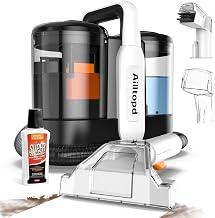
Uwant Portable Carpet Cleaner
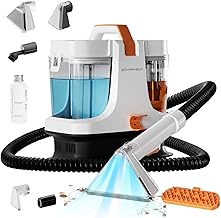
At 18 Kpa with a 2.4-liter two-in-one tank, this hits the sweet spot between capable and genuinely portable, with enough included tooling to handle seats, mats, and a couch on the same afternoon. A smart first machine for anyone who wants extraction without committing to a full-size unit.
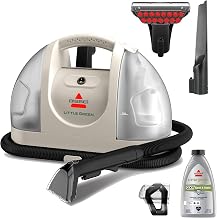
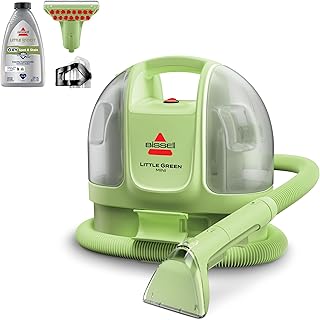
BISSELL Little Green Mini 4075
The most compact serious option here, and the HydroRinse self-cleaning tool solves the maintenance problem that quietly kills enthusiasm for spot cleaners. The four-inch stain tool is properly sized for footwells and seat bolsters, and the tea green colorway is unusually pleasant for something that lives in a garage.
800W Portable Carpet & Upholstery Cleaner
The suction leader of this group at 21 Kpa, backed by an 800-watt motor that recovers water aggressively enough to shorten dry times noticeably. Best suited to larger jobs where you’re moving between car interiors, rugs, and curtains in one session.
Frequently Asked Questions
How long will my seats take to dry?
With a strong extractor and restrained water use, expect four to eight hours with windows cracked and airflow moving. Leaving doors open in sun or running a fan cuts that substantially, and dry time is the single best argument for buying on suction rather than price.
Can I use household carpet shampoo in my car?
Not ideally. Residential formulas often leave a sticky residue that attracts soil quickly and can haze automotive plastics and vinyl trim. Automotive-specific concentrates rinse cleaner and are formulated around the mixed materials found in a cabin.
Do I need a machine, or will a spray be enough?
Sprays handle fresh, localized spills well. Anything ground in over months, or any lingering odor, requires extraction because the soil has migrated into the foam beneath the fabric where blotting cannot reach.
How do I deal with embedded pet hair?
Vacuum thoroughly with a rubber-edged or dedicated hair tool before introducing any moisture. Wet hair mats into the pile and becomes dramatically harder to lift, so sequence matters more than technique here.
Final Thoughts
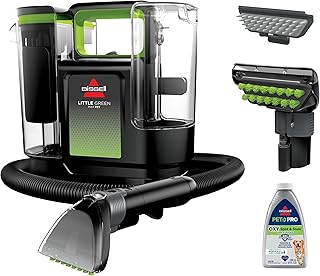
For most people, the BISSELL Little Green Mini 4075 is the right machine to start with, small enough to actually use and easy to maintain. Pet owners and anyone facing deeply set stains should step up to the BISSELL Little Green Max Pet 3860 for its hair tool and greater capacity. Whichever route you take, pair it with a gallon of P & S Carpet Bomber, which will outlast several machines and handle nearly anything a vehicle interior throws at it.