Key takeaways
- Measure to the rail, not the slats: Note the distance from the platform to the top of the side rail. Stay at or just below that number so bolsters and cushions sit against a backrest rather than sliding off a mound. Most daybeds land in the 5 to 8 inch window.
- Match the feel to the actual use: Medium-firm is the safe specification because it handles seated pressure and side sleeping equally well. Plush foam feels luxurious in a showroom and sags into a hammock once it becomes a sofa.
- Demand fiberglass-free and CertiPUR-US: Daybeds live in kids’ rooms, playrooms, and studio corners with heavy zipper traffic. A cover that tears should never release glass fiber into the room, and CertiPUR-US confirms foam emissions and content testing.
- Plan for heat, especially against a wall: Daybeds are usually pushed against a wall or into an alcove, which limits airflow on three sides. Gel, copper, or green tea infusions plus an open-knit cover meaningfully change how a compact foam slab sleeps.
- Confirm trundle and bunk clearance: If a trundle rolls underneath, the lower mattress has to clear the frame rails when stowed. Bunk safety guidance also caps mattress height relative to the guardrail, which is where slim 5 and 6 inch profiles earn their keep.
What's inside
A daybed is one of the few pieces of furniture asked to do two jobs at once, and the mattress is where that double duty usually falls apart. Too thick, and it swallows the frame’s arms and back rail, turning a crisp silhouette into a lumpy bench. Too soft, and it collapses the moment someone sits on the edge with a coffee. Most buyers default to a standard twin, discover it sits four inches too high, and end up with a guest room piece that photographs badly and sleeps worse.
This guide approaches the problem the way a designer would: profile first, feel second, certifications non-negotiable. Below are the daybed mattresses worth specifying in 2026, covering slim 5-inch panels for trundles and bunks, mid-profile foam for everyday sleeping, and one hybrid for anyone who wants coil support without a bulky bed frame look. We flag which heights preserve your frame’s proportions and which ones will bury the rail.
As an Amazon Associate we earn from qualifying purchases.


How to Choose a Daybed Mattress (2026)
- Measure to the rail, not the slats: Note the distance from the platform to the top of the side rail. Stay at or just below that number so bolsters and cushions sit against a backrest rather than sliding off a mound. Most daybeds land in the 5 to 8 inch window.
- Match the feel to the actual use: Medium-firm is the safe specification because it handles seated pressure and side sleeping equally well. Plush foam feels luxurious in a showroom and sags into a hammock once it becomes a sofa.
- Demand fiberglass-free and CertiPUR-US: Daybeds live in kids’ rooms, playrooms, and studio corners with heavy zipper traffic. A cover that tears should never release glass fiber into the room, and CertiPUR-US confirms foam emissions and content testing.
- Plan for heat, especially against a wall: Daybeds are usually pushed against a wall or into an alcove, which limits airflow on three sides. Gel, copper, or green tea infusions plus an open-knit cover meaningfully change how a compact foam slab sleeps.
- Confirm trundle and bunk clearance: If a trundle rolls underneath, the lower mattress has to clear the frame rails when stowed. Bunk safety guidance also caps mattress height relative to the guardrail, which is where slim 5 and 6 inch profiles earn their keep.
The Best Daybed Mattresses Reviewed (2026)
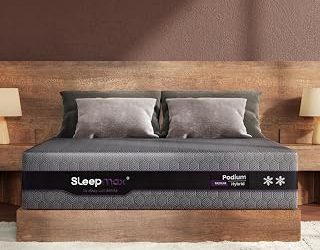
LETMOON 8 Inch Hybrid Twin
Pocketed springs give this one genuine edge stability, which is exactly what a daybed needs when it spends daylight hours as seating. At 8 inches it is the tallest profile most daybed frames will accept gracefully, making it the pick for studios and dorms where the piece is a real bed every night.
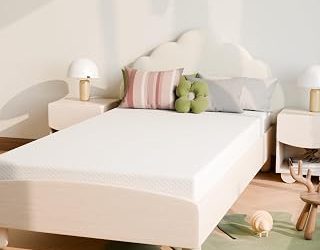
Twin Mattress 5 Inch Cooling Gel Memory Foam
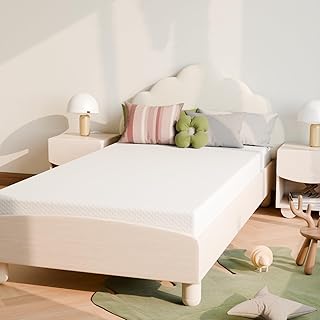
This is the proportion-preserving choice: a slim panel that keeps the frame’s arms and back reading as architecture instead of trim. Fiberglass-free construction and a medium-firm gel foam core make it a sensible specification for kids’ rooms and trundle setups.
MLILY 6 Inch Full Green Tea Memory Foam
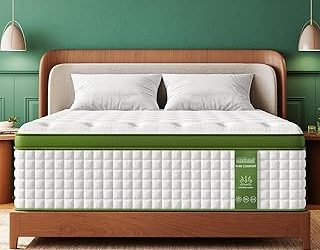
For the wider full-size daybeds that have become popular in nurseries and reading rooms, this 6-inch slab hits a smart middle ground between comfort and low profile. The green tea gel infusion helps with heat retention, and CertiPUR-US certification covers the foam.
10 Inch Twin Memory Foam Mattress
Choose this only if your daybed has a tall rail or you are outfitting a bunk with generous guardrail clearance. The extra depth buys noticeably better pressure relief and motion isolation for adult guests, with a medium feel that avoids the sink-in problem.
EGOHOME 14 Inch Copper Gel Twin
The specialist option, best suited to a low-platform daybed or a frame where the mattress is meant to read as the primary volume. Copper-infused foam and a graphene-cool cover target back pain and heat, but confirm your rail height before committing to this profile.
Frequently Asked Questions
What thickness works best on a daybed?
Five to eight inches suits most frames. The goal is a mattress top that sits level with or slightly below the side rails so cushions stay put and the frame’s lines stay visible.
Can I use a regular twin mattress?
Dimensionally yes, since daybeds use standard twin sizing at 75 by 39 inches. The issue is depth, as a typical 10 to 12 inch mattress often overwhelms the frame and blocks trundle clearance.
Does a daybed need a box spring?
No. Daybeds have slatted or metal platforms designed to support foam and hybrid mattresses directly, and adding a foundation only raises the height further.
Foam or hybrid for daily sleeping?
Hybrid, if the height allows. Pocketed coils hold their edges better under repeated seated pressure, which is the main wear pattern a daybed mattress faces.
Final Thoughts
For most rooms, the LETMOON 8 Inch Hybrid is the best balance of support, edge stability, and frame-friendly height. If your daybed has a low rail or a trundle underneath, the 5 Inch Cooling Gel Memory Foam twin keeps the silhouette clean without sacrificing safety certifications, while the MLILY 6 Inch Green Tea is the one to specify for full-size frames.