Key takeaways
- Measure the corridor, not the rug: Leave 4 to 6 inches of bare floor on each long side so the runner reads as a deliberate band rather than wall-to-wall carpet. In kitchens, align the length with your counter run, not the whole room.
- Insist on rubber, not latex dots: Full rubber backing stays put on hardwood and tile. Sparse adhesive dots tend to peel after a few washes and can leave residue on sealed floors.
- Go low pile in high traffic: Anything above roughly a quarter inch will crush along the walking line and telegraph a path down the middle. Low pile also clears door swing without bunching.
- Confirm the machine-wash spec, not just “washable”: Look for a stated width the rug will fit — most 2×6 and 2×8 runners need a front-loader. Cold water and air dry protects both the fibers and the backing.
- Choose pattern for camouflage: Distressed vintage prints and soft abstracts hide crumbs and paw prints far better than flat solids. If you want solid color, mid-tone grey and charcoal forgive the most.
What's inside
Hallways and galley kitchens are the two hardest rooms in a house to style, because they are all traffic and no furniture. There is nothing to anchor, nothing to soften, and every scuff shows. A runner solves it in one move, which is why so many people buy one — and then discover the real problem: it slides underfoot, the pile mats down within a month, or it soaks up a spilled coffee and never really recovers. The rug that looked considered in the listing photo becomes the thing you keep nudging back into place with your foot.
This guide is built around the runners that hold their shape in the parts of the home that see the most footfall. I have prioritized three things a curator actually cares about in a narrow space: whether the backing genuinely grips, whether the rug survives a washing machine without warping, and whether the pattern reads as intentional rather than filler. Below you will find picks across the standard runner lengths — 6, 8, and 10 feet — in neutrals and low-contrast abstracts that work with the flooring you already have.
As an Amazon Associate we earn from qualifying purchases.



How to Choose a/an Runner Rug (2026)
- Measure the corridor, not the rug: Leave 4 to 6 inches of bare floor on each long side so the runner reads as a deliberate band rather than wall-to-wall carpet. In kitchens, align the length with your counter run, not the whole room.
- Insist on rubber, not latex dots: Full rubber backing stays put on hardwood and tile. Sparse adhesive dots tend to peel after a few washes and can leave residue on sealed floors.
- Go low pile in high traffic: Anything above roughly a quarter inch will crush along the walking line and telegraph a path down the middle. Low pile also clears door swing without bunching.
- Confirm the machine-wash spec, not just “washable”: Look for a stated width the rug will fit — most 2×6 and 2×8 runners need a front-loader. Cold water and air dry protects both the fibers and the backing.
- Choose pattern for camouflage: Distressed vintage prints and soft abstracts hide crumbs and paw prints far better than flat solids. If you want solid color, mid-tone grey and charcoal forgive the most.
The Best Runner Rug (2026)s Reviewed
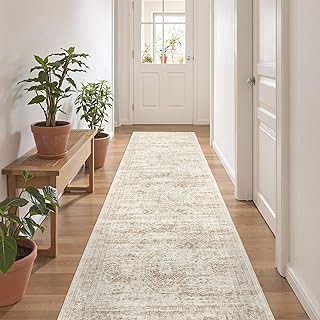
2×6 Vintage Washable Hallway Runner
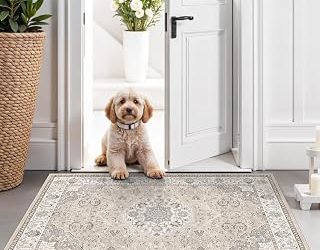
This is the pick I hand to people who want their entryway to look collected rather than furnished, and the faded farmhouse motif does a lot of quiet work hiding tracked-in grit. It is stain resistant, genuinely soft underfoot, and the non-slip backing holds on both tile and finished wood.
2×8 Non-Slip Washable Runner, Beige
The thin profile is the selling point here — it slides under a bathroom or nursery door without catching, which is where thicker runners fail. Beige is the safest neutral in the lineup, and at eight feet it fills a longer galley kitchen without needing two pieces.
2’x10′ Heavy-Duty Hallway Runner
Built for the corridor everyone actually walks through, with a substantial rubber backing and a construction that resists the crushing you normally see within weeks. If you have a long entry hall, a mudroom-to-kitchen route, or a household with kids and dogs, this is the one that earns its place.
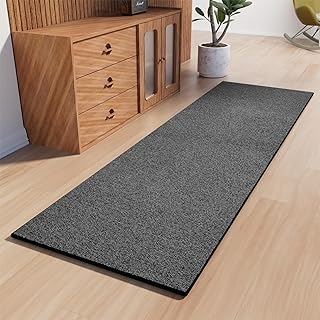
AREDO Pointillism Runner, Black
The most design-forward option here: a solid black ground with a fine pointillist texture that keeps it from reading as flat or heavy. Low pile, rubber backed, and a strong choice against pale oak or white tile where you want contrast rather than blending in.
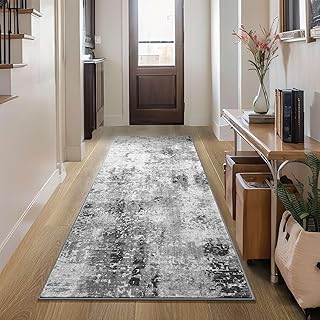
Ompaa 2×6 Grey Abstract Runner
A soft, unstructured grey pattern that suits contemporary interiors without competing with cabinetry or art. It washes well, the rubber backing is reliable on hard floors, and grey remains the most practical color for a laundry room or back hallway.
Frequently Asked Questions
Will a runner rug stay in place without a separate pad?
If it has integrated rubber backing, usually yes on hardwood, tile, and vinyl. On very smooth polished stone, or if the rug will sit over low-pile carpet, add a thin gripper pad for insurance.
What length should I buy for a hallway?
Aim to leave 6 to 12 inches of floor visible at each end of the corridor. A 6-foot runner suits a short entry, 8 feet fits most kitchens, and 10 feet is for full pass-through halls.
Can these go in the dryer?
Air drying is safer. Heat can stiffen or delaminate rubber backing over time, and most manufacturers specify a cold wash followed by flat or line drying.
Are runners a good idea in bathrooms?
They work well provided the rug is thin, washable, and quick to dry. A low-pile washable runner handles a vanity run better than a traditional bath mat and looks considerably more finished.
Final Thoughts
For most homes, the 2×6 Vintage Washable Hallway Runner is the easiest yes — forgiving pattern, soft hand, sensible price point for an entry. If your corridor takes real punishment, step up to the 2’x10′ Heavy-Duty Hallway Runner, and if you want the rug to be the design decision in the room, the AREDO Pointillism Runner in black is the one worth committing to.