Key takeaways
- Confirm Twin XL, not Twin: Nearly every residence hall uses a 38″ x 80″ Twin XL mattress. A standard Twin topper leaves five inches of bare mattress at the foot of the bed, so verify the dimensions on your housing portal before ordering.
- Match thickness to sheet depth: Two inches slips under most deep-pocket Twin XL sheets without strain. Three to four inches adds noticeably more cushioning but usually requires sheets rated for a 15″ pocket or deeper — budget for those in the same order.
- Prioritize airflow over marketing language: Gel infusions, copper, and open ventilation channels all reduce heat retention, and ventilated foam does the most measurable work. In a room where you can’t adjust the thermostat, this matters more than plushness.
- Insist on a removable, washable cover: Shared laundry facilities and no in-room deep cleaning make a zip-off cover essential. Foam itself can’t be machine washed, so the cover is your only line of defense against spills and general wear.
- Look for straps or a grippy backing: Lofted beds and thin institutional mattresses cause toppers to migrate overnight. Anchor straps or a non-slip base keep the topper aligned without daily readjustment.
What's inside
Institutional dorm mattresses are built for turnover, not for rest. They’re typically a thin slab of high-density foam or coil wrapped in vinyl, sized Twin XL, and sanitized between residents — which means firm, flat, and slightly clammy is the baseline experience. Add a room that runs warm because the radiator is centrally controlled, a bed frame lofted three feet in the air, and a roommate on a different sleep schedule, and the mattress becomes the one variable a student can actually change.
A topper is the highest-leverage upgrade in a dorm room, but the specifications that matter here are narrower than they are at home. You need Twin XL sizing, foam that vents rather than traps heat, a cover that survives a communal laundry room, and a profile that doesn’t fight standard sheets. This guide breaks down what to prioritize, then reviews the toppers worth considering for the 2026 school year.
As an Amazon Associate we earn from qualifying purchases.


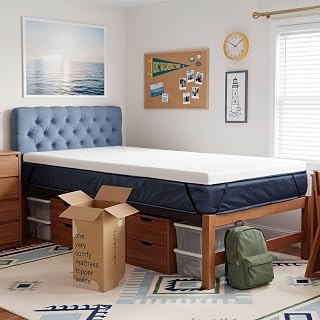


How to Choose a Mattress Topper For Dorm Rooms (2026)
- Confirm Twin XL, not Twin: Nearly every residence hall uses a 38″ x 80″ Twin XL mattress. A standard Twin topper leaves five inches of bare mattress at the foot of the bed, so verify the dimensions on your housing portal before ordering.
- Match thickness to sheet depth: Two inches slips under most deep-pocket Twin XL sheets without strain. Three to four inches adds noticeably more cushioning but usually requires sheets rated for a 15″ pocket or deeper — budget for those in the same order.
- Prioritize airflow over marketing language: Gel infusions, copper, and open ventilation channels all reduce heat retention, and ventilated foam does the most measurable work. In a room where you can’t adjust the thermostat, this matters more than plushness.
- Insist on a removable, washable cover: Shared laundry facilities and no in-room deep cleaning make a zip-off cover essential. Foam itself can’t be machine washed, so the cover is your only line of defense against spills and general wear.
- Look for straps or a grippy backing: Lofted beds and thin institutional mattresses cause toppers to migrate overnight. Anchor straps or a non-slip base keep the topper aligned without daily readjustment.
The Best Mattress Topper For Dorm Rooms (2026)s Reviewed
Linenspa 2 Inch Gel Memory Foam Topper
The dependable entry point: two inches of gel-infused, CertiPUR-US certified foam with a plush surface feel that takes the edge off a firm dorm mattress without changing how your sheets fit. It’s the pick for students who want a clear comfort improvement with zero complications on move-in day.
ViscoSoft 3 Inch Ventilated Twin XL Topper
ViscoSoft’s high-density ventilated foam delivers real contouring at three inches, and the removable rayon-blend cover feels closer to a proper bedding layer than a utility wrap. Best suited to side sleepers who need genuine shoulder and hip relief rather than a light cushion.
Sleepyhead 2 Inch Cooling Gel Topper
Designed around dorm constraints from the start, this one pairs cooling gel foam with a washable zip-off cover in a slim two-inch profile. It’s a smart compromise for students who run hot but don’t want to buy new deep-pocket sheets.
ViscoSoft Active Cooling 4 Inch Copper-Infused Topper
The most substantial option here: four inches of firm copper-infused foam with anchor straps, which effectively resurfaces a worn-out mattress rather than merely softening it. Reserve this for back and stomach sleepers who want firm support and don’t mind sourcing extra-deep sheets.
ELEMUSE 3 Inch Dual-Layer Topper
The two-layer build — two inches of cooling gel foam beneath a one-inch soft pillow top — gives you a cushioned surface without the sinking feeling that single-density foam can produce. A strong middle-ground choice for anyone who finds pure memory foam either too firm or too enveloping.
Frequently Asked Questions
Will a Twin XL topper fit my dorm bed?
In almost all cases, yes. Twin XL is the standard across U.S. residence halls, though a handful of schools use full-size beds in suite-style housing. Check your housing office’s bedding guide to be certain.
How thick should a dorm topper be?
Two inches for a modest comfort lift and easy sheet compatibility; three to four inches if the mattress is genuinely uncomfortable or you sleep on your side. Thicker toppers require deep-pocket sheets.
Do cooling toppers actually work in a warm dorm?
They reduce heat buildup rather than actively chilling you. Ventilated foam with gel or copper infusions sleeps meaningfully cooler than dense conventional memory foam, which is the practical difference in a room you can’t cool.
How do I clean a mattress topper at school?
Unzip and machine wash the cover on a gentle cycle, then air dry. Spot clean the foam with mild soap and let it dry completely before recovering — never submerge or machine wash foam.
Final Thoughts
For most students, the ELEMUSE 3 Inch Dual-Layer Topper hits the best balance of cushioning, cooling, and value for a full academic year. The ViscoSoft 3 Inch Ventilated model is the upgrade worth making if you sleep on your side and want serious pressure relief, while the Linenspa 2 Inch Gel Topper remains the simplest, lowest-friction way to make an institutional mattress livable.