Key takeaways
- Comfort layer depth: Look for at least two to three inches of conforming foam above the support core. A 10-inch build with a generous top layer will cradle a shoulder far better than a 12-inch mattress that’s mostly dense base foam.
- Measure the platform, not the label: RV bed sizes are their own dialect — Short Queen runs 60×74, Short King 72×75, Full XL 53×80. Tape-measure the frame corner to corner and account for any wall trim or wheel-well intrusion before ordering.
- Heat management: RV bedrooms sit close to the roof and hold warmth. Gel infusions, bamboo charcoal, open-cell structures, and breathable covers all help; coil-based hybrids move air best by virtue of their construction.
- Certifications and safety: CertiPUR-US and OEKO-TEX marks confirm foam and textile testing. Fiberglass-free construction is worth seeking out specifically, since fiberglass fire barriers can shed if a cover is ever removed.
- Weight and installation logistics: Bed-in-a-box compression makes it possible to get a mattress through a narrow RV door and around a tight corner. Check the shipping weight if you’ll be wrestling it into place alone.
What's inside
Side sleeping in an RV asks a lot of a mattress. Your shoulder and hip carry most of your body weight into a slab of foam that’s often two inches thinner than what you’d find at home, sitting on a plywood platform instead of a sprung base, in a bedroom where the temperature swings twenty degrees between midnight and sunrise. The result is familiar to anyone who has spent a season on the road: a numb arm, a sore lower back, and the sense that the mattress that came with the rig was chosen by an accountant rather than anyone who planned to sleep on it.
The fix is more specific than “buy something soft.” Side sleepers need enough surface give to let the shoulder sink without bottoming out, paired with a support core firm enough to keep the spine level. In RV sizing, where 8 to 12 inches is the practical ceiling, that balance gets tight, and material choices start to matter more than thickness alone. Below are six RV-specific mattresses worth considering in 2026, followed by the criteria I’d weigh before committing, along with answers to the questions that come up most often once the old mattress is already at the curb.
As an Amazon Associate we earn from qualifying purchases.


How to Choose a Rv Mattress For Side Sleepers (2026)
- Comfort layer depth: Look for at least two to three inches of conforming foam above the support core. A 10-inch build with a generous top layer will cradle a shoulder far better than a 12-inch mattress that’s mostly dense base foam.
- Measure the platform, not the label: RV bed sizes are their own dialect — Short Queen runs 60×74, Short King 72×75, Full XL 53×80. Tape-measure the frame corner to corner and account for any wall trim or wheel-well intrusion before ordering.
- Heat management: RV bedrooms sit close to the roof and hold warmth. Gel infusions, bamboo charcoal, open-cell structures, and breathable covers all help; coil-based hybrids move air best by virtue of their construction.
- Certifications and safety: CertiPUR-US and OEKO-TEX marks confirm foam and textile testing. Fiberglass-free construction is worth seeking out specifically, since fiberglass fire barriers can shed if a cover is ever removed.
- Weight and installation logistics: Bed-in-a-box compression makes it possible to get a mattress through a narrow RV door and around a tight corner. Check the shipping weight if you’ll be wrestling it into place alone.
The Best Rv Mattress For Side Sleepers (2026)s Reviewed
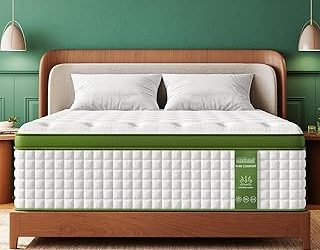
Lucid 10 Inch Bamboo Charcoal Memory Foam, Short Queen
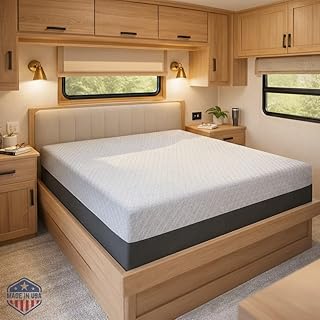
Lucid’s medium feel is the sweet spot for side sleepers who want genuine shoulder relief without the sinking sensation of a plush build, and the bamboo charcoal and gel infusion keeps surface temperature in check through warm nights. At 10 inches it fills a standard RV platform convincingly, which does a lot for the impression that you’re sleeping in a real bedroom.
Zinus 10 Inch Ultima RV Memory Foam, Short Queen
Slightly firmer than the Lucid, the Zinus Ultima suits heavier side sleepers or anyone who alternates between side and back through the night, with breathable airflow foam that resists the trapped-heat problem endemic to closed-cell memory foam. Both CertiPUR-US and OEKO-TEX certified and explicitly fiberglass-free, it’s a reassuring pick on the materials front.
Aquasoft 8 Inch Short Queen RV Mattress
For rigs with limited vertical clearance — bunk beds, low-profile platforms, or anywhere a 10-inch mattress would crowd overhead cabinetry — this 8-inch Mississippi-made option delivers medium-firm support with a diamond-quilted cover that adds a touch of surface softness. Side sleepers on the lighter end of the scale will find it sufficient; heavier sleepers should size up in thickness.
WanderRest Cool Hybrid 10″, Full XL
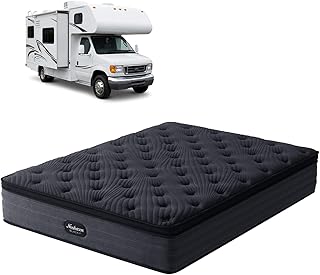
The pocketed coil core is what sets this one apart: individually wrapped springs contour to the hip and shoulder independently while providing more edge stability than all-foam builds, which matters in a narrow Full XL where you may sleep close to the perimeter. The gel memory foam comfort layer handles pressure relief, and the coil layer keeps air circulating.
Celestial Sleep 10 Inch RV Short Queen
A well-executed medium all-foam mattress made in the USA with a full slate of certifications, including fiberglass-free construction. The cooling memory foam layer conforms readily at the shoulder, making it a dependable, no-surprises choice for dedicated side sleepers who don’t need coils.
Frequently Asked Questions
What firmness should side sleepers choose in an RV?
Medium to medium-firm covers most people. The pressure points that matter — shoulder and hip — need a comfort layer that yields, but the core underneath has to resist enough to keep your spine straight. Truly firm mattresses push the shoulder up and torque the neck; truly plush ones let the hips drop.
Is 8 inches thick enough?
It can be, particularly for lighter sleepers or bunk applications where clearance is limited. Ten inches gives more room for a substantial comfort layer, so if your platform and cabinetry allow it, that’s the more forgiving choice for side sleeping.
Do I need a hybrid, or is all-foam fine?
All-foam is fine and often lighter to install. Choose a hybrid if you sleep hot, want stronger edge support, or dislike the enveloped feeling of memory foam — the coils add responsiveness and airflow.
How long does a compressed mattress take to expand?
Most reach usable shape within a few hours and full loft within 24 to 48. Unbox it with the windows open and give it a day before judging the feel.
Final Thoughts
For most side sleepers replacing a factory RV mattress, the Lucid 10 Inch Bamboo Charcoal is the easiest recommendation — a well-judged medium feel with real cooling credentials at a sensible thickness. Sleepers who run hot or want firmer edges should look at the WanderRest Cool Hybrid for its pocketed coil core, while the Zinus Ultima is the pick if you want a slightly firmer surface backed by a full set of safety certifications.