Key takeaways
- Profile height: Measure from the platform to the top of your back rail, then subtract two to three inches for cushions and sightline. Most daybeds look and function best with 5 to 6 inches; 8 inches works only on frames with a tall back or no back at all.
- Dual-purpose firmness: Medium-firm is the sweet spot because a daybed mattress is also a seat. Softer builds sink at the front edge where people sit, which accelerates sagging along one line rather than across the whole surface.
- Foam versus hybrid: All-foam is lighter, easier to flip up for trundle access, and cheaper. A thin hybrid with pocketed coils gives adult sleepers real pushback and better edge integrity, at the cost of weight and height.
- Certifications and cooling: Look for CertiPUR-US and explicit fiberglass-free language, plus gel or green tea infusions. Daybeds often sit against a wall with limited airflow, so heat retention is more noticeable than on an open platform bed.
- Slip resistance and cover: Daybed platforms are smooth and often slatted. A textured or anti-slip bottom keeps the mattress from creeping forward under seated use, and a removable washable cover earns its keep in kids’ rooms and guest spaces.
What's inside
A daybed asks one piece of furniture to do two jobs, and the mattress is where that compromise usually shows. Buyers pick a standard twin, slide it into the frame, and discover the back rail has vanished behind eight inches of foam — the sofa silhouette is gone, the bolsters tip forward, and what was meant to be a slim reading nook now reads as an unmade bed in the corner of the room. Go too thin in the other direction and you get a mattress that feels fine as a seat but leaves an overnight guest counting slats by 3 a.m.
This guide is built around that specific tension. Below are six twin mattresses that suit daybed geometry — low-profile foams that preserve the frame’s lines, mid-height options for rooms where the daybed sleeps guests weekly, and one hybrid for anyone who wants coil support without a tall bed. Every pick is CertiPUR-US certified, fiberglass-free, and sized to true twin at 75″ x 38″.
As an Amazon Associate we earn from qualifying purchases.




How to Choose a Twin Mattress For Daybed (2026)
- Profile height: Measure from the platform to the top of your back rail, then subtract two to three inches for cushions and sightline. Most daybeds look and function best with 5 to 6 inches; 8 inches works only on frames with a tall back or no back at all.
- Dual-purpose firmness: Medium-firm is the sweet spot because a daybed mattress is also a seat. Softer builds sink at the front edge where people sit, which accelerates sagging along one line rather than across the whole surface.
- Foam versus hybrid: All-foam is lighter, easier to flip up for trundle access, and cheaper. A thin hybrid with pocketed coils gives adult sleepers real pushback and better edge integrity, at the cost of weight and height.
- Certifications and cooling: Look for CertiPUR-US and explicit fiberglass-free language, plus gel or green tea infusions. Daybeds often sit against a wall with limited airflow, so heat retention is more noticeable than on an open platform bed.
- Slip resistance and cover: Daybed platforms are smooth and often slatted. A textured or anti-slip bottom keeps the mattress from creeping forward under seated use, and a removable washable cover earns its keep in kids’ rooms and guest spaces.
The Best Twin Mattresses For Daybeds (2026), Reviewed
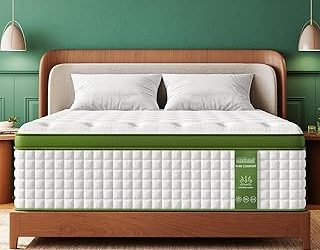
EGOHOME 8 Inch Twin Memory Foam
The most substantial pick here, with green tea gel-infused memory foam over a firmer support core that holds up for adult guests rather than just occasional naps. Reserve it for backless daybeds or frames with a high rail — at 8 inches it will crowd a low backrest.
MLILY 6 Inch Twin Mattress in a Box
My default recommendation for daybeds, because 6 inches threads the needle between seating comfort and preserving the frame’s proportions. The medium-firm green tea gel foam is genuinely comfortable for kids and light-to-average-weight adults, and it stays light enough to lift when you need the trundle.
Zinus 5 Inch Cooling Essential Memory Foam
Zinus has spent years refining this thin-profile formula, and it shows in the consistency: a just-right medium feel, OEKO-TEX certified materials, and reliable expansion out of the box. The best low-profile choice when the daybed is primarily a sofa and secondarily a bed.
Neo Sleep 8 Inch Cool Hybrid
The only innerspring option in the group, and worth considering if the daybed doubles as a teen’s everyday bed. Pocketed coils deliver support and edge stability that thin foam cannot match, and the anti-slip bottom is a real advantage on slatted daybed platforms.
FDW 5 Inch Twin Gel Memory Foam
A budget-conscious dual-layer build with a removable, washable cover — practical for kids’ rooms, dorm daybeds, and guest spaces used a few nights a month. Comfortable for children and lighter sleepers; heavier adults will want more than 5 inches.
Frequently Asked Questions
What thickness works best on a daybed?
Five to six inches for most frames. That range keeps the mattress top below the back rail so the daybed still reads as seating, while providing enough foam for comfortable sleep. Choose 8 inches only if the frame is backless or has an unusually tall back.
Do I need a box spring or bunkie board?
Usually not. Daybeds ship with slatted or solid platforms designed to support a mattress directly. If your slats are spaced wider than about three inches, add a thin bunkie board to prevent the foam from sagging between gaps.
Will a twin mattress fit a daybed with a trundle?
Yes — both the daybed and trundle take standard twin mattresses at 75″ x 38″. Keep the trundle mattress at 5 to 6 inches, since it has to clear the daybed frame when it rolls back underneath.
How long until a boxed mattress is ready to use?
Most reach full loft within 24 to 48 hours, though you can sleep on them sooner. Unbox in a warm room; cool temperatures slow foam expansion noticeably.
Final Thoughts
For most daybeds, the MLILY 6 Inch hits the best balance of seating support and sleeping comfort without swallowing the frame’s back rail. If the daybed is mainly a sofa, the Zinus 5 Inch Cooling Essential is the cleaner low-profile choice, and for a teen using it nightly, the Neo Sleep 8 Inch Hybrid brings coil support that thin foam can’t replicate.