Key takeaways
- Give a new foam topper time to expand and air out in a well-ventilated room before sleeping on it; follow the manufacturer’s instructions rather than guessing.
- Use a breathable mattress protector that fits over both the topper and mattress, but avoid a waterproof layer that feels crinkly or traps excessive heat.
- If shoulder pressure is your main issue, test a thicker topper before choosing an ultra-soft one; deeper contouring is often more useful than surface fluff.
- Pair the topper with a pillow that fills the space between your head and the mattress, keeping your neck closer to neutral while you sleep on your side.
What's inside
Side sleeping can feel luxurious when your mattress has the right amount of give, but an overly firm or worn sleep surface may leave pressure at the shoulder, hip, and knee. A topper is a practical way to fine-tune that feel without replacing the entire mattress—especially in a guest room, rental, or beautifully furnished bedroom where a full mattress upgrade is not yet on the brief.
This guide explains how to choose the best mattress topper for side sleepers in 2026, with a focus on pressure relief, temperature control, stability, and fit. We’ll compare the main materials, clarify which thicknesses make sense, and show how to match a topper to your existing mattress and sleep habits.
As an Amazon Associate we earn from qualifying purchases.



Our Recommended Picks
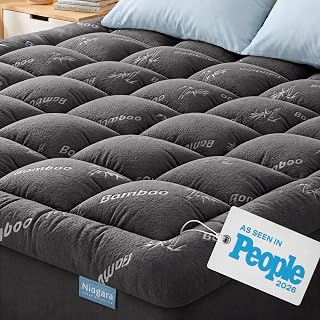
For a softer, more breathable surface, the BEDLORE Queen Mattress Topper with viscose bamboo is a sensible starting point. Its stretchable pockets are designed for mattresses from 6 to 18 inches deep, making it useful when fit is the main concern. The Niagara Sleep Solution Ultra Soft & Cooling Mattress Topper takes a similar pillow-top approach, with rayon derived from bamboo and extra-deep pockets for taller mattresses.
If you want more noticeable contouring beneath the shoulders and hips, consider a three-inch memory foam design. The PERLECARE Gel Memory Foam Topper adds a removable washable cover and a non-slip design, while the ViscoSoft 3 Inch Memory Foam Topper uses high-density ventilated foam with a removable rayon cover. The VALUXE 3 Inch Gel Memory Foam Topper is another pressure-relieving option, paired with a removable bamboo cover. For a full-size bed, the Ultra Soft & Cooling Full Size Mattress Topper offers a softer, breathable pillow-top feel without stepping up to queen dimensions.
Choose the Right Material
Memory foam is usually the most effective choice when a side sleeper wants pressure relief. It responds to body heat and weight, allowing the shoulder and hip to sink in while the rest of the body remains supported. Gel-infused or ventilated foam may feel less stuffy than traditional dense foam, although no foam topper can guarantee cool sleep in a warm room.
Fiber-filled and quilted bamboo or rayon toppers create a gentler, more cloud-like change. They can soften a firm mattress without dramatically altering its underlying support, and they are often easier to move and wash. However, they provide less deep contouring than memory foam and may compress sooner, particularly beneath heavier sleepers.
Consider Thickness and Firmness
For most side sleepers, a topper between two and three inches is the useful middle ground. Two inches can take the edge off a firm mattress while preserving more of its original support. Three inches creates a deeper cradle and is better suited to sleepers who regularly wake with pressure around the shoulders or hips.
Thickness is not the same as softness. A thick high-density foam topper may feel supportive rather than plush, while a lofty fiber topper may feel soft but offer little structural change. If your current mattress is already sagging, a topper may disguise the problem temporarily but cannot restore proper support. In that situation, replacement is the more durable solution.
Check Support, Alignment, and Movement
The goal is not simply to make the bed softer. When you lie on your side, your spine should remain reasonably level rather than dipping toward the mattress or bending upward away from it. A topper that is too soft can allow the midsection to sink, while one that is too firm may leave the shoulder suspended and compressed.
Foam toppers generally absorb movement well, which is helpful for couples with different schedules. Their trade-off is that they can make repositioning feel slower, particularly in thicker, softer models. If you change positions often or prefer a responsive surface, a quilted fiber topper may feel more natural.
Measure the Bed Before Buying
Accurate dimensions matter more than a product label. Measure the mattress length and width, then check its depth, including any existing pad or protector. Deep-pocket skirts such as those on the BEDLORE and Niagara Sleep Solution models can help keep a topper in place on taller mattresses, but excess fabric may bunch on a slim bed.
Also inspect the topper’s construction. A washable cover is valuable for everyday maintenance, especially in a warm bedroom or a home with pets. Non-slip panels, elastic straps, or a fitted skirt can reduce shifting, although a properly sized fitted sheet remains the best final layer for holding everything together.
Tips
- Give a new foam topper time to expand and air out in a well-ventilated room before sleeping on it; follow the manufacturer’s instructions rather than guessing.
- Use a breathable mattress protector that fits over both the topper and mattress, but avoid a waterproof layer that feels crinkly or traps excessive heat.
- If shoulder pressure is your main issue, test a thicker topper before choosing an ultra-soft one; deeper contouring is often more useful than surface fluff.
- Pair the topper with a pillow that fills the space between your head and the mattress, keeping your neck closer to neutral while you sleep on your side.
Frequently Asked Questions
How thick should a mattress topper be for side sleepers?
Two to three inches is a practical range for most people. Choose two inches for moderate cushioning and three inches for more pronounced shoulder and hip relief. Body weight, mattress firmness, and personal preference all affect the final choice.
Is memory foam or a pillow-top topper better?
Memory foam is better for targeted contouring and pressure distribution. A pillow-top or fiber-filled topper is better when you want a lighter, airier softness and a smaller change in the mattress feel. Neither material is universally best.
Can a topper fix a mattress that is too firm?
Yes, a topper can make a firm mattress feel more forgiving, particularly when it is at least two inches thick. It will not correct permanent sagging, broken support layers, or an unsuitable mattress size.
How do I keep a mattress topper from sliding?
Start with the correct size and use a fitted sheet deep enough to cover the combined mattress and topper height. Non-slip construction, fitted skirts, and elastic straps can provide additional stability. Smooth the topper regularly during the first few days of use.
Conclusion
The best mattress topper for a side sleeper balances cushioning with alignment rather than chasing maximum softness. Choose ventilated memory foam when pressure relief is the priority, or a quilted bamboo and rayon topper when you prefer a cooler, more flexible layer. Measure carefully, select a thickness that suits your mattress, and treat the topper as a comfort upgrade—not a substitute for a mattress that has lost its support.