Key takeaways
- Let a boxed mattress fully expand flat for 24 to 48 hours before you articulate it the first time — early bending can set uneven compression.
- Skip a rigid box spring or a bunkie board. The base is the foundation; anything between it and the mattress kills the flex.
- Buy deep-pocket fitted sheets, 16 inches or more, so corners don’t pop off at the fold. Split beds need split-specific bedding.
- Use the trial period deliberately — a 365-night window like Sleepmax offers only helps if you sleep on it through a full seasonal swing.
What's inside
An adjustable base changes the job description of a mattress. Instead of lying flat and holding still, it has to bend at the shoulders and knees, hold that shape for hours, and return to level without developing a permanent crease or a dead zone under your hips. Most mattresses on the market can technically do this. Fewer do it well for eight or nine years, which is the window you should be buying for.
Below is how I’d approach the decision if I were specifying a bed for a client: which constructions actually flex, what profile and weight to aim for, when a split configuration earns its cost, and the material details that matter once the head is raised and airflow drops. You’ll also find a few sets and standalone mattresses worth shortlisting, plus answers to the questions that come up most often at delivery.
Our recommended picks for adjustable-base sleeping:
As an Amazon Associate we earn from qualifying purchases.


Start With Construction, Not Comfort Level
Three build types bend reliably: all-foam, latex, and hybrids that use individually wrapped pocket coils. The common thread is that each unit works independently, so the surface can articulate without fighting itself. What to avoid is any mattress with an interconnected coil system — Bonnell, offset, or continuous wire — along with heavy edge encasements and rigid perimeter foam rails. Those are engineered for a flat foundation and will either resist the base or fatigue at the fold lines. If a product page doesn’t say “adjustable base compatible” and doesn’t specify pocket coils or foam, treat that as a no.
Aim For 10 To 14 Inches, And Watch The Weight
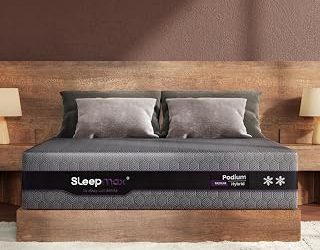
Profile is where people overspend. Very tall mattresses, roughly 15 inches and up, have so much material stacked above the base that the incline flattens out — you crank the head to 40 degrees and feel maybe 25. They’re also heavy enough to strain the motors over time. The practical range sits between 10 and 14 inches. A 10-inch build like the Mielmoon Split Queen hybrid articulates crisply and suits anyone who wants a distinct, responsive bend; the 14-inch tier, which covers the Amada and EGOHOME sets as well as the Sleepmax Queen hybrid, gives you more pressure relief and a plusher hand while still tracking the base. Check the shipping weight too, and compare it against your base’s rated capacity, which includes sleepers.
Decide Whether You Need A Split
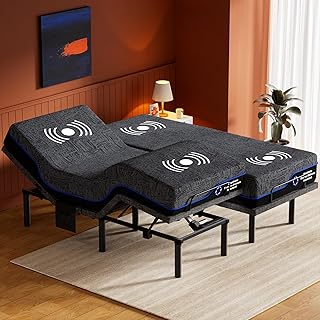
If you share the bed and only one of you wants the head raised, split is not a luxury — it’s the whole point. Two independent halves on a split king base let one person read at 30 degrees while the other stays flat, with no shared motion and no compromise position. The tradeoff is a visible center seam, which a mattress pad or a dedicated split-king fitted sheet set largely solves. Sleeping solo? A single queen or full mattress on a matching base is simpler and cheaper. Split queen exists as well, useful in rooms that can’t take a king footprint, though bedding options are thinner on the ground.
Plan For Heat And Air Movement
Raising the head reduces the open air path around your torso, and memory foam already runs warm. This is where cooling features stop being marketing. Look for gel-infused or graphite-infused foam, copper or phase-change covers, and ideally a coil layer that moves air by design. Hybrids have a structural advantage here: the Sleepmax and the 11-inch Liberty Hybrid both pair graphite or gel foam with pocket coils, so heat has somewhere to go. Among all-foam options, the copper-infused 14-inch set and the EGOHOME cooling foam are the ones addressing it directly rather than hoping density does the work.
Confirm Fit Before Anything Ships
Two details derail more deliveries than any comfort mismatch. First, retention: most bases include bars or brackets at the foot to stop the mattress sliding forward on incline, and slick mattress bottoms without a grip panel need them. Second, dimensions. Non-standard sizes are real — the Liberty Hybrid comes in a 70×75 RV/king cut, which will not work on a standard king base. Measure your existing frame, and if you’re buying a base and mattress together, a matched set like the Amada or EGOHOME removes the guesswork entirely.
Tips
- Let a boxed mattress fully expand flat for 24 to 48 hours before you articulate it the first time — early bending can set uneven compression.
- Skip a rigid box spring or a bunkie board. The base is the foundation; anything between it and the mattress kills the flex.
- Buy deep-pocket fitted sheets, 16 inches or more, so corners don’t pop off at the fold. Split beds need split-specific bedding.
- Use the trial period deliberately — a 365-night window like Sleepmax offers only helps if you sleep on it through a full seasonal swing.
Frequently Asked Questions
Can I put my current mattress on an adjustable base?
Possibly. Foam, latex, and pocket-coil hybrids usually adapt fine. Traditional innersprings with connected coils, pillow-top models with stiff perimeters, and anything over about 15 inches generally won’t. Check the manufacturer’s warranty language first, since some void coverage on adjustable frames.
Is memory foam or hybrid better here?
Memory foam contours most closely and is quietest through the bend. Hybrids give you more bounce, easier repositioning, stronger edge support, and better airflow. Side sleepers and those who want a cradling feel lean foam; back sleepers, heavier bodies, and hot sleepers usually do better with a hybrid.
Does zero gravity actually help?
For many people, yes. Elevating head and legs slightly above the heart takes load off the lumbar spine and can ease reflux and snoring. It’s a preset on most modern remotes, including the Amada and EGOHOME bases, so it’s worth trying nightly for a week before judging.
How long should an adjustable-base mattress last?
Seven to ten years with a compatible build. Rotate it head-to-foot every few months if the manufacturer allows, and inspect the fold zones annually for sag.
Conclusion
The short version: choose a flexible construction, keep the profile between 10 and 14 inches, go split if two people want different positions, insist on real cooling if you’re in memory foam, and verify dimensions and retention hardware before checkout. Get those five right and the mattress disappears into the background, which is exactly what a well-specified bed should do.