Key takeaways
- Slat spacing and thickness: Aim for slats no more than 3 inches apart. Most foam and hybrid mattress warranties require it, and wider gaps cause sagging that shows up within a year. Thicker slats with a center support leg matter more than the total slat count.
- Underbed clearance you’ll actually use: Measure your bins before you buy. A 12-inch frame usually leaves 10 to 11 inches of usable height once rails are accounted for, while 14-inch steel frames open up genuine storage. Low-profile platforms look cleaner but give that space back.
- Noise engineering: Squeak comes from metal-on-metal contact and loose bolts, not from the material itself. Look for non-woven slat covers, rubber or felt buffers at joints, and lock nuts rather than plain washers.
- Headboard integration: Attached headboards sit flush and won’t drift from the wall, but they lock in your aesthetic. Frames without one give you freedom to add an upholstered panel or lean a reclaimed piece behind the bed later.
- Assembly reality: Single-person setup in under an hour is achievable at this price. Check whether the frame ships with pre-drilled joints and an included wrench, and whether the box weight is something you can move upstairs alone.
What's inside
Under a thousand dollars, the bed frame market splits into two personalities: pieces that look expensive and pieces that behave well. Shoppers rarely get to test both before committing. You read about a walnut platform with a tall slatted headboard, it arrives in three flat boxes, and by week six the center rail is announcing every shift in the night. Meanwhile the frames that stay perfectly silent often read as utilitarian — visible steel, low clearance, no headboard to anchor the wall behind it.
This guide sorts through that tension. I’ve grouped six frames that hold up structurally at this price, then broken down where each one earns its place: solid pine for people who want warmth and no hardware showing, heavy-gauge steel for renters who move often and need real storage underneath, and upholstered options for bedrooms where the bed is the focal point rather than the furniture. Below you’ll find the picks, a short buying framework, and answers to the questions that actually determine whether a frame lasts.
As an Amazon Associate we earn from qualifying purchases.


How to Choose a Bed Frame Under 1000 (2026)
- Slat spacing and thickness: Aim for slats no more than 3 inches apart. Most foam and hybrid mattress warranties require it, and wider gaps cause sagging that shows up within a year. Thicker slats with a center support leg matter more than the total slat count.
- Underbed clearance you’ll actually use: Measure your bins before you buy. A 12-inch frame usually leaves 10 to 11 inches of usable height once rails are accounted for, while 14-inch steel frames open up genuine storage. Low-profile platforms look cleaner but give that space back.
- Noise engineering: Squeak comes from metal-on-metal contact and loose bolts, not from the material itself. Look for non-woven slat covers, rubber or felt buffers at joints, and lock nuts rather than plain washers.
- Headboard integration: Attached headboards sit flush and won’t drift from the wall, but they lock in your aesthetic. Frames without one give you freedom to add an upholstered panel or lean a reclaimed piece behind the bed later.
- Assembly reality: Single-person setup in under an hour is achievable at this price. Check whether the frame ships with pre-drilled joints and an included wrench, and whether the box weight is something you can move upstairs alone.
The Best Bed Frames Under 1000 (2026) Reviewed
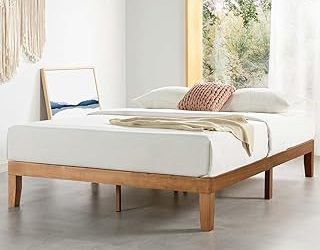
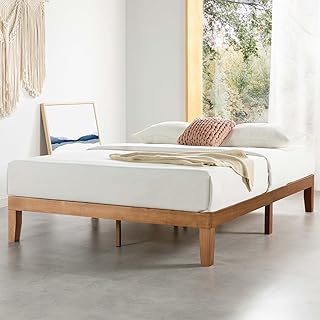
Mellow Naturalista Classic 12-Inch Solid Wood Platform Bed
Solid pine construction with wooden slats and no visible metal gives this frame an unfussy, almost Shaker-like presence that works in small bedrooms and guest rooms alike. The 12-inch height keeps proportions balanced under a thicker mattress, and skipping the box spring means the silhouette stays low and intentional.
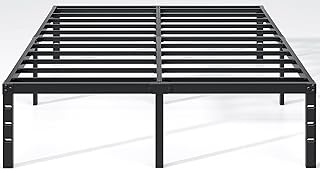
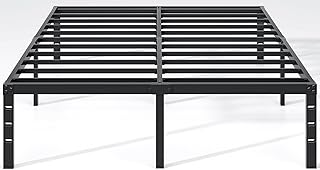
NEW JETO 14-Inch Metal Bed Frame with Storage Space
This is the pragmatist’s choice: heavy-duty steel, 14 inches of height, and enough clearance underneath to make bins and luggage disappear. It’s the frame I’d recommend to anyone who relocates frequently, since steel tolerates repeated disassembly far better than wood joinery does.
LIFEMENT Classic Wood Platform Bed with Headboard
The walnut finish reads warmer and more considered than most wood frames in this range, and the noise-free build plus underbed storage covers the two complaints that usually surface after a few months. A strong pick if you want a headboard without moving into upholstery.
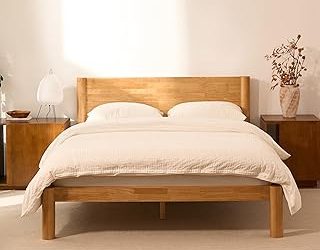
ZINUS Vivek Deluxe Wood Platform Bed with Headboard
The slatted headboard is the detail worth paying for here — it adds vertical texture and a quiet mid-century line without dominating the room. Wood slat support and box-spring-free design keep it versatile across foam, hybrid, and latex mattresses.
GRUSIGN Queen Platform Bed with Velvet Headboard
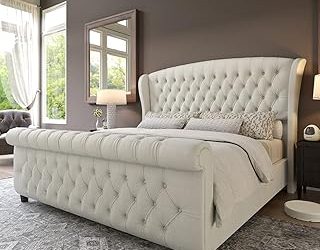
Velvet upholstery in a soft beige turns the bed into the room’s anchor, and the adjustable-height slat system is the genuinely useful feature: you can run a mattress alone or add a box spring depending on how tall you want the sleep surface. Best suited to bedrooms where softness and layering are the goal.
Frequently Asked Questions
Do I need a box spring with a platform bed?
No. Every frame here uses slat support designed to hold a mattress directly. Adding a box spring raises the surface height and can void some foam mattress warranties, so only do it if the frame explicitly allows for it.
Is wood or metal better at this price?
Metal gives you more structural strength and storage clearance per dollar. Wood gives you warmth, quieter joints, and a finished look without a bed skirt. Choose based on whether you want the frame seen or hidden.
What if I need a full size instead of a queen?
The VINGLI 12-Inch Full Bed Frame covers that gap well, with steel slat support and roughly 10 inches of underbed storage. Its noise-free construction makes it a solid fit for smaller rooms and shared walls.
How long should a frame in this range last?
Expect seven to ten years with basic maintenance. Retighten bolts every six months, keep the center support leg making firm floor contact, and rotate your mattress on schedule to avoid uneven slat pressure.
Final Thoughts
If you want one recommendation, the LIFEMENT Classic in walnut delivers the most complete package — headboard, storage, and a finish that doesn’t telegraph its price. Choose the NEW JETO metal frame if durability and underbed capacity outrank appearance, and the ZINUS Vivek if you’re building a room around clean lines and want that slatted headboard doing the design work.