Key takeaways
- Slat spacing under 3 inches: This is the single number that matters most. Tempur-Pedic specifies gaps no wider than 2 to 3 inches, or a fully solid surface. Anything broader lets foam sag between slats over months of use.
- Center support with floor legs: A queen or larger frame needs a center rail that reaches the ground on its own legs — not just a beam spanning the side rails. Look for five or more total legs on a queen, six or more on a king.
- Weight capacity with headroom: Add the mattress weight to the sleepers’ combined weight, then choose a frame rated well above that figure. Steel platforms typically publish higher numbers than wood, which is worth knowing if you sleep two plus a dog.
- Non-slip slat surface: Memory foam has no coil tension to lock it in place, so it creeps on smooth metal. Rubberized slat caps, tape, or a fabric-covered deck keeps the mattress from migrating toward the footboard.
- Deck height and total profile: Tempur-Pedic mattresses run thick, usually 10 to 13 inches. A 14-inch frame plus a 12-inch mattress puts the sleep surface above 26 inches, which reads tall in a low-ceilinged bedroom. Choose 12-inch or under if you want proportions to stay calm.
What's inside
A Tempur-Pedic is one of the few mattresses that can be actively ruined by the thing holding it up. All that dense proprietary foam — often 80 to 120 pounds of it — needs uninterrupted, rigid contact underneath. Put it on a frame with widely spaced slats, a sagging box spring, or a flimsy center rail, and the foam will settle into the gaps. You get soft spots where you wanted support, edges that roll, and in some cases a voided warranty, since Tempur-Pedic’s own coverage language hinges on adequate foundation support.
The frustrating part is that almost nothing on a product page tells you whether a frame qualifies. Listings advertise “no box spring needed” without mentioning slat gaps or leg count. This guide cuts through that: what specs actually matter for memory foam, and six frames — metal platforms, solid wood bases, and one adjustable base — that meet the requirements without looking like hospital equipment in a well-designed room.
As an Amazon Associate we earn from qualifying purchases.


How to Choose a Bed Frame For A Tempurpedic Mattress (2026)
- Slat spacing under 3 inches: This is the single number that matters most. Tempur-Pedic specifies gaps no wider than 2 to 3 inches, or a fully solid surface. Anything broader lets foam sag between slats over months of use.
- Center support with floor legs: A queen or larger frame needs a center rail that reaches the ground on its own legs — not just a beam spanning the side rails. Look for five or more total legs on a queen, six or more on a king.
- Weight capacity with headroom: Add the mattress weight to the sleepers’ combined weight, then choose a frame rated well above that figure. Steel platforms typically publish higher numbers than wood, which is worth knowing if you sleep two plus a dog.
- Non-slip slat surface: Memory foam has no coil tension to lock it in place, so it creeps on smooth metal. Rubberized slat caps, tape, or a fabric-covered deck keeps the mattress from migrating toward the footboard.
- Deck height and total profile: Tempur-Pedic mattresses run thick, usually 10 to 13 inches. A 14-inch frame plus a 12-inch mattress puts the sleep surface above 26 inches, which reads tall in a low-ceilinged bedroom. Choose 12-inch or under if you want proportions to stay calm.
The Best Bed Frame For A Tempurpedic Mattress (2026)s Reviewed
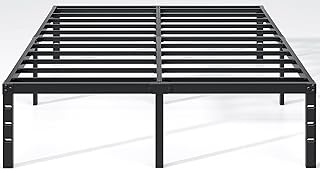
JETO 14-Inch Metal Bed Frame with Storage Space
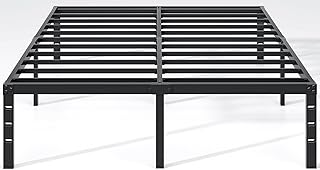
The most direct answer for anyone who just wants correct support and clear floor space beneath it: heavy-gauge steel, closely set slats, and a 14-inch clearance that swallows bins and luggage. It disappears visually under a duvet, making it the pick when the bedding is the design statement.
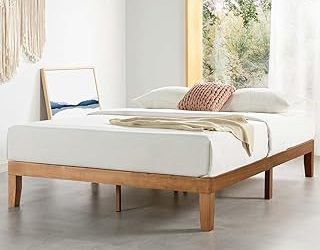
ZINUS Vivek Deluxe Wood Platform Bed
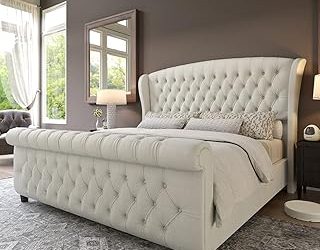
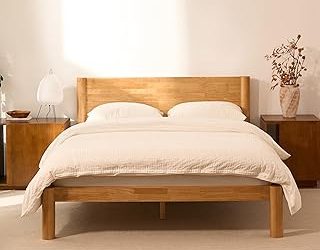
Zinus builds the Vivek with dense wood slat support and a slatted headboard that adds warmth without the bulk of an upholstered panel. It reads as intentional furniture rather than a hidden base, which matters in a small room where the bed is the only large object.
SHA CERLIN 14-Inch Metal Platform with Wood Headboard and Footboard
The mixed-material approach here — black steel structure, black oak wood panels — gives you the load rating of metal with the visual softness of wood. The non-slip, noise-dampened slat system is genuinely useful under foam, which tends to shift on bare steel.
NELYE California-King Solid Wood Platform Bed
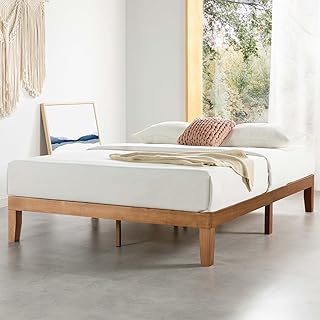
Cal-king shoppers have thin options, and this rubberwood frame with pine slats is the sturdiest of them at a sane price. The oak finish and exposed leg profile suit a warm minimalist scheme; for a lower, more grounded look at queen size, the Mellow Naturalista Classic covers similar ground at 12 inches.
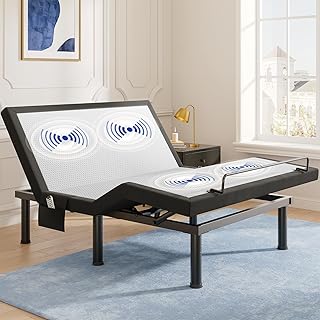
Tami T600 Adjustable Bed Frame
Tempur-Pedic foam flexes without complaint, so an adjustable base unlocks capability a static frame can’t touch — zero gravity positioning, independent head and foot articulation, massage, and USB ports. Worth it if you read in bed, deal with reflux, or want to sleep at a slight incline.
Frequently Asked Questions
Do I need a box spring with a Tempur-Pedic mattress?
No, and you should avoid one. Box springs compress unevenly and offer flex where memory foam needs rigidity. A platform frame or solid foundation is the correct choice.
Will an adjustable base damage the mattress?
Not with all-foam Tempur-Pedic models — they’re designed to bend. Confirm your specific model is adjustable-compatible, since a few hybrid and older coil-based versions are less flexible.
Can I put my Tempur-Pedic directly on the floor?
It’s supportive but poorly ventilated. Trapped moisture underneath invites mildew, so if you go frameless, lift and air the mattress regularly.
My frame has 4-inch slat gaps. Do I have to replace it?
Not necessarily. A bunkie board or a sheet of half-inch plywood cut to size closes the gaps and restores a flat plane, though it adds an inch of height.
Final Thoughts
For most buyers, the JETO metal frame is the efficient answer — correct slat spacing, high load capacity, and storage clearance for less than the alternatives. Choose the SHA CERLIN if you want the frame to contribute something to the room, and step up to the Tami T600 if positioning and pressure relief are the reason you bought a Tempur-Pedic in the first place.