Key takeaways
- Slat spacing under 3 inches: This is the single number that matters most. Tempur-Pedic specifies gaps of roughly 2 to 3 inches on slatted platforms. Anything wider lets the foam settle between supports and creates permanent impressions that read as body indentations.
- Center support with floor-contact legs: A queen or king needs a longitudinal center rail braced by at least one or two legs touching the floor. A rail that only spans between side frames will bow under a dense foam mattress. Count the legs before you buy.
- Load rating with headroom: Add mattress weight, sleeper weight, and bedding, then look for a frame rated well beyond that figure. Steel frames advertising 2,000 pounds or more give you margin; the ROIL model’s 3,500-pound rating is generous for a queen.
- Total sleep height: TEMPUR profiles run 10 to 13 inches. Pair a 13-inch mattress with a 14-inch frame and you’re sitting at 27 inches — high for shorter sleepers. A 12-inch wood platform keeps the stack closer to standard nightstand height.
- Joint design and noise: Foam doesn’t squeak; hardware does. Look for felt or rubber slat sleeves, welded corners rather than bolted butt joints, and locking connectors. Metal-on-metal contact points are where noise begins.
What's inside
A TEMPUR mattress is a different animal from a spring bed. The proprietary foam is dense — a queen can push past 90 pounds before anyone climbs in — and it transmits weight straight down rather than distributing it across a coil network. Put that on a frame with wide slat gaps or a flimsy center rail and the foam begins to sag into the voids within months. The mattress hasn’t failed; the foundation underneath it has, and Tempur-Sealy’s warranty language is explicit that inadequate support voids coverage.
This guide looks at bed frames through that specific lens: slat spacing tight enough to keep foam flat, steel or hardwood construction rated for real load, and center legs that actually reach the floor. Below are six platform frames worth considering in 2026, followed by the specs that matter, honest reviews of the top five, and answers to the questions that come up most often once a TEMPUR mattress is already on the way.
As an Amazon Associate we earn from qualifying purchases.



How to Choose a Bed Frame For Tempur Mattress (2026)
- Slat spacing under 3 inches: This is the single number that matters most. Tempur-Pedic specifies gaps of roughly 2 to 3 inches on slatted platforms. Anything wider lets the foam settle between supports and creates permanent impressions that read as body indentations.
- Center support with floor-contact legs: A queen or king needs a longitudinal center rail braced by at least one or two legs touching the floor. A rail that only spans between side frames will bow under a dense foam mattress. Count the legs before you buy.
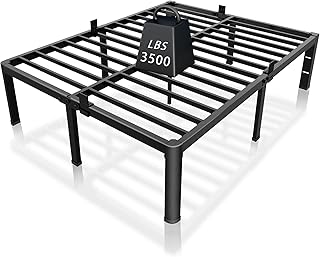
- Load rating with headroom: Add mattress weight, sleeper weight, and bedding, then look for a frame rated well beyond that figure. Steel frames advertising 2,000 pounds or more give you margin; the ROIL model’s 3,500-pound rating is generous for a queen.
- Total sleep height: TEMPUR profiles run 10 to 13 inches. Pair a 13-inch mattress with a 14-inch frame and you’re sitting at 27 inches — high for shorter sleepers. A 12-inch wood platform keeps the stack closer to standard nightstand height.
- Joint design and noise: Foam doesn’t squeak; hardware does. Look for felt or rubber slat sleeves, welded corners rather than bolted butt joints, and locking connectors. Metal-on-metal contact points are where noise begins.
The Best Bed Frame For Tempur Mattress (2026)s Reviewed
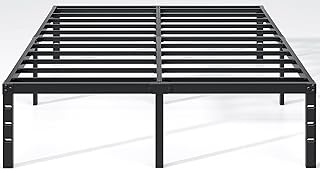
JETO 14 Inch Metal Bed Frame with Storage
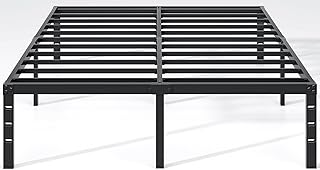
The strongest all-around value here: heavy-gauge steel, closely set slats, and a clean 14-inch clearance that swallows storage bins without looking utilitarian. Assembly is tool-light and the frame stays silent, which matters more than buyers expect once a heavy foam mattress starts absorbing movement.
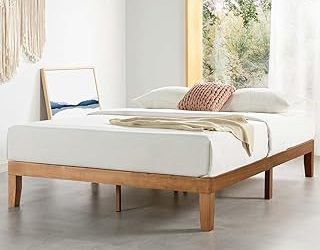
Mellow Naturalista Classic 12 Inch Solid Wood Platform
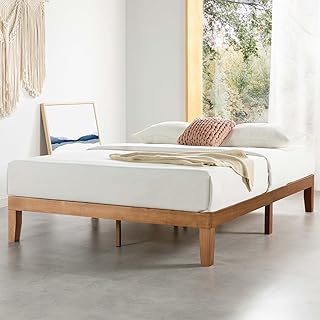
Solid pine with wooden slats and a 12-inch profile — the right choice if you want the mattress to sit at a natural height and prefer wood’s slight give to steel’s rigidity. It reads warmer in a minimal bedroom than any metal frame, and the shorter stature keeps a thick TEMPUR from towering.
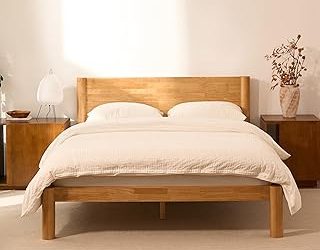
ZINUS Vivek Deluxe Wood Platform Bed
The slatted headboard does real design work, giving an otherwise plain foam mattress a defined visual anchor. Slat support is dependable and the contemporary silhouette suits rooms where the bed is meant to recede rather than announce itself.
Merax Bamboo Platform Bed with Tall Headboard
Bamboo is the sleeper material of this group — dimensionally stable, lighter than hardwood, and genuinely handsome in the warm brown finish. The tall mid-century headboard is the most architectural option here, and the noise-free joinery holds up as the frame ages.
ROIL 14 Inch Bed Frame with Mattress Baffles
The four mattress baffles are the standout detail: they stop a slick foam base from creeping toward the edges, a common annoyance with TEMPUR on bare steel. Add the 3,500-pound rating, rounded corners, and 12.4 inches of usable storage, and this is the most technically thorough pick on the list.
Frequently Asked Questions
Does a TEMPUR mattress need a box spring?
No. Every frame here is a platform design that provides continuous support on its own. A traditional box spring is actually counterproductive, since its coils flex unevenly beneath foam.
Can I use a slatted frame, or does it need to be solid?
Slats are fine as long as spacing stays within about 3 inches and the slats themselves don’t flex. If your frame has wider gaps, a bunkie board or thin plywood sheet closes them without adding meaningful height.
Will a metal frame make my mattress sleep hotter?
The opposite, generally. An open metal platform allows more airflow beneath the mattress than a closed wooden base, which helps dense foam shed heat.
Do these frames work with an adjustable TEMPUR base?
Adjustable bases are self-supporting and typically drop inside a frame rather than sit on slats. Check interior dimensions and slat removability before ordering, and confirm the frame has no fixed center bar in the way.
Final Thoughts
For most buyers, the ROIL 14 Inch frame is the safest match for a TEMPUR mattress — the baffles and load rating address foam-specific problems directly. The JETO Metal Bed Frame is the better value if storage clearance is the priority, and the Merax Bamboo Platform earns its place for anyone who wants the foundation to contribute something to the room’s design rather than disappear under the duvet.