Key takeaways
- Fitment first: These are vehicle-specific builds, not universal boxes. Match year range, model, and bed length exactly — a 5’5″ Tundra unit will not work in a 6’6″ bed, and generation changes matter more than model names.
- Drawers vs. trays: Drawer decks give you lockable, weather-sealed storage plus a flat load floor on top. Slide-out trays and mats keep full bed depth and pull cargo to you at the tailgate. Pick based on whether you haul tools or bulk.
- Payload math: Full systems add roughly 200–230 lbs empty. If you regularly run near your truck’s rated payload with trailers or equipment, subtract that weight before you commit.
- Weather sealing: Look for marine-grade drawer seals and drainage if you park outdoors year-round. Open trays and mats need a tonneau or cap to keep contents dry.
- Install reality: Most quality systems are no-drill, using existing bed anchor points, but expect two people and a couple of hours. Confirm your tonneau, bedliner, and bed lighting stay compatible.
What's inside
A pickup bed is the most under-designed square footage most people own. It’s a big, open, weather-exposed box that swallows tools, groceries, camp gear, and lumber with equal indifference, then rearranges all of it on the first hard left turn. Anyone who has crawled headfirst over a tailgate to fish a socket set out from behind the wheel well understands the problem: the space isn’t lacking capacity, it’s lacking structure.
Bed storage systems solve that with the same logic good interior cabinetry brings to a kitchen — dedicated zones, easy reach, and a surface that stays usable. This guide covers the systems worth installing in 2026, from full sealed drawer decks to slide-out trays and mats, with notes on fitment, payload, and how each one changes the way you actually use the truck.
As an Amazon Associate we earn from qualifying purchases.


How to Choose a Truck Bed Storage Systems (2026)
- Fitment first: These are vehicle-specific builds, not universal boxes. Match year range, model, and bed length exactly — a 5’5″ Tundra unit will not work in a 6’6″ bed, and generation changes matter more than model names.
- Drawers vs. trays: Drawer decks give you lockable, weather-sealed storage plus a flat load floor on top. Slide-out trays and mats keep full bed depth and pull cargo to you at the tailgate. Pick based on whether you haul tools or bulk.
- Payload math: Full systems add roughly 200–230 lbs empty. If you regularly run near your truck’s rated payload with trailers or equipment, subtract that weight before you commit.
- Weather sealing: Look for marine-grade drawer seals and drainage if you park outdoors year-round. Open trays and mats need a tonneau or cap to keep contents dry.
- Install reality: Most quality systems are no-drill, using existing bed anchor points, but expect two people and a couple of hours. Confirm your tonneau, bedliner, and bed lighting stay compatible.
The Best Truck Bed Storage Systems (2026), Reviewed
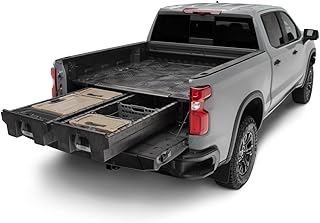
DECKED System for Chevy Silverado & GMC Sierra 2500/3500 (2020–Current), 6’6″
Built for heavy-duty crews who treat the bed as a rolling job site, this version pairs two full-length weatherproof drawers with a deck rated for serious static load above. The 6’6″ footprint gives each drawer real working length, which is where most tool storage compromises usually happen.
DECKED System for Ford F-150 (2015–Current), 6’6″
The most broadly useful configuration in the lineup, thanks to the aluminum-bed F-150’s popularity and generous bed dimensions. Drawers ride on ball-bearing slides and hold their alignment under load, and the flat deck above keeps plywood, coolers, and bikes off drawer hardware entirely.
DECKED System for Toyota Tundra (2022–Current), 5’5″
A smart answer for the short-bed crew cab, where usable length is already tight and organization matters most. You trade some drawer depth for a level deck that makes the short bed feel intentional rather than cramped, and the sealed drawers keep recovery gear and tools protected.
DECKED System for Toyota Tacoma (2005–2023), 5’1″
Overlanders have leaned on this one for years, and the reason is simple: it turns a mid-size bed into a sleeping platform with kitchen and tool storage underneath. Fitment covers two Tacoma generations, so used-truck buyers rarely get left out.
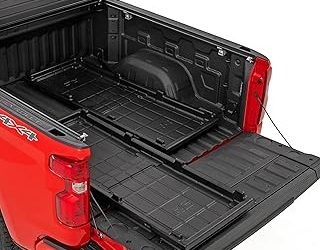
Rough Country Slide-Out Cargo Tray (5’7″+ Beds)
The value pick for anyone who wants easier tailgate access without giving up bed depth or adding drawer weight. Heavy-duty UV-protected polyethylene handles sun and salt well, and the slide action means loading a truck bed no longer requires climbing into it.
Frequently Asked Questions
Will a drawer system work with my tonneau cover?
Usually yes, since the deck sits below the bed rails. Roll-up and folding covers are generally fine; check clearance carefully with retractable canisters and any cover using rail-mounted hardware.
Can I still haul mulch, gravel, or bulk loads?
Not the way you could with an empty bed. A drawer deck sits several inches up and creates a flat floor, so loose bulk material becomes impractical. A slide-out tray or mat like the Tmat organizer preserves full bed depth if bulk hauling is routine.
How secure is the storage?
Drawer systems lock and are weather-sealed, making them a solid deterrent for tools when paired with a locking tonneau. Open trays and mats offer organization, not security.
Does installation void my truck’s warranty?
No-drill systems that use factory bed anchor points don’t affect the powertrain or body warranty. Keep your hardware and documentation, and avoid modifying the bed itself.
Final Thoughts
For most buyers, the DECKED system matched to your truck is the long-term answer — the F-150 6’6″ version is the most versatile of the bunch, and the Tacoma 5’1″ unit remains the go-to for camping and overland builds. If you want better access without adding weight or losing bed depth, the Rough Country slide-out tray delivers most of the practical benefit for a fraction of the investment.