Key takeaways
- Do the guardrail math first: Measure from the top of your slats to the top of the guardrail. Subtract 5 inches — safety guidance calls for at least that much rail standing proud of the finished sleep surface. Whatever’s left is your maximum thickness, and it’s usually 5 to 8 inches, not 10.
- Confirm the footprint, not just the label: A full is 54″ x 75″. Bunk frames are typically built tight to those dimensions, so an oversized or heavily pillowed edge can bind against the rails. Look for a stated size in inches rather than assuming.
- Weight matters more than you’d think: You’ll be lifting this thing over your head at least once, and again on every sheet change. Thinner all-foam builds land in a manageable range; hybrids with coil units run heavier and are better suited to the bottom bunk.
- Pick firmness by sleeper, not by habit: Kids and lighter teens need medium-firm support so a thin profile doesn’t bottom out. Adults on a bottom bunk or daybed generally do better with 8 inches and a hybrid or higher-density foam core.
- Check the certifications and the slat gap: CertiPUR-US foam and fiberglass-free construction are worth insisting on for a child’s room. Also verify slats sit no more than about 3 inches apart, or add a bunkie board — foam telegraphs wide gaps quickly.
What's inside
Full-size bunks have quietly become one of the smartest moves in small-space design — a bottom bunk that actually sleeps a teenager comfortably, a loft bed that frees up an entire wall, a guest setup that doesn’t eat a whole room. The problem shows up at checkout. Almost every mattress marketed today is engineered for a standard platform bed, which means 10, 12, even 14 inches of loft. Drop one of those into a bunk frame and the guardrail disappears beneath the sleeping surface, headroom in the upper berth vanishes, and the whole thing goes from clever to unsafe.
What you actually want is a narrower band of options: full-size mattresses between roughly 5 and 8 inches, light enough to hoist onto an upper bunk without a second person, and firm enough that they don’t sag between slats. This guide covers the models worth considering in 2026, the measurements that determine whether one will work in your frame, and how to match thickness and feel to who’s sleeping there.
As an Amazon Associate we earn from qualifying purchases.


How to Choose a Full-Size Mattress For Bunk Bed (2026)
- Do the guardrail math first: Measure from the top of your slats to the top of the guardrail. Subtract 5 inches — safety guidance calls for at least that much rail standing proud of the finished sleep surface. Whatever’s left is your maximum thickness, and it’s usually 5 to 8 inches, not 10.
- Confirm the footprint, not just the label: A full is 54″ x 75″. Bunk frames are typically built tight to those dimensions, so an oversized or heavily pillowed edge can bind against the rails. Look for a stated size in inches rather than assuming.
- Weight matters more than you’d think: You’ll be lifting this thing over your head at least once, and again on every sheet change. Thinner all-foam builds land in a manageable range; hybrids with coil units run heavier and are better suited to the bottom bunk.
- Pick firmness by sleeper, not by habit: Kids and lighter teens need medium-firm support so a thin profile doesn’t bottom out. Adults on a bottom bunk or daybed generally do better with 8 inches and a hybrid or higher-density foam core.
- Check the certifications and the slat gap: CertiPUR-US foam and fiberglass-free construction are worth insisting on for a child’s room. Also verify slats sit no more than about 3 inches apart, or add a bunkie board — foam telegraphs wide gaps quickly.
The Best Full-Size Mattress For Bunk Bed (2026)s Reviewed
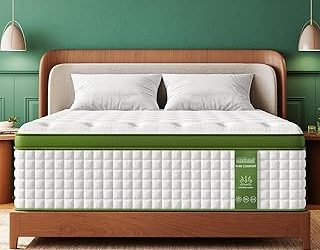
LETMOON Luxury Full Size Mattress, 8 Inch Hybrid
The most substantial pick here that still respects a bunk’s ceiling: 8 inches of gel memory foam over a zoned support layer, tuned to give at the shoulders and hold firm through the hips. Best reserved for a bottom bunk or a full-size loft with generous rails, where its hotel-grade feel and long trial window make it a genuine primary bed rather than a compromise.
MLILY 8 Inch Green Tea Memory Foam
MLILY explicitly builds this one for daybeds and bunks, and the medium-firm all-foam construction shows it — supportive enough for adults, light enough to maneuver. The green tea gel infusion is a real help in upper bunks, where warm air collects near the ceiling.
Dopinmin 5 Inch Gel Memory Foam
When the guardrail math comes back tight, this is the answer. At 5 inches it preserves maximum rail height and headroom while staying medium-firm, which is exactly the right trade for a child or lighter teen in a top bunk.
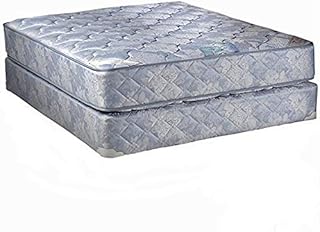
Linenspa 6 Inch Memory Foam, Firm
The dependable, unfussy choice — a firm 6-inch profile that fits most bunk frames without calculation and resists the sagging that plagues softer thin mattresses. A sensible pick for guest rooms and rental setups where durability outranks luxury.
EGOHOME 6 Inch Cooling Green Tea Gel
EGOHOME splits the difference nicely: 6 inches of medium-firm foam with cooling gel and fiberglass-free construction, a detail worth paying attention to in kids’ rooms. It’s the version of the 6-inch category with the most thought given to temperature.
Frequently Asked Questions
How thick can a bunk bed mattress be?
Most manufacturers cap it around 6 inches for upper bunks and 8 inches for lower ones, but your frame is the authority. Measure your rail height and leave 5 inches above the finished surface.
Will a standard full mattress fit a full-size bunk?
Yes, as long as it’s a true 54″ x 75″ and within your thickness limit. The width and length are standard; only the profile changes.
Do I need a box spring or bunkie board?
No box spring — it would blow past your height allowance. A thin bunkie board is worth adding if your slats are widely spaced or flex underfoot.
Are thin mattresses comfortable enough for adults?
An 8-inch hybrid or dense foam model works well for most adults. Below 6 inches, comfort drops off noticeably for heavier sleepers, so keep those profiles for kids and teens.
Final Thoughts
For a bottom bunk or a well-railed loft that needs to sleep an adult, the LETMOON 8 Inch Hybrid and the MLILY Green Tea 8 Inch are the two worth spending on. If your rail height is limited or the mattress is headed to a top bunk for a child, the Dopinmin 5 Inch gives you the safety margin without giving up support.