Key takeaways
- Coil gauge and count: Pocketed springs in the 12–13 gauge range resist compression far better than the thin 15-gauge coils common in budget hybrids. More coils help, but thickness matters more — a 1,000-coil bed with flimsy wire will still bottom out.
- Perimeter reinforcement: Look for a dense foam rail or higher-gauge coils along the edges. This is what keeps the sitting zone usable and stops the mattress from feeling like a hammock with walls.
- Total height, honestly measured: Fourteen inches is the practical floor for sleepers over 250 pounds. Anything under 10 inches leaves too little material between your hip and the foundation, no matter how the layers are marketed.
- Foam density over foam thickness: A three-inch comfort layer at 4 lb/ft³ outlasts a five-inch layer at 2.5 lb/ft³. Density is the number that predicts whether the bed still feels like itself in year four.
- Heat management by design: Deeper compression traps more body heat. Gel infusions help modestly; open coil chambers and breathable covers help more. If you sleep warm, prioritize a hybrid over an all-foam build.
What's inside
Most mattresses are engineered around an assumption nobody says out loud: that the person lying on them weighs somewhere near 160 pounds. Push past that and the math changes. Foam that felt buoyant in the showroom compresses into a trough within a year, coils lose their spring near the hips, and the perimeter — the part you sit on every morning to put your shoes on — rolls away underneath you. The result is a bed that technically works and functionally doesn’t, which is why so many heavier sleepers cycle through three mattresses in five years and blame themselves.
This guide approaches the problem the way I’d approach specifying furniture for a room that has to hold up: by looking at structure first, comfort second. Below are six mattresses that hold their geometry under real load, spanning firm hybrids with reinforced perimeters, cooling foam builds for hot sleepers, and a few genuinely well-made budget options. I’ve flagged what each one is built for, where it compromises, and how to read the spec sheet so you can judge the next mattress you see without my help.
As an Amazon Associate we earn from qualifying purchases.


How to Choose a Mattress For Heavy Person (2026)
- Coil gauge and count: Pocketed springs in the 12–13 gauge range resist compression far better than the thin 15-gauge coils common in budget hybrids. More coils help, but thickness matters more — a 1,000-coil bed with flimsy wire will still bottom out.
- Perimeter reinforcement: Look for a dense foam rail or higher-gauge coils along the edges. This is what keeps the sitting zone usable and stops the mattress from feeling like a hammock with walls.
- Total height, honestly measured: Fourteen inches is the practical floor for sleepers over 250 pounds. Anything under 10 inches leaves too little material between your hip and the foundation, no matter how the layers are marketed.
- Foam density over foam thickness: A three-inch comfort layer at 4 lb/ft³ outlasts a five-inch layer at 2.5 lb/ft³. Density is the number that predicts whether the bed still feels like itself in year four.
- Heat management by design: Deeper compression traps more body heat. Gel infusions help modestly; open coil chambers and breathable covers help more. If you sleep warm, prioritize a hybrid over an all-foam build.
The Best Mattress For Heavy Person (2026)s Reviewed
BedStory 14 Inch Hybrid
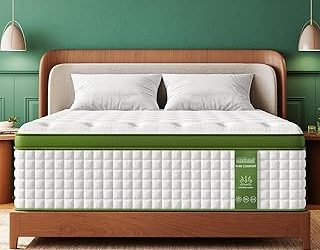
The zoned lumbar band is the real story here — firmer springs concentrated under the midsection, which is exactly where heavier sleepers sink first and wake up sore. At 14 inches with pocketed coils and a decade-long warranty, it’s the most structurally sensible starting point on this list.
Extra Firm 14 Inch Hybrid
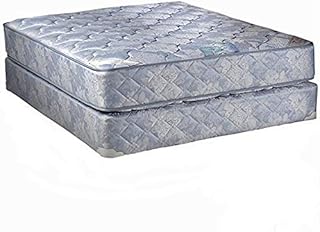
Built with a thickened foam edge that actually earns the name, this one is aimed at couples and seniors who need the perimeter to hold weight without deforming. The extra-firm surface won’t charm anyone looking for plush, but it’s the most confident under sustained load, and it’s fiberglass-free.
Sweetnight CoolNest 14 Inch
A medium-feel memory foam bed that solves the usual foam problem — heat retention — through five-zone support and a deliberately open, breathable construction. Best suited to heavier sleepers who want contouring without the swampy trapped-warmth trade-off, though the softer feel favors those closer to the 250-pound mark than well above it.
Kin by Tuft & Needle Firm 8″
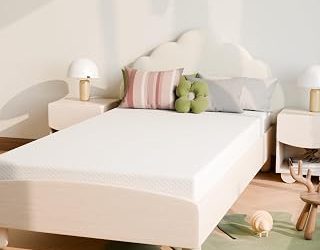
At eight inches this is a supporting player, not a primary bed — think guest rooms, bunk setups, or a firm platform sleeper who wants minimal loft. The adaptive foam is genuinely well-formulated for the price, and the 100-night trial takes the risk out of finding out.
Sealy Dreamlife 14″ Hybrid
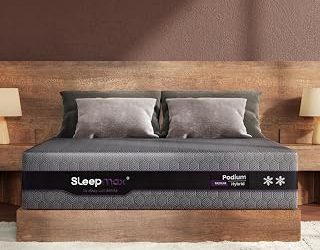
Sealy’s encased coil system paired with gel memory foam gives you a familiar, balanced feel from a manufacturer with real quality control behind it. It’s the safe specification: less specialized than the purpose-built firm hybrids, but reliably consistent across the surface.
Frequently Asked Questions
What firmness works best for heavier sleepers?
Medium-firm to firm. Perceived firmness drops as body weight increases, so a bed labeled firm often lands as medium-firm underneath a heavier sleeper — plan for one step firmer than you’d instinctively choose.
Are hybrids genuinely better than all-foam?
For sleepers above roughly 250 pounds, usually yes. Steel coils resist long-term compression in a way foam can’t match, and the airflow through the coil layer keeps surface temperature down.
Will my existing bed frame handle a 14-inch mattress?
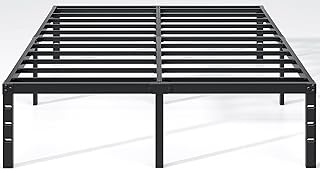
Check slat spacing before anything else — gaps wider than three inches will let the mattress bow between them regardless of quality. Center support legs are non-negotiable on queen sizes and larger.
How long should one of these last?
Six to eight years with proper support, versus the eight to ten a lighter sleeper might see. Rotating head-to-foot every three months meaningfully extends that window.
Final Thoughts
If you want one recommendation, the BedStory 14 Inch Hybrid balances zoned support, real coil structure, and warranty coverage better than anything else here. Choose the Extra Firm 14 Inch Hybrid if edge support and maximum resistance to sagging are your priorities, or the Sweetnight CoolNest if you sleep hot and want contouring foam that doesn’t hold heat against you.