Key takeaways
- Deck height and proportion: A 14-inch platform is the current default for good reason. It clears most storage bins, reads as substantial without dominating the room, and puts the top of a 10 to 12-inch mattress at a comfortable seated height. Lower profiles suit high-ceilinged rooms and thick hybrid mattresses.
- Load rating and joinery: Look for a stated weight capacity rather than vague “heavy duty” language. Steel frames in the 3,000-pound range are genuinely overbuilt for two sleepers, which is exactly what you want. On wood frames, check that legs bolt into a center rail rather than relying on friction fit.
- Slat spacing: Keep gaps under three inches. Wider spacing voids most foam and hybrid mattress warranties and creates the soft, hammock-like dip that people mistake for a worn-out mattress.
- Noise engineering: Squeaks come from metal-on-metal contact and unsecured slats. Frames with rubber or felt padding at joint points, plus slats that lock or strap into place, stay quiet years longer than smooth-tube designs.
- Assembly honesty: Tool-free and folding designs go together in fifteen minutes. Wood platforms with headboards take closer to an hour and benefit from a second set of hands. Neither is better, but knowing which you’ve bought prevents a bad Saturday.
What's inside
A bed frame is the largest piece of furniture most people will ever buy, and it’s also the one they research the least. The mattress gets weeks of comparison; the thing holding it up gets a ten-minute scroll. That mismatch is why so many bedrooms end up with a frame that sags in the third year, telegraphs every movement through the floorboards, or sits at a height that makes the mattress look like it’s floating in the wrong part of the room. Add the persistent confusion around box springs, slat spacing, and warranty fine print, and it’s easy to overpay for something that undercuts the mattress it supports.
This guide approaches the frame as a design decision and a structural one at the same time. Below you’ll find current standout options across the three formats worth your attention in 2026: low-profile steel platforms built for storage and silence, solid wood platforms that bring visible material warmth, and upholstered designs that treat the headboard as the room’s textile anchor. Each pick was assessed for load capacity, slat support, noise behavior, and how honest the assembly process actually is.
As an Amazon Associate we earn from qualifying purchases.


How to Choose a Bed Frame in 2026
- Deck height and proportion: A 14-inch platform is the current default for good reason. It clears most storage bins, reads as substantial without dominating the room, and puts the top of a 10 to 12-inch mattress at a comfortable seated height. Lower profiles suit high-ceilinged rooms and thick hybrid mattresses.
- Load rating and joinery: Look for a stated weight capacity rather than vague “heavy duty” language. Steel frames in the 3,000-pound range are genuinely overbuilt for two sleepers, which is exactly what you want. On wood frames, check that legs bolt into a center rail rather than relying on friction fit.
- Slat spacing: Keep gaps under three inches. Wider spacing voids most foam and hybrid mattress warranties and creates the soft, hammock-like dip that people mistake for a worn-out mattress.
- Noise engineering: Squeaks come from metal-on-metal contact and unsecured slats. Frames with rubber or felt padding at joint points, plus slats that lock or strap into place, stay quiet years longer than smooth-tube designs.
- Assembly honesty: Tool-free and folding designs go together in fifteen minutes. Wood platforms with headboards take closer to an hour and benefit from a second set of hands. Neither is better, but knowing which you’ve bought prevents a bad Saturday.
The Best Bed Frames of 2026, Reviewed
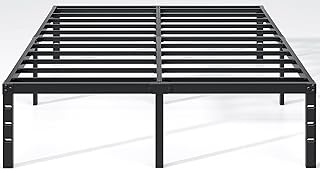
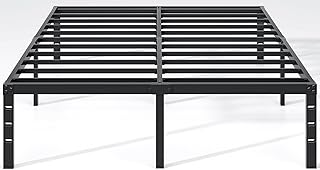
JETO 14-Inch Metal Bed Frame with Storage Space
JETO’s queen platform is the pragmatist’s pick: matte black steel, a full 14 inches of usable underbed clearance, and enough reinforcement in the center rail to sit on the edge without flex. The visual footprint is thin enough that it disappears under a duvet, which makes it a smart base if your bedding is doing the decorative work.
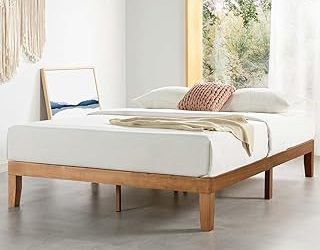
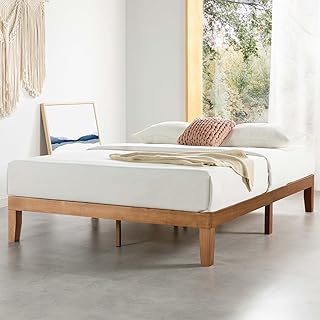
Mellow Naturalista Classic 12-Inch Solid Wood Platform
Real pine, exposed slats, and no upholstery to date itself. The Naturalista Classic is the frame to choose when you want the structure to be part of the room’s material palette rather than hidden beneath it, and the 12-inch height pairs cleanly with thicker mattresses that would sit too tall on a 14-inch deck.
14-Inch Noise-Free Heavy Duty Steel Platform
A 3,500-pound rating on a queen frame is deliberate overengineering, and it shows up as complete stillness under movement. Scratch-resistant feet protect hardwood and engineered flooring, making this the strongest candidate for anyone who has replaced a squeaking frame before and doesn’t want to do it again.
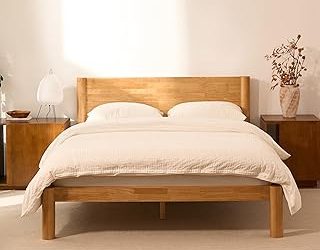
ZINUS Vivek Deluxe Wood Platform Bed
The Vivek Deluxe solves the headboard problem without committing to fabric: slatted wood that echoes the frame’s own construction, in a restrained contemporary profile that works in small rooms. Slat support is close-spaced and warranty-safe for foam mattresses.
GRUSIGN Velvet Upholstered Platform Bed
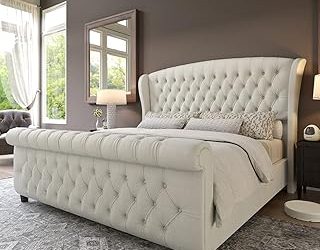
This is the softest option here in every sense, with a beige velvet headboard that adds texture where a room may be short on it. The adjustable-height slat system is the underrated feature, letting you run it as a true platform or drop the deck to accommodate a box spring.
Frequently Asked Questions
Do I still need a box spring?
Not with any of these frames. Every pick uses close-spaced slats or a steel deck that provides the flat, ventilated support foam, latex, and hybrid mattresses require. Box springs are only relevant if you own an older innerspring mattress designed for one.
Is metal or wood the better long-term investment?
Steel wins on load capacity and price; wood wins on repairability and appearance as it ages. If the frame will be visible, choose wood. If it lives under bedding and above storage, steel is the more efficient purchase.
How do I stop an existing frame from squeaking?
Tighten every bolt in sequence, then add felt pads or rubber washers at metal-to-metal contact points and secure loose slats with fabric straps. If the noise originates from the center support rather than the joints, the frame is flexing and no amount of tightening will fix it.
What’s the smartest choice for a guest room?
A folding metal platform like the Amazon Basics frame, which sets up without tools and collapses flat for storage between visits while still offering full underbed space.
Final Thoughts
For most bedrooms in 2026, the Mellow Naturalista Classic is the pick that will still look intentional in a decade, thanks to solid pine and a design that doesn’t chase a trend. If you’d rather put your budget toward the mattress and use the frame as invisible infrastructure, the JETO 14-inch steel platform delivers serious rigidity and generous storage clearance for very little. And when a headboard is non-negotiable, the ZINUS Vivek Deluxe threads the needle between presence and restraint better than anything else at its price.