Key takeaways
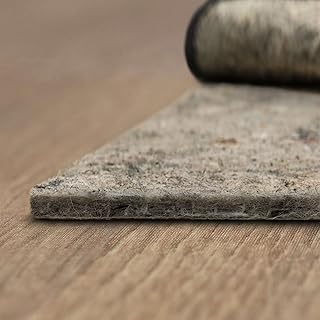
- Construction: Felt-and-rubber pads are the benchmark for wood. Recycled felt supplies cushion and body while natural rubber grips without migrating into the finish. Skip anything described as PVC, vinyl, or adhesive-backed.
- Thickness: A quarter inch is the sweet spot for living and dining rooms. Go thinner in doorways and under low-clearance furniture; anything thicker under a thin rug creates a spongy, unstable feel underfoot.
- Grip style: Continuous rubber sheets hold heavy wool and jute best. Silicone dot or strip patterns work well under lighter machine-woven rugs and breathe more freely, which matters on floors that see seasonal humidity swings.
- Sizing: Order the pad to match your rug, then trim one inch in from each edge with a utility knife. That slight setback lets the rug taper cleanly instead of forming a visible ridge.
- Room use: Match density to traffic. Entryways and hallways need firm, low-profile grip; bedrooms and reading corners are where a plush felt layer earns its keep.
What's inside
Hardwood is the one surface in a home that rewards restraint and punishes shortcuts. A beautiful flatweave slides three inches every time someone crosses the room, corners curl into trip hazards, and the cheap plastic mesh you bought to fix it leaves a faint waffle pattern baked into the finish six months later. The failure is rarely the rug. It’s the two millimeters of material nobody sees.
This guide looks at rug pads through the lens of how sealed wood actually behaves: it expands, it breathes, and it reacts badly to adhesives and plasticizers. Below are the pads worth putting under a rug you care about, plus a short framework for matching thickness, grip style, and construction to your floor and your rug’s weight.
As an Amazon Associate we earn from qualifying purchases.



How to Choose a Rug Pad For Hardwood Floors (2026)
- Construction: Felt-and-rubber pads are the benchmark for wood. Recycled felt supplies cushion and body while natural rubber grips without migrating into the finish. Skip anything described as PVC, vinyl, or adhesive-backed.
- Thickness: A quarter inch is the sweet spot for living and dining rooms. Go thinner in doorways and under low-clearance furniture; anything thicker under a thin rug creates a spongy, unstable feel underfoot.
- Grip style: Continuous rubber sheets hold heavy wool and jute best. Silicone dot or strip patterns work well under lighter machine-woven rugs and breathe more freely, which matters on floors that see seasonal humidity swings.
- Sizing: Order the pad to match your rug, then trim one inch in from each edge with a utility knife. That slight setback lets the rug taper cleanly instead of forming a visible ridge.
- Room use: Match density to traffic. Entryways and hallways need firm, low-profile grip; bedrooms and reading corners are where a plush felt layer earns its keep.
The Best Rug Pads For Hardwood Floors (2026) Reviewed
RUGPADUSA Dual Surface 8’x10′ Felt + Rubber
This is the pad interior installers reach for: dense recycled felt bonded to natural rubber, with no glues or synthetic backings that can react with polyurethane. It’s the safest long-term choice for a finished floor and the most convincing under heavy wool, though the tradeoff is weight—wrestling an 8×10 into position is genuinely a two-person job.
Mohawk Home Non Slip Rug Pad 8′ x 10′
A quarter-inch felt and latex rubber build made in the USA, and the most balanced dual-surface option here since it performs nearly as well over low-pile carpet as it does on wood. Cushioning is substantial without lifting the rug high enough to catch a door sweep.
Veken Cushioned Rug Pad Gripper 8 x 10 Ft
Veken’s felt pad uses distributed silicone strips instead of a solid rubber sheet, which keeps the pad breathable and makes it easy to reposition during styling. It’s the practical pick for mid-weight machine-woven rugs in rooms you rearrange often, and it cuts cleanly with household scissors.
GORILLA GRIP Strong Rug Pad Gripper 2×3 FT
For runners, entry mats, and small accent rugs, this low-profile gripper solves the sliding problem without adding noticeable height. Grip is aggressive on sealed hardwood and tile—just plan on a periodic rinse, since the tackiness dulls as dust collects.
Jorvila Non-Slip Rug Pad Gripper 8×10
A thick cushioned option at a friendlier price, with enough loft to soften a thin flatweave and keep it anchored in a moderate-traffic room. Best suited to bedrooms and studies rather than dining rooms, where chair legs demand a denser felt core.
Frequently Asked Questions
Can a rug pad damage a hardwood finish?
The wrong one can. PVC, vinyl, and adhesive-backed pads contain plasticizers that soften over time and can cloud or imprint a polyurethane surface. Natural rubber and felt constructions are inert by comparison and are what flooring manufacturers typically endorse.
What thickness should I choose?
Quarter inch handles most rooms. Drop to an eighth inch for entryways, under interior doors, and beneath furniture with limited clearance, and reserve thicker felt for bedrooms where cushioning matters more than a low profile.
Should the pad be smaller than the rug?
Yes—about an inch shorter on every side. This keeps the pad invisible, prevents edge curl, and lets the rug’s border lie flat instead of tenting over a hard perimeter.
How often should a rug pad be replaced?
A quality felt-and-rubber pad often lasts a decade. Replace sooner if the felt compresses permanently, the rubber turns chalky or brittle, or the rug starts creeping again despite a clean floor.
Final Thoughts
If the rug is an investment piece and the floor is newly finished, the RUGPADUSA Dual Surface is the pad to buy and forget about. The Mohawk Home pad is the smartest all-rounder for households that move rugs between wood and carpet, while the Veken 8×10 offers most of that performance in a lighter, easier-to-handle format for everyday rooms.