Key takeaways
- Load rating, read skeptically: A 3,500 lb figure is a static test, not a nightly guarantee. Cross-check it against gauge of steel, number of legs, and whether the center rail is welded or clipped in.
- Slat spacing under 3 inches: Wide gaps let foam and hybrid mattresses sag between supports, which voids most warranties. Tight, full-width steel slats spread pressure evenly and keep the mattress surface honest.
- Leg count and footprint: Look for nine or more legs on a queen, with wide feet or floor pads. Narrow posts punch through carpet padding and mark hardwood under sustained weight.
- Joinery over quantity of parts: Interlocking or bolted steel joints stay tight; friction-fit connections loosen and are the usual source of squeak. Rounded corner legs are a genuine shin-saver in tighter rooms.
- Clearance you’ll actually use: Around 12 inches of under-bed space fits standard bins and luggage. Taller frames raise seat height, which many people find easier on knees and hips.
What's inside
Most bed frames are engineered to a price, not to a load. That gap shows up fast: a slat cracks in month four, a center leg sinks into carpet, and every shift in the night comes with a metallic complaint that wakes both sleepers. For anyone above roughly 250 pounds, or for couples whose combined weight clears 400, the frame stops being a background object and becomes the single component that decides whether a good mattress performs or slowly collapses into a hammock.
This guide looks at bed frames built around real structural math: welded or bolted steel, closely spaced slats, and enough vertical legs to distribute load instead of concentrating it. Every pick below is a queen platform that skips the box spring entirely, which lowers the total number of failure points under you. I’ve weighed stated load ratings against build details that actually support those numbers, plus the quieter considerations that matter in a bedroom you have to live in, like leg finish, storage clearance, and whether assembly is a twenty-minute job or an evening lost.
As an Amazon Associate we earn from qualifying purchases.



How to Choose a Bed Frame For Heavy People (2026)
- Load rating, read skeptically: A 3,500 lb figure is a static test, not a nightly guarantee. Cross-check it against gauge of steel, number of legs, and whether the center rail is welded or clipped in.
- Slat spacing under 3 inches: Wide gaps let foam and hybrid mattresses sag between supports, which voids most warranties. Tight, full-width steel slats spread pressure evenly and keep the mattress surface honest.
- Leg count and footprint: Look for nine or more legs on a queen, with wide feet or floor pads. Narrow posts punch through carpet padding and mark hardwood under sustained weight.
- Joinery over quantity of parts: Interlocking or bolted steel joints stay tight; friction-fit connections loosen and are the usual source of squeak. Rounded corner legs are a genuine shin-saver in tighter rooms.
- Clearance you’ll actually use: Around 12 inches of under-bed space fits standard bins and luggage. Taller frames raise seat height, which many people find easier on knees and hips.
The Best Bed Frame For Heavy People (2026)s Reviewed
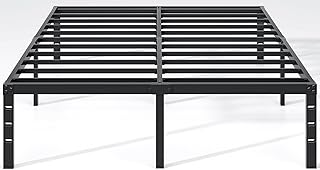
ROIL 14 Inch Queen Bed Frame
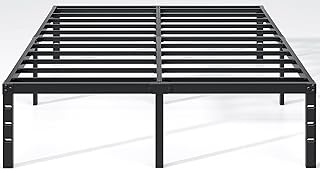
The strongest all-round case here: a 3,500 lb rating backed by heavy-gauge steel, four mattress baffles that stop nightly creep, and a headboard hole for people who want to add a proper board later. Rounded corners and a noise-free joint design make it feel considered rather than merely strong.
MAF 14 Inch Queen Metal Platform Bed Frame
A 3,000 lb steel slat system with round corner legs and 12.4 inches of clearance, which is the sweet spot for storage bins. Assembly is genuinely quick, and the baffle edges keep the mattress squared without a footboard.
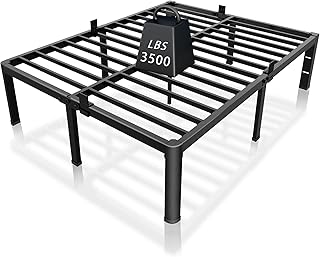
Queen Bed Frame, 14 Inch Heavy Duty Steel Platform
Straightforward, no-frills engineering: 3,500 lb capacity and scratch-proof feet that matter more than they sound on hardwood or luxury vinyl. Pick this if you want structural performance without paying for design details you’ll cover with a duvet anyway.
NEW JETO Metal Bed Frame with Storage Space
A clean 14-inch black steel platform aimed at people who want the under-bed volume to be usable, not theoretical. The finish reads more matte and architectural than most budget metal frames, which helps it disappear in a minimal room.
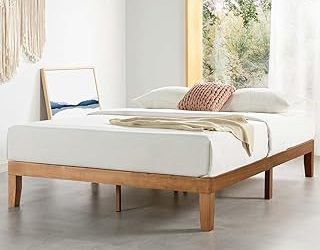
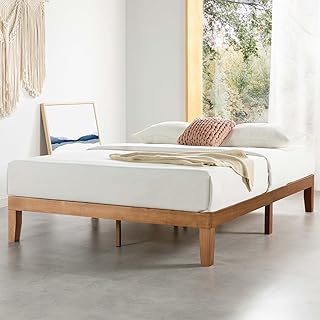
Mellow Naturalista Classic Solid Wood Platform
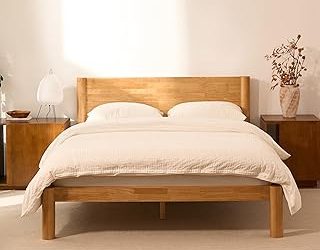
The choice for anyone who doesn’t want metal in the bedroom. Solid pine with wooden slats brings warmth and a lower 12-inch profile, though its capacity sits below the steel options, so check the rating against your combined weight before committing.
Frequently Asked Questions
Do I still need a box spring?
No. Every frame here is a platform with integrated slat support, which is structurally better for heavy sleepers than a mattress-on-box-spring stack. Adding a box spring on top just raises the bed and reintroduces a weak layer.
Will a heavy-duty frame stop the squeaking?
Usually, yes, because squeak comes from movement at joints rather than from weight itself. Frames with interlocking or bolted connections and full-width slats are quiet; retighten hardware after the first few weeks as everything settles.
Is metal always better than wood for higher weights?
For raw capacity, yes. Steel frames here rate 3,000 to 3,500 lb, while solid wood platforms typically sit lower. Wood wins on warmth and aesthetics, so it’s a tradeoff rather than a rule.
How much under-bed clearance do these give?
The 14-inch models deliver roughly 12.4 inches of usable space, enough for standard storage containers and carry-on luggage. The 12-inch wood option sits lower and suits rooms where visual weight matters more than storage.
Final Thoughts
For most buyers, the ROIL 14 Inch Queen is the pick to beat: the highest capacity here, paired with baffles and rounded legs that solve real bedroom problems rather than spec-sheet ones. The MAF 14 Inch Queen is the value alternative with nearly the same footprint and clearance, and the Mellow Naturalista Classic is the one to choose if you want solid wood and can live within its lower load rating.