Key takeaways
- Automatic vs. manual operation: True automatic models handle solution mixing and dispensing with a single trigger, so your wash and dry passes stay consistent. Manual shampooers leave ratio and timing to you, which is where most over-wetting happens.
- Tank layout: Look for fully separate clean and recovery tanks that lift out independently. Emptying dirty water without contaminating the fresh side matters more on a large job than any spec on the box.
- Brush design and drying power: Counter-rotating or spinning brush rows lift matted fibers instead of just wetting them. Heated airflow on the recovery pass meaningfully shortens dry time, which is what keeps damp carpet from smelling musty.
- Attachments you’ll actually reach for: A spot wand or upholstery tool turns a carpet machine into a stair, sofa, and car-seat cleaner. If your square footage is mostly furniture, weight this heavily.
- Weight, cord, and storage: These machines live in a closet, not on display. Check hose reach, cord length, and whether the unit stands upright in a 24-inch space before you commit.
What's inside
Wall-to-wall wool, a jute runner in the entry, a low-pile Berber in the media room — soft flooring does more for a room’s acoustics and warmth than almost any other material choice. The catch is that carpet holds a record of everything that happens on top of it: a spilled negroni, a dog that came in through the garden, the slow gray haze that settles into traffic lanes and makes a once-crisp neutral read as dingy. Rental machines are awkward and unpredictable, and professional extraction gets expensive fast when you’re doing it twice a year.
An automatic carpet cleaner solves that by handling the fussy part for you: it mixes water and solution at the correct ratio, lays it down, agitates, and recovers the dirty water in a controlled pass. This guide looks at the machines worth owning in 2026, what separates a genuinely automatic unit from a manual shampooer, and which model fits a pet-heavy household versus a mostly-tidy apartment.
As an Amazon Associate we earn from qualifying purchases.


How to Choose an Automatic Carpet Cleaner (2026)
- Automatic vs. manual operation: True automatic models handle solution mixing and dispensing with a single trigger, so your wash and dry passes stay consistent. Manual shampooers leave ratio and timing to you, which is where most over-wetting happens.
- Tank layout: Look for fully separate clean and recovery tanks that lift out independently. Emptying dirty water without contaminating the fresh side matters more on a large job than any spec on the box.
- Brush design and drying power: Counter-rotating or spinning brush rows lift matted fibers instead of just wetting them. Heated airflow on the recovery pass meaningfully shortens dry time, which is what keeps damp carpet from smelling musty.
- Attachments you’ll actually reach for: A spot wand or upholstery tool turns a carpet machine into a stair, sofa, and car-seat cleaner. If your square footage is mostly furniture, weight this heavily.
- Weight, cord, and storage: These machines live in a closet, not on display. Check hose reach, cord length, and whether the unit stands upright in a 24-inch space before you commit.
The Best Automatic Carpet Cleaners of 2026, Reviewed
Hoover SmartWash+ Automatic Carpet Cleaner
The reference point for the category: push forward to clean, pull back to dry, and the machine manages the solution ratio itself, which makes it nearly impossible to soak a rug by accident. It’s the pick for anyone who wants whole-room results without learning a technique.
Hoover SmartWash Pet with Spot Chaser Wand
Same automatic platform, plus a pretreat wand that lets you attack a fresh accident on the spot instead of hauling out the full machine. If you share your floors with animals, the wand alone justifies the step up.
Hoover SmartWash+ with Everyday Carpet Cleaner Solution
The FH52000 bundled with a 64 oz bottle of Hoover’s everyday formula — a sensible way to start, since you’ll need solution on day one regardless. Best value if you’re buying your first machine rather than replacing one.
Hoover PowerScrub Deluxe Carpet Cleaner
SpinScrub brush rows and HeatForce drying make this the most aggressive option here on ground-in traffic lanes, and the included pet and upholstery tools extend it to stairs and sofas. Expect to control your own passes; it rewards a bit of technique.
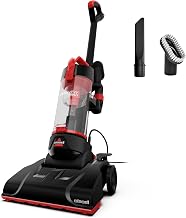
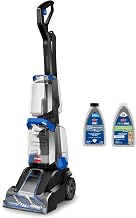
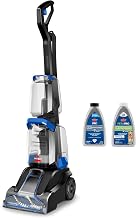
BISSELL TurboClean Upright Carpet Cleaner
Lighter and more compact than the Hoover uprights, and it ships with an OXY formula plus urine eliminator, so it handles apartment-scale messes without dominating a closet. The smartest choice for smaller homes and second floors.
Frequently Asked Questions
How often should I deep clean carpet?
Every 12 to 18 months for low-traffic rooms, and every three to six months in entryways, playrooms, or any space with pets. Regular vacuuming does the heavy lifting between extractions.
Is a renewed machine worth considering?
A renewed SmartWash FH52000 can be a solid way into the platform at a lower cost, provided it’s covered by a return guarantee. Inspect the tanks and brush roll on arrival.
Can I use these on wool or natural-fiber rugs?
Be cautious. Wool, sisal, and jute react badly to saturation and to some detergents — spot-test an inconspicuous corner, or leave heirloom rugs to a specialist.
How long does carpet take to dry?
Usually two to six hours with adequate airflow. Open windows, run ceiling fans, and make several dry-only passes to pull out residual moisture.
Final Thoughts
For most homes, the Hoover SmartWash+ remains the easiest path to a professional-looking result, and the SmartWash Pet version is the obvious upgrade if animals set the pace in your house. If you’re working with tighter square footage or a walk-up, the BISSELL TurboClean delivers most of the benefit in a package you’ll actually be willing to carry upstairs.