Key takeaways
- Capacity versus footprint: Anything in the 24 to 28 quart range will take a 12-inch pizza and a small rotisserie chicken, but depth is the number to measure. Check clearance beneath upper cabinets and confirm the doors clear your backsplash outlet.
- Door mechanism: Look for a single-pull design where one handle opens both panels. Independent doors look sharp but slow you down mid-cook, and dual-zone models sometimes use them deliberately to keep heat in one side.
- Interior finish: Porcelain or enamel interiors wipe clean and hold up to grease better than bare stainless, which is worth prioritizing if you plan to air fry more than a couple of times a week.
- Fan control: Adjustable or dual-speed convection is the difference between crisp fries and blown-off breading. A low setting also matters for proofing dough and dehydrating fruit.
- Preset depth versus manual control: Ten well-tuned functions with clear temperature and time dials beat twenty presets buried in a touch panel. Decide whether you want to cook by menu or by instinct.
What's inside
A countertop oven is one of the few appliances that lives permanently in the open, which makes it as much a design decision as a cooking one. The trouble is that most air fryer toaster ovens still swing a single heavy door straight out into your workspace, forcing you to reach over hot glass and sacrifice a foot of prep surface every time you check on dinner. In a galley kitchen or on an island where sightlines matter, that single detail is enough to make an otherwise capable machine feel like clutter.
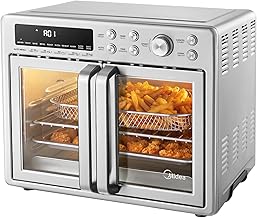
French door models solve the problem elegantly: two slim panels split from the center, often on a single-pull mechanism, so the opening stays tight to the cabinet face and the front reads like a small wall oven rather than an appliance. This guide looks at the 2026 field with an eye on both performance and presence, covering capacity, interior finishes, fan control, and the rotisserie and dehydrate functions that justify giving up the counter space in the first place.
As an Amazon Associate we earn from qualifying purchases.




🛒 Best Price Today on Amazon
Prime members get fast, free shipping on everything above, plus member-only deals. New members get a 30-day free trial — cancel anytime.
How to Choose a French Door Air Fryer Toaster Oven (2026)
- Capacity versus footprint: Anything in the 24 to 28 quart range will take a 12-inch pizza and a small rotisserie chicken, but depth is the number to measure. Check clearance beneath upper cabinets and confirm the doors clear your backsplash outlet.
- Door mechanism: Look for a single-pull design where one handle opens both panels. Independent doors look sharp but slow you down mid-cook, and dual-zone models sometimes use them deliberately to keep heat in one side.
- Interior finish: Porcelain or enamel interiors wipe clean and hold up to grease better than bare stainless, which is worth prioritizing if you plan to air fry more than a couple of times a week.
- Fan control: Adjustable or dual-speed convection is the difference between crisp fries and blown-off breading. A low setting also matters for proofing dough and dehydrating fruit.
- Preset depth versus manual control: Ten well-tuned functions with clear temperature and time dials beat twenty presets buried in a touch panel. Decide whether you want to cook by menu or by instinct.
The Best French Door Air Fryer Toaster Oven (2026)s Reviewed
Emeril Lagasse 26QT French Door Air Fryer Oven
Still the most complete package in the category, pairing 26 quarts of usable space with 24 functions and a dual-speed fan that gives you genuine control over crisping. The rotisserie spit is the standout: it comes up to speed quickly and handles a full bird without crowding the heating elements.
Midea Flexify Pro 26.4QT
The most refined-looking option here, with a brushed stainless face, restrained control layout, and an easy-clean enamel interior that shrugs off splatter. Precision heat management keeps roasts even from edge to edge, which is where cheaper convection ovens usually stumble.
Midea Flexify Classic 26.4QT
Essentially the Pro’s practical sibling: same generous 26.4-quart cavity and ten-in-one function set, minus the premium interior and upgraded controls. Midea’s claim of faster cooking with far less oil holds up in practice, and it’s the smarter buy if the enamel lining isn’t a priority.
HotKing Dual-Zone 28QT XL Convection Oven
The largest cavity in the group and the only true dual-zone design, letting you run two temperatures at once for a main and a side. The 500°F broil setting is unusually aggressive for a countertop unit, and the non-toxic stainless build feels appropriately overengineered.
OSTBA 24QT 10-in-1 French Door Oven
A well-judged value pick with 1700W of heating, adjustable fan speed, and a rotisserie kit that undercuts far pricier ovens. The slightly smaller 24-quart cavity suits couples and compact kitchens, and the removable crumb tray makes weekly cleanup a two-minute job.
Frequently Asked Questions
Do French doors actually cook differently?
No, the cooking chamber and elements are what matter. The benefit is ergonomic and spatial: less heat in your face, less counter lost to a swinging door, and easier access to the middle rack.
What if I don’t have room for a 26-quart oven?
The Gourmia 6-slice French door model is the sensible step down, with FryForce 360° convection and 17 presets in a much shallower body. It handles toast, wings, and small trays without dominating the counter.
Can these replace a full-size oven?
For weeknight cooking, largely yes. They preheat in minutes and roast well, but a sheet pan of holiday vegetables or a two-layer cake will still want the range.
How much maintenance do they need?
Empty the crumb tray weekly and wipe the interior after any air-fry session. Enamel-lined models like the Flexify Pro tolerate neglect better than bare stainless.
Final Thoughts
The Emeril Lagasse 26QT remains the best all-rounder for households that want rotisserie and real fan control, while the Midea Flexify Pro is the pick if the oven has to look intentional on an open counter. Choose the HotKing 28QT if cooking two dishes at two temperatures is worth the extra depth.