Key takeaways
- Comfort layer depth: Look for at least 3 to 4 inches of memory foam or soft transition foam above the support core. Anything thinner and your shoulder bottoms out onto the springs or base foam before it has finished sinking — which is exactly where the ache comes from. Total profiles in the 12 to 14 inch range give designers the room to stack layers properly.
- Medium feel, not firm: Side sleepers with shoulder pain almost always overcorrect toward firm, believing firmness equals support. It doesn’t. Aim for a medium or medium-soft feel around 5 to 6.5 on the ten-point scale, and let the support core handle alignment rather than the surface.
- Zoned construction: Five-zone foam profiling or individually pocketed coil banks let the mattress soften under the shoulder while staying firm under the hips and lumbar. This is the single most effective feature for shoulder relief, and it’s now common at mid-tier prices.
- Heat management: Deep-contouring foam traps heat, and heat makes joint inflammation feel worse. Prioritize gel infusions, open-cell foam, breathable covers, or hybrid coil layers that keep air moving through the core.
- A long, honest trial window: Shoulder pain takes three to six weeks to respond to a new surface, because the joint has to unlearn old compensations. A 365-night trial isn’t marketing fluff here — it’s the minimum window to know whether a mattress is genuinely working. Verify the return process is free and doesn’t require the original packaging.
What's inside
Side sleeping is the most popular position in the world, and it’s also the one that punishes a mattress the hardest. All of your body weight funnels into two narrow contact zones — the shoulder and the hip — and if the surface underneath refuses to yield, the shoulder joint gets compressed against the mattress for six or seven hours straight. The result is that familiar morning ache in the rotator cuff, the numb arm, the 3 a.m. flip to the other side that never quite fixes anything. Most people blame their pillow. Usually it’s the mattress.
What a shoulder-friendly bed actually needs is a two-layer conversation: a comfort layer soft enough to let the shoulder sink below the surface plane, paired with a support core firm enough to keep the lumbar spine from bowing. Get that balance wrong in either direction and the pain stays. Below are six mattresses that get the geometry right, followed by the buying criteria I use when specifying beds for clients with joint sensitivity — plus reviews of the standout options for 2026.
As an Amazon Associate we earn from qualifying purchases.


How to Choose a Mattress For Side Sleepers With Shoulder Pain (2026)
- Comfort layer depth: Look for at least 3 to 4 inches of memory foam or soft transition foam above the support core. Anything thinner and your shoulder bottoms out onto the springs or base foam before it has finished sinking — which is exactly where the ache comes from. Total profiles in the 12 to 14 inch range give designers the room to stack layers properly.
- Medium feel, not firm: Side sleepers with shoulder pain almost always overcorrect toward firm, believing firmness equals support. It doesn’t. Aim for a medium or medium-soft feel around 5 to 6.5 on the ten-point scale, and let the support core handle alignment rather than the surface.
- Zoned construction: Five-zone foam profiling or individually pocketed coil banks let the mattress soften under the shoulder while staying firm under the hips and lumbar. This is the single most effective feature for shoulder relief, and it’s now common at mid-tier prices.
- Heat management: Deep-contouring foam traps heat, and heat makes joint inflammation feel worse. Prioritize gel infusions, open-cell foam, breathable covers, or hybrid coil layers that keep air moving through the core.
- A long, honest trial window: Shoulder pain takes three to six weeks to respond to a new surface, because the joint has to unlearn old compensations. A 365-night trial isn’t marketing fluff here — it’s the minimum window to know whether a mattress is genuinely working. Verify the return process is free and doesn’t require the original packaging.
The Best Mattress For Side Sleepers With Shoulder Pain (2026)s Reviewed
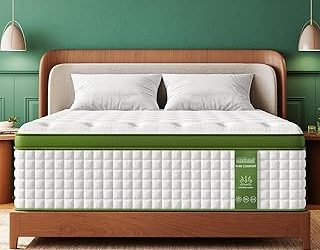
Sleepmax 14″ Cooling Hybrid Queen
This is the most complete package on the list for shoulder-sensitive side sleepers: a genuinely plush top section over a pocketed coil core, so the shoulder drops in while the waist stays lifted. The 365-night trial and forever warranty make it a low-risk bet if you’re unsure whether foam or hybrid suits you better.
Nectar 12″ Memory Foam Queen
Nectar’s medium-firm build is the classic slow-response memory foam experience — deep, cradling contour that spreads shoulder pressure across a wide surface rather than a single point. Best suited to lighter and average-weight sleepers, since heavier bodies may want the extra pushback of a coil core.
Sweetnight CoolNest 14″ King
The five-zone ergonomic profiling is the headline here, and it’s the right feature for this problem: softer foam density mapped to the shoulder region, firmer through the midsection. Combined with strong breathability and CertiPUR-US certified foams, it’s a smart pick for warm sleepers who need contour without the heat penalty.
Sealy Dreamlife 14″ Foam King
Sealy’s gel memory foam over a dedicated transition layer produces a more responsive, less sinking feel than pure memory foam — easier to change position on, which matters if you shift sides through the night. The brand pedigree and consistent quality control make this the conservative choice.
Luxury Hotel 14″ Zoned Pocket Spring Queen
Explicitly engineered with reinforced hip, shoulder, and lumbar zones, this hybrid delivers a hotel-plush surface over independent pocketed springs that limit motion transfer between partners. Fiberglass-free construction and a year-long trial round out a strong value proposition.
Frequently Asked Questions
Should side sleepers with shoulder pain choose soft or firm?
Medium to medium-soft. The shoulder needs to sink below the surface plane to decompress the joint, which a firm mattress prevents. Support should come from the core layers underneath, not from a hard surface.
Is memory foam or hybrid better for shoulder pain?
Both work. Memory foam offers deeper pressure redistribution; hybrids offer better airflow, easier repositioning, and stronger edge support. If you sleep hot or share the bed, lean hybrid.
How long before my shoulder pain improves?
Expect three to six weeks. Your body needs time to release the muscular compensations built up on your old mattress, and new foam needs time to break in. Judge results at the end of that window, not the first week.
Does my pillow matter as much as my mattress?
It matters a great deal, and the two work as a system. Once the mattress lets your shoulder sink, you’ll usually need a slightly lower pillow loft to keep your neck neutral. Reassess pillow height after the new mattress arrives.
Final Thoughts
If you want one recommendation to act on, the Sleepmax 14″ Cooling Hybrid is the strongest all-around choice — it balances deep shoulder contour with real spinal support and backs it with the longest trial here. The Sweetnight CoolNest is the pick for hot sleepers who need zoned relief, and the Nectar 12″ remains the benchmark for anyone who simply wants classic, enveloping memory foam pressure relief.