Key takeaways
- Backing material: Look for jute, cotton, or a woven non-slip weave rather than solid rubber or heavy latex. Non-breathable backings hold humidity against sealed wood and can discolor the finish over time.
- Pile height: Anything under about half an inch lays flatter, resists curling at the corners, and clears door swings and dining chairs. Low pile also lets you vacuum grit out instead of grinding it in.
- Weight and washability: A machine-washable rug is only useful if you can physically get it to the machine. Lightweight, foldable 8x10s are worth prioritizing in homes with kids or pets.
- Size and placement: In living rooms, aim for the front legs of all seating to land on the rug. Under a dining table, add roughly 24 inches past the table edge so chairs stay on the rug when pulled out.
- Pad compatibility: Even a grippy rug benefits from a felt or felt-rubber pad. It cushions impact, adds airflow underneath, and stops micro-movement that dulls a finish.
What's inside
Hardwood is the one floor people are genuinely protective of. It scratches, it dents, it telegraphs every grain of grit dragged across it, and the refinishing bill is not small. So the rug you put on top has a second job beyond looking good: it has to sit still, breathe, and never trap moisture or abrasive backing against the boards. Plenty of rugs fail quietly at that. Latex-heavy backings can leave a haze or a sticky residue after a few humid summers, thick shag traps dust that grinds underfoot, and anything that slides becomes a daily hazard on a slick finish.
This guide focuses on rugs that actually suit wood: low-pile constructions that lay flat without a fight, non-slip designs that grip without gumming up the finish, and washable options for households where spills are a matter of when. Below you’ll find our current picks, the specs worth checking before you commit, and answers to the questions that come up most once a rug is unrolled in a real room.
As an Amazon Associate we earn from qualifying purchases.



How to Choose a/an Area Rug For Hardwood Floors (2026)
- Backing material: Look for jute, cotton, or a woven non-slip weave rather than solid rubber or heavy latex. Non-breathable backings hold humidity against sealed wood and can discolor the finish over time.
- Pile height: Anything under about half an inch lays flatter, resists curling at the corners, and clears door swings and dining chairs. Low pile also lets you vacuum grit out instead of grinding it in.
- Weight and washability: A machine-washable rug is only useful if you can physically get it to the machine. Lightweight, foldable 8x10s are worth prioritizing in homes with kids or pets.
- Size and placement: In living rooms, aim for the front legs of all seating to land on the rug. Under a dining table, add roughly 24 inches past the table edge so chairs stay on the rug when pulled out.
- Pad compatibility: Even a grippy rug benefits from a felt or felt-rubber pad. It cushions impact, adds airflow underneath, and stops micro-movement that dulls a finish.
The Best Area Rug For Hardwood Floors (2026)s Reviewed
UERMEI 8×10 Washable Abstract Rug
The brown-grey abstract pattern is a smart choice over wood because it echoes the tonal variation already in the grain rather than competing with it. Thin, washable, and genuinely low-profile, it’s a strong pick for open-plan spaces where the rug has to transition under a dining table without catching chair legs.
8×10 Beige Washable Low Pile Rug
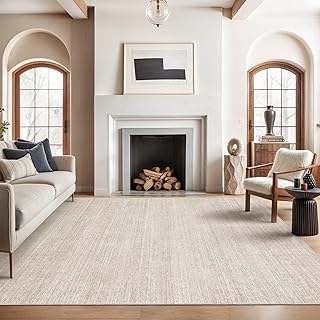
A clean, quiet neutral that works when the floor is the feature and the rug is meant to soften rather than steal attention. The foldable, lightweight build makes it one of the more realistic options to actually wash on a schedule, and the stain-resistant surface buys you time on spills.
Soalmost Washable Vintage Beige Rug
The faded vintage motif is forgiving in high-traffic rooms because pattern hides wear and footprints far better than a flat solid. Non-slip and low pile, it suits hallways and dining zones where a plusher rug would fight the floor.
SUPERIOR Rockwood Geometric Rug
This is the pick for anyone who wants structure instead of softness. The jute backing is exactly what you want against hardwood, breathable and stable, and the chocolate geometric reads richer than the price suggests in rooms with mid-tone or dark boards.
Faux Wool Washable Rug, Kids & Pet Friendly
Faux wool gets you the visual depth of a wool rug without the shedding or the specialty cleaning bill. Non-slip, non-shedding, and machine washable, it’s the most family-tolerant option here and holds its color well in rooms with real daylight.
Frequently Asked Questions
Can a rug backing damage hardwood floors?
It can. Solid rubber and adhesive-style latex backings are the usual culprits, especially in humid climates where they trap moisture and can leave a cloudy residue or lift the finish. Jute, cotton, and woven non-slip backings are much safer bets.
Do I still need a rug pad?
Yes, in most cases. A felt or felt-and-rubber pad adds cushioning, improves airflow between rug and floor, and reduces the tiny shifting movements that abrade a finish over years of use.
How often should I move the rug?
Rotate or lift it every few months. This evens out UV fading on both the rug and the wood beneath it, and gives you a chance to sweep out grit before it becomes sandpaper.
Is 8×10 the right size for my living room?
For most standard living rooms, yes. Measure your seating arrangement first and confirm the front legs of your sofa and chairs will land on the rug, with a few inches of bare wood visible around the perimeter to frame it.
Final Thoughts
If you want one rug that handles a busy household without drama, the faux wool washable option is the most practical all-rounder here. For a more designed look over mid or dark boards, the SUPERIOR Rockwood brings real structure and the right jute backing, while the UERMEI abstract remains the easiest pick for open-plan rooms where the rug has to work in more than one zone.