Key takeaways
- Stack the total height first: Add frame deck height, box spring, and mattress. A 7-inch base under a 9-inch box spring and a 12-inch mattress lands near 28 inches, which is tall. Under 24 inches feels grounded and reads more contemporary.
- Count the legs, not the marketing: Nine legs on a full or queen distributes load through the center rail where sag begins. Six-leg frames are fine for twins but a false economy at larger sizes.
- Check floor protection: Non-slip pads or wide plastic feet matter on hardwood and LVP. Bare steel legs will scar a floor and let the frame drift a few inches a month.
- Confirm headboard brackets: Many low-profile bases skip them entirely. If a headboard is anywhere in your plan, buy a frame with pre-drilled bracket holes now rather than replacing the base later.
- Weigh assembly against permanence: Tool-free folding frames go together in ten minutes and store flat, which suits rentals and guest rooms. Bolt-together bases are stiffer over years of use.
What's inside
The mattress-and-box-spring pairing never really went away, but the furniture built to hold it has quietly split into two camps: honest steel platforms that disappear under the bedding, and decorative frames that fight the box spring for visual space. Most people shopping in this category discover the problem on assembly night, when the slats sit too high, the center rail flexes under a queen set, or the whole thing announces every turn with a metallic tick. A box spring already contributes six to nine inches of loft, so the frame beneath it has one job: hold weight silently and stay out of the way.
This guide looks at the low-profile metal bases and foundations worth specifying in 2026, judged on the details that actually matter in a finished room — deck height, leg count, floor protection, and whether the frame can accept a headboard when you eventually want one. Each pick below is a proven, widely reviewed option rather than a trend piece, and the notes explain who each one suits.
As an Amazon Associate we earn from qualifying purchases.


How to Choose a Bed Frame For Mattress And Box Spring (2026)
- Stack the total height first: Add frame deck height, box spring, and mattress. A 7-inch base under a 9-inch box spring and a 12-inch mattress lands near 28 inches, which is tall. Under 24 inches feels grounded and reads more contemporary.
- Count the legs, not the marketing: Nine legs on a full or queen distributes load through the center rail where sag begins. Six-leg frames are fine for twins but a false economy at larger sizes.
- Check floor protection: Non-slip pads or wide plastic feet matter on hardwood and LVP. Bare steel legs will scar a floor and let the frame drift a few inches a month.
- Confirm headboard brackets: Many low-profile bases skip them entirely. If a headboard is anywhere in your plan, buy a frame with pre-drilled bracket holes now rather than replacing the base later.
- Weigh assembly against permanence: Tool-free folding frames go together in ten minutes and store flat, which suits rentals and guest rooms. Bolt-together bases are stiffer over years of use.
The Best Bed Frames for Mattress and Box Spring (2026) Reviewed
Amazon Basics Metal Bed Frame, 9-Leg Support Base (Full)
The reference point for this whole category: nine legs, tool-free setup, and a plain steel profile that vanishes beneath a bed skirt. It won’t win a design award, but for a full-size box spring set that needs dependable center support at the lowest reasonable cost, nothing here is more sensible.
EMODA 7 Inch Queen Bed Frame
The most complete package of the group, pairing a 2,500-pound rating with headboard compatibility, nine steel legs, and six non-slip pads. The low 7-inch deck is genuinely pet-friendly — dogs step up rather than jump — and the ten-minute assembly is accurate rather than optimistic.
ZINUS Compack Adjustable Bed Frame
Zinus solved a real problem here by making one frame span full-to-king or twin-to-queen, which is the right call for guest rooms, growing kids, or anyone who suspects a mattress upgrade is coming. Build quality is consistent with the brand’s platform frames, and it folds flat for storage between uses.
Amazon Basics Smart Box Spring Bed Base (5-Inch, Full)
This is the alternative path: a 5-inch steel foundation that replaces a traditional box spring rather than sitting under one. Choose it when your total stack is running too tall and you want to shave four inches off the profile without giving up support.
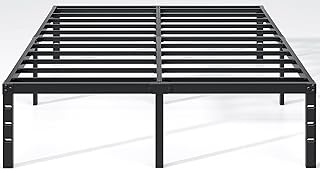
Queen Bed Frame, 7 Inch Heavy Duty Metal Base, 9 Legs
A well-executed take on the standard nine-leg queen base, with the noise-free hardware and reinforced joints that separate a good steel frame from a squeaky one. A straightforward pick if you already own a queen box spring and simply need something quiet and rigid beneath it.
Frequently Asked Questions
Do I still need a box spring with a metal bed frame?
Only if your frame is a support base rather than a platform. The nine-leg frames above are designed to carry a box spring, which then carries the mattress. Placing a mattress directly on them will void most warranties and feel unsupported.
Will a 7-inch frame feel too low?
Rarely, once the box spring and mattress are stacked. Seven inches plus a standard set typically puts the sleep surface at a comfortable 25 to 27 inches, and the lower deck reads cleaner in smaller bedrooms.
How do I stop a metal frame from squeaking?
Most noise comes from loose fasteners or metal-on-metal contact at the center rail. Retighten every joint after the first week, and add felt or rubber washers at the connection points if a tick persists.
Can I attach a headboard to any of these?
No. The EMODA is explicitly headboard-compatible with pre-drilled brackets, while basic support frames usually are not. Verify before buying, since retrofitting brackets to thin steel is not worth the effort.
Final Thoughts
For most bedrooms, the EMODA 7 Inch Queen is the pick worth paying slightly more for — headboard-ready, quiet, and rated well beyond what any household will ask of it. The Amazon Basics 9-Leg frame remains the value benchmark for a full-size set, while the ZINUS Compack earns its place in any room where the mattress size might change.