Key takeaways
- Match the format to the square footage: Full uprights make sense for wall-to-wall carpet and large area rugs. If your home is mostly hard flooring with a few layered rugs and upholstered pieces, a portable spot cleaner will get far more use.
- Look at the brush system: Dual rotating brush rows agitate from two directions and lift matted pile more effectively than a single row — worth prioritizing in high-traffic zones and on medium-pile carpet.
- Decide whether you need heat: Heated or steam-assisted cleaning loosens dried, set-in marks that cool water simply rewets. It’s the difference-maker on older stains rather than fresh spills.
- Check the tool reach: A hose with an upholstery attachment turns a floor machine into a stair, sofa, and vehicle cleaner. Without one, you’ll be buying a second unit eventually.
- Weigh tank size against storage: Bigger tanks mean fewer refill trips but heavier lifting and a larger footprint in the closet. Be honest about where the machine will actually live.
What's inside
Textiles are where a room’s design shows its age first. A wool-blend runner in the hallway starts pulling gray through its traffic lane, the sofa’s roll arms darken where hands land, and a pale bedroom carpet quietly turns beige a few shades at a time. Vacuuming handles the surface layer, but woven fibers act like a filter — they hold fine grit, body oils, spilled coffee, and pet dander well below where suction alone can reach. By the time the change is visible, it has usually been building for a year or more.
Bissell’s carpet cleaning lineup covers an unusually wide range, from a compact canister you can carry into a car footwell up to a two-motor commercial extractor. That breadth is useful once you know which end of it you actually need. This guide sorts the current 2026 machines by the job they’re built for, explains the specs that genuinely affect results — brush design, heat, tank capacity, tool reach — and answers the questions that come up most often about fiber safety and drying time.
As an Amazon Associate we earn from qualifying purchases.




How to Choose a Bissell Carpet Cleaner (2026)
- Match the format to the square footage: Full uprights make sense for wall-to-wall carpet and large area rugs. If your home is mostly hard flooring with a few layered rugs and upholstered pieces, a portable spot cleaner will get far more use.
- Look at the brush system: Dual rotating brush rows agitate from two directions and lift matted pile more effectively than a single row — worth prioritizing in high-traffic zones and on medium-pile carpet.
- Decide whether you need heat: Heated or steam-assisted cleaning loosens dried, set-in marks that cool water simply rewets. It’s the difference-maker on older stains rather than fresh spills.
- Check the tool reach: A hose with an upholstery attachment turns a floor machine into a stair, sofa, and vehicle cleaner. Without one, you’ll be buying a second unit eventually.
- Weigh tank size against storage: Bigger tanks mean fewer refill trips but heavier lifting and a larger footprint in the closet. Be honest about where the machine will actually live.
The Best Bissell Carpet Cleaners of 2026, Reviewed
Bissell ProHeat 2X Revolution Pet Pro Plus (3588F)
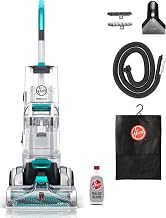
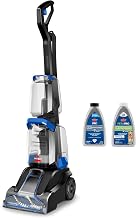
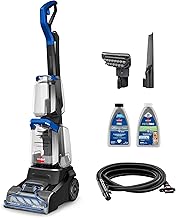
The dual DirtLifter PowerBrush rows and heated cleaning make this the most versatile pick for households with animals, and the included hose plus pet upholstery tool handles stairs and sofa cushions without a second machine. It’s the one I’d point most homeowners toward first.
Bissell Revolution HydroSteam (4123)
HydroSteam pushes heated moisture into the pile, which is what finally moves the dried-in marks other machines just dampen. The 4-inch self-cleaning tough stain tool is the underrated feature here — it rinses itself so you’re not scrubbing an attachment over a sink afterward.
Bissell TurboClean PET (3948)
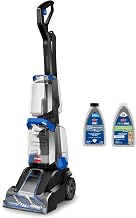
Light enough to carry up a staircase one-handed, which in practice means it gets used on a Tuesday instead of waiting for a deep-clean weekend. Best suited to apartments, single carpeted bedrooms, and quick pet accident response.
Bissell Big Green Professional
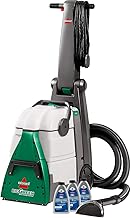
The XL DirtLifter PowerBrush and oversized tanks put this closer to rental-grade equipment than to a household upright, and it shows on large carpeted floors that haven’t been treated in years. Plan for the weight and the storage space it demands.
Bissell BigGreen Commercial BG10 Extractor
A two-motor extractor built for repetition — the right call for property managers, short-term rental turnovers, and studios cleaning on a schedule. Overkill for a single home, and priced and sized accordingly.
Frequently Asked Questions
How often should carpet be deep cleaned?
Every 12 to 18 months for most homes, dropping to roughly every six months with pets or young children. Spot-treat traffic lanes and spills as they happen rather than waiting for the full session.
Are these safe on wool, jute, or viscose rugs?
Treat natural fibers cautiously. Wool can felt and viscose can pull and discolor with too much water, so check the care tag, test an inconspicuous corner first, and hand those pieces to a rug specialist if the label calls for dry cleaning only.
Upright or portable — which do I actually need?
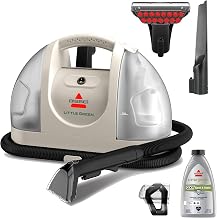
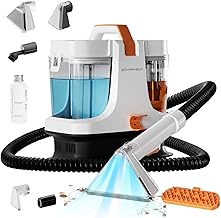
Uprights are for floors; the Little Green (1400B) is for stairs, upholstery, mattresses, and car interiors, with specialty tools built for those angles. Plenty of owners keep both, using the portable far more often.
How long does carpet take to dry?
Typically two to six hours. Make extra dry passes to pull more water out, run a fan or open windows, and leave furniture off the carpet until it’s fully dry to avoid transfer marks.
Final Thoughts
For most homes, the ProHeat 2X Revolution Pet Pro Plus (3588F) is the sensible default — dual brushes, heat, and tools that reach past the floor. Step up to the Revolution HydroSteam (4123) if your problem is old set-in staining rather than routine grime, and add the Little Green (1400B) as a companion for upholstery, stairs, and car interiors.