Key takeaways
- Six-sided seal: Only a fully enclosed encasement works. Fitted-sheet-style protectors leave the underside exposed, which is precisely where bed bugs congregate on a foundation.
- Zipper design: Look for micro-fine teeth paired with a Velcro or fabric flap over the end stop. That end-of-track gap is the single most common failure point on cheap covers.
- Fabric weave and feel: A tight knit blocks nymphs and dust mite allergens without going stiff and plasticky. Since a box spring sits under the mattress, prioritize durability and quiet over softness.
- Waterproof backing: A thin polyurethane membrane protects the foundation from spills and treatment residue. Skip thick vinyl, which cracks and rustles.
- Depth and dimensions: Measure your foundation’s actual height. Standard box springs run 8 to 9 inches; low-profile versions land near 5. A cover stretched to its limit will strain at the seams.
What's inside
A bed bug problem rarely starts and ends with the mattress. The box spring is the quieter half of the sleep system, and its raw wood frame, stapled dust cover, and hollow interior give insects exactly what they want: dark seams, tight corners, and almost no chance of being spotted during a quick inspection. Treat the mattress alone and you have solved half a problem. Skip the box spring and you leave a breeding ground sitting eight inches below where you sleep.
This guide covers the encasements worth trusting in 2026 — the six-sided, fully zippered covers that seal a foundation completely rather than draping over it. We look at zipper engineering, fabric hand-feel, waterproof backing, and sizing tolerances, because a cover that fits poorly or splits at the corner is worse than no cover at all. Below you’ll find the current standouts, followed by a buying framework and answers to the questions that come up most.
As an Amazon Associate we earn from qualifying purchases.




How to Choose a Box Spring Encasement for Bed Bugs (2026)
- Six-sided seal: Only a fully enclosed encasement works. Fitted-sheet-style protectors leave the underside exposed, which is precisely where bed bugs congregate on a foundation.
- Zipper design: Look for micro-fine teeth paired with a Velcro or fabric flap over the end stop. That end-of-track gap is the single most common failure point on cheap covers.
- Fabric weave and feel: A tight knit blocks nymphs and dust mite allergens without going stiff and plasticky. Since a box spring sits under the mattress, prioritize durability and quiet over softness.
- Waterproof backing: A thin polyurethane membrane protects the foundation from spills and treatment residue. Skip thick vinyl, which cracks and rustles.
- Depth and dimensions: Measure your foundation’s actual height. Standard box springs run 8 to 9 inches; low-profile versions land near 5. A cover stretched to its limit will strain at the seams.
The Best Box Spring Encasements for Bed Bugs (2026), Reviewed
Hospitology Sleep Defense System Box Spring Encasement (Queen)
Hospitology built its reputation in hospitality supply, and this Queen encasement shows it: a genuinely tight weave, a well-shielded zipper, and dimensions that track true to 60″ x 80″. It’s the pick for anyone who wants hotel-grade construction without a specialty retailer markup.
SureGuard Box Spring Encasement (Queen)
SureGuard’s six-sided cover pairs full waterproofing with a zipper assembly that stays sealed through repeated washes, which is where most competitors loosen up. The knit is noticeably softer than the category average, making it the better choice if your foundation sits partly exposed on an open frame.
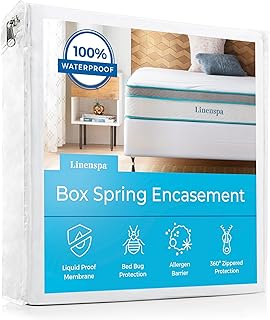
Linenspa Zippered Waterproof 360° Box Spring Encasement
Linenspa delivers the essentials — full 360-degree coverage, a waterproof barrier, and a clean zipper track — at the most accessible price of the group. It’s the sensible option for guest rooms, kids’ beds, or treating several foundations at once.
SureGuard Box Spring Encasement (Full)
Identical engineering to the Queen, cut for a 54″ x 75″ foundation with enough give to clear a standard 9-inch profile. If you’re outfitting a Full-size bed and want one cover you won’t revisit, this is it.
Utopia Bedding Six-Sided Mattress Encasement (Queen, 12″)
Included here because a box spring cover only works as part of a pair — sealing the foundation while leaving the mattress open simply relocates the problem. Utopia’s six-sided Queen encasement fits mattresses up to 12 inches, washes reliably, and rounds out the system for very little added cost.
Frequently Asked Questions
Do I really need to encase the box spring too?
Yes. Pest management professionals consistently find heavier infestations in foundations than in mattresses, largely because the interior cavity is dark, undisturbed, and impossible to inspect. Encasing both is the standard protocol.
How long should the encasement stay on?
Leave it sealed for at least 12 to 18 months. Bed bugs can survive extended periods without feeding, so an encasement removed early can release trapped survivors. Many people simply leave it on permanently as ongoing protection.
Will an encasement kill the bed bugs inside?
Not directly — it traps them. Sealed in with no access to a host, they eventually die off, while the barrier prevents new insects from settling into the seams. It’s containment plus prevention, not a treatment on its own.
Can I wash it?
All the covers here are machine washable. Use warm water and tumble dry on low to protect the waterproof membrane, and inspect the zipper flap before resealing.
Final Thoughts
For most bedrooms, the Hospitology Sleep Defense System hits the best balance of commercial-grade construction and honest sizing, while SureGuard earns the upgrade if you want the most reliable zipper and softest hand-feel in the category. On a tighter budget, or when covering several beds, Linenspa’s 360° encasement gets the essential job done — and pairing any of them with a matching mattress encasement is what turns a partial fix into a sealed sleep system.