Key takeaways
- Node dimension: 2D nodes travel up and down, 3D adds forward pressure, 4D layers in variable rhythm. Deeper isn’t automatically better. If you’re managing everyday desk tension rather than chronic knots, 2D or 3D with adjustable intensity is usually more sustainable to sit through.
- Coverage geometry: Measure from your seat pan to the base of your neck before buying. Pads with adjustable track length or repositionable neck nodes accommodate a wider range of torsos and chair heights, which matters enormously if the same pad moves between a task chair and a sofa.
- Node versus vibration: Rolling shiatsu nodes work into muscle; vibration motors deliver broad, diffuse stimulation. Vibration pads are slimmer, quieter, and far less conspicuous on a nice chair, though they won’t reach a deep knot.
- Heat behavior: Look for auto shut-off timers and independent heat control. Heat you can run without the mechanism is genuinely useful in a cold home office, and staged timers (30/60/90) prevent the overheating that shortens a pad’s life.
- Visual and physical footprint: Check strap placement, cable exit point, and mesh versus faux-leather covers. Mesh reads lighter on modern seating and breathes better; a controller that clips rather than dangles keeps the whole setup from looking clinical.
What's inside
Most massage pads are designed as if the chair they sit on doesn’t matter. They arrive in glossy black vinyl, drape awkwardly over a walnut dining chair or a linen desk chair, and turn a considered corner of a room into something that reads like physical therapy equipment. That’s the real friction point for anyone shopping in this category: the mechanics are usually fine, but the object has to live in a room you’ve spent time getting right.
This guide looks at chair massage pads through both lenses. We assess the hardware that actually earns its footprint (node depth, heat distribution, coverage adjustability, motor placement) alongside the things a spec sheet skips: how the pad sits on different seat depths, whether the strap system distorts your upholstery, and how visually quiet it is when switched off. Below are the pads worth putting on a chair you like.
As an Amazon Associate we earn from qualifying purchases.


How to Choose a Chair Massage Pad (2026)
- Node dimension: 2D nodes travel up and down, 3D adds forward pressure, 4D layers in variable rhythm. Deeper isn’t automatically better. If you’re managing everyday desk tension rather than chronic knots, 2D or 3D with adjustable intensity is usually more sustainable to sit through.
- Coverage geometry: Measure from your seat pan to the base of your neck before buying. Pads with adjustable track length or repositionable neck nodes accommodate a wider range of torsos and chair heights, which matters enormously if the same pad moves between a task chair and a sofa.
- Node versus vibration: Rolling shiatsu nodes work into muscle; vibration motors deliver broad, diffuse stimulation. Vibration pads are slimmer, quieter, and far less conspicuous on a nice chair, though they won’t reach a deep knot.
- Heat behavior: Look for auto shut-off timers and independent heat control. Heat you can run without the mechanism is genuinely useful in a cold home office, and staged timers (30/60/90) prevent the overheating that shortens a pad’s life.
- Visual and physical footprint: Check strap placement, cable exit point, and mesh versus faux-leather covers. Mesh reads lighter on modern seating and breathes better; a controller that clips rather than dangles keeps the whole setup from looking clinical.
The Best Chair Massage Pads (2026) Reviewed
COMFIER 2D/3D Shiatsu Pad with App Control
The most capable pad here, and the only one that lets you switch between 2D and 3D node travel plus adjust back coverage to match your frame. App control sounds like a gimmick until you’re mid-session and don’t want to reach for a wired remote, and the compression element gives it range beyond simple kneading.
COMFIER Shiatsu Pad with Adjustable Neck
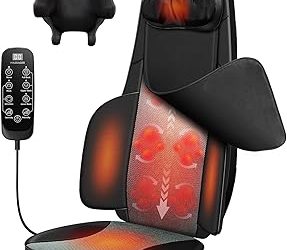
A strong middle option: repositionable neck nodes, rolling and spot modes, three compression levels, and seat vibration in one unit. The adjustable neck section is what makes it work across a low task chair and a taller dining chair, and the spot function is genuinely precise once you locate the right height.
COMFIER 4D Full-Back Pad with Waist & Hip Compression
Full-back coverage with 4D kneading and adjustable neck nodes, plus compression at the waist and hips that most pads in this range ignore. This is the pick for anyone who sits for long stretches and feels it in the lower back rather than the shoulders.
Massage Seat Cushion with 10 Vibration Motors
Ten motors and staged 30/60/90-minute heat timers in a slim profile that doesn’t reshape the chair beneath it. There’s no deep-tissue kneading here, so treat it as a warm, broad-coverage cushion for daily use rather than a therapeutic tool.
Heycool 10-Motor Vibration Pad with Heat
Five modes and four intensities give it more nuance than most vibration-only pads, and the heat is even across the panel rather than concentrated in one strip. The lowest-profile option in this roundup, which makes it the easiest to leave in place on a chair you actually care about.
Frequently Asked Questions
Will a massage pad damage my chair upholstery?
Rarely, but friction and heat can mark delicate materials over time. On leather, boucle, or light linen, use a thin throw underneath and route straps so they don’t cinch against a seam or a piped edge.
How long should each session be?
Fifteen to twenty minutes is the standard guidance for shiatsu-node pads, and most units auto-shut-off around that mark. Vibration pads are gentler, though the heat timer is still worth respecting.
Do these work on any chair?
Most need a reasonably upright back and a flat seat. Deep lounge chairs, heavily contoured gaming seats, and low-slung mid-century frames tend to misalign the nodes with your spine.
Node pad or vibration pad for desk work?
Node pads for accumulated tension you can point to; vibration pads for general stiffness and warmth through a long working day. Vibration is also the quieter choice on calls.
Final Thoughts
For genuine therapeutic range, the COMFIER 2D/3D App-Control Pad is the most adaptable unit here, with the COMFIER 4D Full-Back Pad the better answer if lower-back and hip tension is the actual complaint. If you want relief without a black vinyl slab dominating a room you’ve carefully assembled, the Heycool 10-Motor Pad is the quiet, low-profile compromise worth making.