Key takeaways
- Fiber face, not just the film: Bamboo viscose and Tencel lyocell wick moisture away from skin and dry faster than cotton-poly blends, which is what actually keeps you feeling cool. Spacer knits take a different route, adding physical airflow space instead of relying on the fiber alone.
- Membrane quality: Look for thin, breathable polyurethane rather than vinyl or PVC. A vinyl-free construction stays quieter, feels less like a tarp, and holds up better through repeated wash cycles.
- Pocket depth and skirt tension: Measure your mattress including any topper. Most quality protectors cover 17 to 21 inches, but a highly elastic skirt matters more than the stated maximum, since a loose fit bunches under the sheet and creates the exact crinkle you were trying to avoid.
- Noise: A protector you can hear is a protector you will eventually remove. Terry-backed and spacer-knit designs mask membrane sound far better than smooth laminated surfaces.
- Care requirements: Machine washable is standard now, but check the drying instructions. Low heat protects the waterproof layer; high heat is the single most common reason a protector stops being waterproof.
What's inside
Waterproofing and breathability have spent years pulling in opposite directions. The old fix was a sheet of vinyl film laminated to a thin quilt, and anyone who has slept on one knows the result: a faint plastic crackle every time you shift, and a pocket of trapped body heat that turns a well-chosen mattress into a warm slab by 3 a.m. For side sleepers, hot sleepers, and anyone layering heavy winter bedding over a memory foam bed, the protector is often the real culprit behind a restless night, not the mattress underneath it.
The good news for 2026 is that the category has genuinely matured. Bamboo-derived viscose and Tencel lyocell knits now handle moisture the way good performance apparel does, while spacer constructions marketed as 3D and 4D air fabric build actual airflow channels between you and the barrier film. This guide looks at the protectors worth putting on a bed you care about, what separates a quiet membrane from a noisy one, and how to match depth, fiber, and finish to the mattress you already own.
As an Amazon Associate we earn from qualifying purchases.

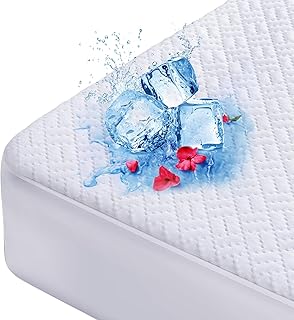


How to Choose a Cooling Mattress Protector (2026)
- Fiber face, not just the film: Bamboo viscose and Tencel lyocell wick moisture away from skin and dry faster than cotton-poly blends, which is what actually keeps you feeling cool. Spacer knits take a different route, adding physical airflow space instead of relying on the fiber alone.
- Membrane quality: Look for thin, breathable polyurethane rather than vinyl or PVC. A vinyl-free construction stays quieter, feels less like a tarp, and holds up better through repeated wash cycles.
- Pocket depth and skirt tension: Measure your mattress including any topper. Most quality protectors cover 17 to 21 inches, but a highly elastic skirt matters more than the stated maximum, since a loose fit bunches under the sheet and creates the exact crinkle you were trying to avoid.
- Noise: A protector you can hear is a protector you will eventually remove. Terry-backed and spacer-knit designs mask membrane sound far better than smooth laminated surfaces.
- Care requirements: Machine washable is standard now, but check the drying instructions. Low heat protects the waterproof layer; high heat is the single most common reason a protector stops being waterproof.
The Best Cooling Mattress Protectors (2026) Reviewed
PlushDeluxe Bamboo Waterproof Mattress Protector
The most hotel-adjacent option here, with a viscose-from-bamboo face that has a soft, slightly cool hand and a genuinely silent membrane underneath. The King version fits up to 18 inches, which covers most pillow-tops without needing a separate deep-pocket sheet.
Cooling 3D Air Fabric Mattress Protector
Instead of relying on fiber to move heat, this one uses an open spacer knit that keeps a thin cushion of air between your sheet and the barrier layer. It is the pick for people sleeping on dense memory foam, where surface heat retention is the primary complaint, and the 8 to 21 inch pocket range is unusually forgiving.
Utopia Bedding Bamboo Viscose Protector
The value benchmark of the group: a fitted, stretchable-pocket bamboo viscose protector that fits up to 17 inches and stays quiet through regular washing. If you are outfitting a guest room or a second bed and do not want to think hard about it, start here.
Luxury Tencel Mattress Protector
Tencel lyocell is the most refined cooling fiber in this lineup, with a smooth, faintly dry finish that reads as luxury rather than utility under a percale or linen sheet. Fully waterproof to 18 inches deep, and the one I would choose for a bed where feel matters as much as function.
360 Protection Bamboo Protector, Gray
Built for households with kids or pets, this one wraps the sides for full-perimeter coverage rather than protecting the top panel alone. The 20 inch pocket handles tall mattresses, and gray hides wear better than white on a bed that gets stripped often.
Frequently Asked Questions
Does a waterproof protector always sleep hot?
Not anymore. Breathable polyurethane membranes paired with a wicking face fabric or spacer knit allow vapor to pass while blocking liquid. The heat problem belongs to older vinyl-laminated designs.
Is bamboo viscose or Tencel better for cooling?
Both outperform cotton. Tencel has a slightly crisper, drier feel and excellent moisture management; bamboo viscose feels softer and more fluid. Choose by preferred hand feel rather than by cooling claims.
How often should I wash it?
Every one to two months for most sleepers, more often with kids or pets. Wash warm, tumble dry low, and skip fabric softener, which coats the fibers and reduces breathability.
Will it change how my mattress feels?
A well-fitted knit protector is essentially undetectable. Spacer-knit designs add a slight cushion, which some sleepers find pleasant on firmer beds.
Final Thoughts
For most bedrooms, the Utopia Bedding bamboo viscose protector is the sensible default, quiet and cool at a price that makes sense across multiple beds. If you want a more considered result, the Luxury Tencel protector is the one that feels intentional under good sheets, while the 3D Air Fabric option is the clearest fix for a memory foam mattress that has always run warm.