Key takeaways
- Cooling mechanism: Fiber toppers with rayon or viscose derived from bamboo cool by wicking moisture and letting air pass through, which suits sleepers who wake up sweaty. Gel-infused memory foam cools by absorbing and dispersing heat, better for those who feel radiantly warm rather than damp. Match the mechanism to your symptom.
- Loft versus support: Pillow-top pads add a plush inch or two without altering how your mattress supports you. A 3- or 4-inch foam topper genuinely rebuilds the feel of the bed — the right call if your mattress is too firm or has developed a dip, but overkill if you only want softness.
- Pocket depth: Measure your mattress including any existing protector. A 20-inch deep pocket handles hybrid and pillow-top mattresses that shallower skirts pop off nightly. Straps-only designs need a fitted sheet tight enough to hold them in place.
- Fill weight and quilting: GSM tells you density; box or diamond quilting tells you whether that fill stays put. A high-GSM pad without stitched channels will migrate into lumps within months.
- Washability: Fiber toppers should be machine washable in a home machine. Foam toppers never are, so a removable, launderable cover isn’t a bonus feature — it’s the difference between a hygienic purchase and a disposable one.
What's inside
Heat is the quiet saboteur of good sleep. You can invest in blackout curtains, a white-noise machine, and linen sheets with an impressive thread count, and still wake at 3 a.m. with damp shoulders because the surface beneath you has been storing your body heat for hours. Conventional mattresses — especially the dense foam builds that dominate the market — behave like insulation. They cradle you, then trap the warmth you generate and hold it against your skin until your core temperature can’t drop far enough to keep you under.
A cooling topper is the most efficient fix available short of replacing the mattress entirely: it changes the layer that touches you, which is where thermal comfort is actually decided. This guide breaks down the two approaches that work — moisture-moving fiber toppers and ventilated gel foam — and reviews the models worth your attention in 2026, from breathable bamboo-derived pillow tops to dual-layer foam builds that balance pressure relief against airflow. Below, you’ll find what to look for before you buy, honest notes on each pick, and answers to the questions hot sleepers ask most.
As an Amazon Associate we earn from qualifying purchases.




How to Choose a Cooling Mattress Topper For Hot Sleepers (2026)
- Cooling mechanism: Fiber toppers with rayon or viscose derived from bamboo cool by wicking moisture and letting air pass through, which suits sleepers who wake up sweaty. Gel-infused memory foam cools by absorbing and dispersing heat, better for those who feel radiantly warm rather than damp. Match the mechanism to your symptom.
- Loft versus support: Pillow-top pads add a plush inch or two without altering how your mattress supports you. A 3- or 4-inch foam topper genuinely rebuilds the feel of the bed — the right call if your mattress is too firm or has developed a dip, but overkill if you only want softness.
- Pocket depth: Measure your mattress including any existing protector. A 20-inch deep pocket handles hybrid and pillow-top mattresses that shallower skirts pop off nightly. Straps-only designs need a fitted sheet tight enough to hold them in place.
- Fill weight and quilting: GSM tells you density; box or diamond quilting tells you whether that fill stays put. A high-GSM pad without stitched channels will migrate into lumps within months.
- Washability: Fiber toppers should be machine washable in a home machine. Foam toppers never are, so a removable, launderable cover isn’t a bonus feature — it’s the difference between a hygienic purchase and a disposable one.
The Best Cooling Mattress Topper For Hot Sleepers (2026)s Reviewed
Niagara Sleep Solution Bamboo-Derived Cooling Topper (Queen)
The rayon-from-bamboo surface is the standout here — it moves moisture off the skin quickly and stays cool to the touch through the night, which is exactly what night-sweat sleepers need. The 20-inch deep pocket fits tall hybrids without straining, and the soft sage colorway is a welcome break from the default white.
Niagara Sleep Solution 100% Cotton Top Cooling Topper (Queen)
A cotton face sheet breathes more openly than any synthetic blend, and the cloud-like fill delivers pressure relief without the sinking heat of foam. This is the pick for sleepers who want plushness and airflow in equal measure, and it launders beautifully.
3-Inch Memory Foam Topper with Cooling Cover (Queen)
Three inches is the sweet spot for correcting a mattress that’s gone too firm, and the removable cooling cover does real work counteracting foam’s natural heat retention. Anchoring straps keep it aligned, though expect the usual 48-hour foam expansion window before it feels right.
4-Inch Dual Layer Gel Memory Foam Topper (Queen)
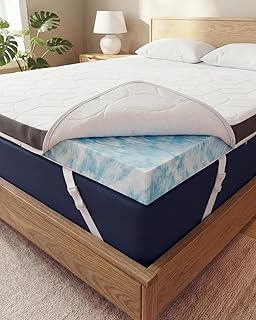
The two-layer construction is smart engineering: gel foam beneath for contouring and heat dispersion, a quilted pillow-top above so you’re not sleeping directly on foam. It’s the most substantial transformation on this list and the best option for side sleepers with hip or shoulder pain.
NEWDECO Twin XL Bamboo Viscose Topper
Purpose-built for dorm beds, with an 8–18 inch pocket range that accommodates the thin, unforgiving mattresses institutions favor. The viscose-from-bamboo top breathes well in rooms with no climate control — a genuine advantage in an un-air-conditioned residence hall.
Frequently Asked Questions
Do cooling toppers actually lower temperature?
They don’t refrigerate. They reduce heat retention and speed moisture evaporation, which lets your body shed warmth naturally. The effect is real but incremental — pair it with breathable bedding for the full benefit.
Fiber or foam for hot sleepers?
Fiber, if temperature is your primary complaint. Foam always retains more heat than woven fill, even gel-infused. Choose foam when you need pressure relief badly enough to accept the tradeoff, and prioritize dual-layer builds with cooling covers.
Will a topper fix a sagging mattress?
It masks minor unevenness. Structural sag means broken support underneath, and no topper compensates for that — you’ll feel the dip through any thickness.
How thick should I go?
One to two inches for added softness on a mattress you basically like. Three to four inches when the feel needs to change substantially. Thicker pads may require deep-pocket sheets.
Final Thoughts
For most hot sleepers, the Niagara Sleep Solution bamboo-derived topper is the smartest first move — genuinely breathable, generously deep-pocketed, and easy to maintain. If your mattress is punishingly firm as well as hot, the 4-inch dual layer gel foam topper handles both problems at once, while the 1400 GSM king pillow-top delivers serious plush loft for larger beds without sacrificing airflow.