Key takeaways
- Profile height: Aim for 12 inches minimum and 14 inches where budget allows. Taller builds stack a thicker support core beneath the comfort layer, which is the layer that resists sagging over years of nightly compression.
- Coil versus all-foam: Pocketed-spring hybrids generally outperform pure foam above roughly 230 pounds because steel rebounds rather than creeps. High-density foam still works well if you prefer motion isolation and near-silent nights.
- Zoned reinforcement: Look for firmer coils or denser foam specifically under the lumbar and hip region. Uniform construction lets the heaviest part of your body sink first, which is exactly what pulls the spine out of neutral.
- Perimeter strength: Reinforced edges determine whether you can sit on the side to tie your shoes without the mattress folding. Weak edges also shrink the usable sleep surface for couples.
- Cooling and certification: Gel infusions and ventilated cores matter more when body contact area is larger. Confirm CertiPUR-US foam, fiberglass-free construction, and a trial window long enough to test through a full season.
What's inside
Support is where most mattresses quietly fail heavier sleepers. A bed can feel plush and promising in week one, then develop a hammock through the hip zone by month six, and suddenly you are waking with a low-back ache that has nothing to do with your workouts. The physics are unforgiving: more load per square inch means foam compresses further, coils flex harder, and edges collapse sooner. Marketing language like “medium-firm” tells you almost nothing, because firmness is measured against an average body, not yours.
This guide is built around the specs that actually hold up under weight: coil gauge and count, foam density, total profile height, and how a bed handles heat once it is compressed. Below you will find extra-firm foam and hybrid options currently worth attention in 2026, a short checklist for evaluating any mattress on your own, and honest notes on where each pick shines. Every recommendation leans toward beds engineered for durability first and softness second.
As an Amazon Associate we earn from qualifying purchases.


How to Choose a Firm Mattress For Heavy Person (2026)
- Profile height: Aim for 12 inches minimum and 14 inches where budget allows. Taller builds stack a thicker support core beneath the comfort layer, which is the layer that resists sagging over years of nightly compression.
- Coil versus all-foam: Pocketed-spring hybrids generally outperform pure foam above roughly 230 pounds because steel rebounds rather than creeps. High-density foam still works well if you prefer motion isolation and near-silent nights.
- Zoned reinforcement: Look for firmer coils or denser foam specifically under the lumbar and hip region. Uniform construction lets the heaviest part of your body sink first, which is exactly what pulls the spine out of neutral.
- Perimeter strength: Reinforced edges determine whether you can sit on the side to tie your shoes without the mattress folding. Weak edges also shrink the usable sleep surface for couples.
- Cooling and certification: Gel infusions and ventilated cores matter more when body contact area is larger. Confirm CertiPUR-US foam, fiberglass-free construction, and a trial window long enough to test through a full season.
The Best Firm Mattress For Heavy Person (2026)s Reviewed
SLEEP100 14″ Extra Firm Memory Foam
This is the pick for sleepers who want zero coil feel and absolute stillness, with a 14-inch all-foam stack that keeps the spine flat rather than cradled. Gel-infused ventilated layers do real work here, offsetting the heat retention that usually plagues thick memory foam under heavier loads.
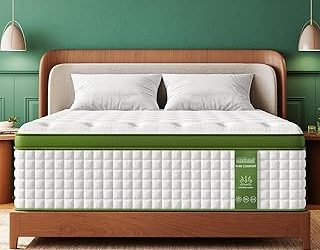
BedStory Extra Firm 14″ Hybrid
A genuinely firm hybrid that targets the lumbar and hip zone where sag typically begins, backed by a 365-night trial that gives you room to judge it across seasons. Fiberglass-free, CertiPUR-US certified, and notably odor-free out of the box, which is not a given in compressed shipping.
14″ Extra Firm Hybrid with Cooling Comfort
Nearly identical support philosophy to the BedStory but tuned slightly more toward pressure relief, making it a smart middle ground if pure extra-firm feels punishing on your shoulders. The spinal alignment focus and year-long trial make it a low-risk experiment for chronic back pain.
12″ Extra Firm Cooling Gel Hybrid (Queen)
The most practical choice for couples sharing a queen, with a breathable gel hybrid build engineered specifically around heavier body weights and neck or back complaints. At 12 inches it works with standard sheet sets and lower bed frames, which is a real convenience win.
BedStory 14″ Zoned Lumbar Hybrid
Pocket springs arranged in zones give this one a distinctly responsive feel, easier to move on than dense foam while still refusing to bottom out. The 10-year warranty signals confidence in the no-sag claim, and it suits combination sleepers who shift positions all night.
Frequently Asked Questions
How firm should a mattress be for a heavier sleeper?
Most people above 230 pounds sleep best on a 7 to 9 on the ten-point firmness scale. Compression means you will experience a firm mattress softer than a lighter person would, so what reads as extra-firm on paper often feels supportive rather than harsh.
Do hybrids really last longer than foam?
Typically yes, under sustained heavier load. Pocketed coils recover their shape more reliably than polyfoam, which gradually loses loft. Foam can still last well if the density is high and the profile is thick.
Will an extra-firm mattress cause shoulder or hip pain?
It can for strict side sleepers, since the shoulder needs somewhere to go. A firm core with a thin conforming top layer, or adding a two-inch topper, usually resolves it without sacrificing support.
What kind of base does a thick mattress need?
Use a frame with center support and slats spaced no more than three inches apart. Inadequate foundations void many warranties and cause sagging that gets blamed on the mattress.
Final Thoughts
For most heavier sleepers, the BedStory Extra Firm 14″ Hybrid is the strongest all-around bet, pairing zoned lumbar reinforcement with a trial period generous enough to prove itself. Choose the SLEEP100 14″ Extra Firm if you want dense, motionless foam with serious cooling built in, or the 12″ Extra Firm Cooling Gel Hybrid when you need shared-bed support in a lower, more manageable profile.