Key takeaways
- Target range: Far infrared cabins typically operate between 120°F and 150°F, well below traditional Finnish saunas. Anything advertising 190°F is either a hybrid or optimistic. Look for a stated maximum of at least 140°F with a preset thermostat rather than a simple dial.
- Wattage per person: Roughly 1,000 to 1,300 watts per occupant is the practical floor. A 1,200W single-person cabin heats confidently; a 1,500W two-person unit is adequate but will take longer to stabilize with two bodies absorbing radiant output.
- Preheat behavior: Ten to fifteen minutes to usable temperature is the current benchmark. Carbon panels warm gradually and evenly, ceramic rods spike faster and run hotter at the surface. Choose based on whether you want quick sessions or slow, even saturation.
- Low EMF construction: Reputable manufacturers publish gauss readings taken at seat level. Prioritize shielded heaters and rear-routed wiring, particularly in compact cabins where your back sits inches from a panel.
- Enclosure and scale: Kiln-dried hemlock resists warping through repeated heat cycles and keeps its pale, quiet tone. Measure ceiling clearance and door swing before committing; a 73-inch cabinet needs breathing room to read as furniture rather than an appliance.
What's inside
Heat is the one design decision you can’t judge from a photo. A sauna can be beautifully joined, clad in tight-grain hemlock, and perfectly scaled to the corner of a finished basement, and still disappoint if the panels stall at 110°F while the control screen insists otherwise. Most shoppers discover this after delivery, when they realize the number on the display describes the air near the sensor rather than the radiant heat actually reaching the body. Temperature range, ramp time, and panel placement matter more than cabinet styling, and they are rarely explained clearly on a product page.
This guide looks at home infrared saunas through the lens of thermal performance: how hot each cabin genuinely runs, how quickly it gets there, and how consistently it holds. We cover one- and two-person cabins, a corner unit for larger rooms, an app-controlled model, and a collapsible tent for apartments where a permanent installation isn’t realistic. Each pick is assessed for heater wattage, EMF handling, control precision, and how gracefully the piece sits in a real interior.
As an Amazon Associate we earn from qualifying purchases.


How to Choose an Infrared Sauna Temperature (2026)
- Target range: Far infrared cabins typically operate between 120°F and 150°F, well below traditional Finnish saunas. Anything advertising 190°F is either a hybrid or optimistic. Look for a stated maximum of at least 140°F with a preset thermostat rather than a simple dial.
- Wattage per person: Roughly 1,000 to 1,300 watts per occupant is the practical floor. A 1,200W single-person cabin heats confidently; a 1,500W two-person unit is adequate but will take longer to stabilize with two bodies absorbing radiant output.
- Preheat behavior: Ten to fifteen minutes to usable temperature is the current benchmark. Carbon panels warm gradually and evenly, ceramic rods spike faster and run hotter at the surface. Choose based on whether you want quick sessions or slow, even saturation.
- Low EMF construction: Reputable manufacturers publish gauss readings taken at seat level. Prioritize shielded heaters and rear-routed wiring, particularly in compact cabins where your back sits inches from a panel.
- Enclosure and scale: Kiln-dried hemlock resists warping through repeated heat cycles and keeps its pale, quiet tone. Measure ceiling clearance and door swing before committing; a 73-inch cabinet needs breathing room to read as furniture rather than an appliance.
The Best Infrared Sauna Temperature (2026)s Reviewed
1–2 Person Infrared Sauna with Red Light Therapy and Bluetooth
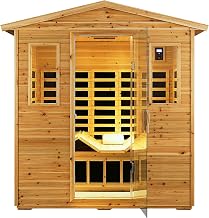
At 40 by 36 inches, this brown-toned cabin manages a genuine two-person footprint without dominating a room, and the dry heat holds steadily in the mid-130s once preheated. The red light panel and seven-color chromotherapy are more atmospheric than clinical, but the Bluetooth and radio integration make longer sessions considerably easier to sit through.
2–3 Person Ceramic Infrared Corner Sauna
Ceramic emitters push surface temperatures higher and faster than carbon, which suits this larger corner geometry where heat has more volume to fill. The angled hemlock footprint is genuinely smart space planning, tucking into an unused corner of a basement or converted garage rather than floating awkwardly along a wall.
Homsido 1-Person Hemlock Infrared Sauna
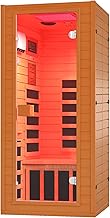
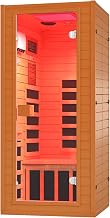
The most thermally efficient pick here: 1,200 watts driving a single-person volume means a reliable ten-minute pre-warm and precise temperature holding via the LCD preset controls. Ideal for anyone who wants a repeatable daily session without waiting on a large cabin to come up to temperature.
2-Person Smart App-Controlled Infrared Sauna
App scheduling turns preheat lag into a non-issue, since you can start the 1,500W heaters before you leave the office and walk into a stabilized cabin. Flame-retardant materials and low-EMF wiring make this the pick for buyers who want documented safety specifications alongside connectivity.
Infrared Sauna Tent with 3L Steamer
Nine heat levels and a 3L steamer give this folding tent surprising range, though its insulated fabric shell can’t retain heat like a wood cabin over long sessions. For renters, small apartments, or anyone unwilling to surrender permanent floor space, it delivers most of the benefit with none of the commitment.
Frequently Asked Questions
What temperature should I set an infrared sauna to?
Start around 120°F for your first several sessions and work upward to 140°F as tolerance builds. Infrared heats the body directly, so lower air temperatures produce effects comparable to a much hotter conventional sauna.
Why does my sauna read lower than its advertised maximum?
Sensors usually sit near the ceiling or a wall, away from panel faces, and ambient room temperature affects the ceiling. A cool basement will cost you five to ten degrees at the display.
Is ceramic or carbon better for reaching high temperatures?
Ceramic reaches higher surface temperatures quickly but distributes less evenly. Carbon runs cooler per panel while covering more area, producing gentler, more uniform heat.
How long should sessions last?
Twenty to thirty minutes at your target temperature is standard. Begin with fifteen and hydrate before and after, regardless of the setting you choose.
Final Thoughts
For consistent, well-controlled heat in a single-person footprint, the Homsido hemlock cabin is the most dependable performer here. Households wanting shared sessions should look at the 2-Person Smart App-Controlled Sauna for its scheduling and safety documentation, or the 2–3 Person Ceramic Corner Sauna if the room can accommodate a larger, faster-heating enclosure.