Key takeaways
- Joinery vs. hardware: Real joinery beds lock together with tapered wedges and mortise-style connections, so weight tightens the frame rather than loosening bolts. Listings that mention “no-tool assembly” alongside solid wood are usually the genuine article; ones that ship a bag of Allen bolts are conventional frames in Japandi clothing.
- Wood and certification: Solid rubberwood is the sweet spot right now for density and price. Look for SGS or IAS testing and a stated load rating, ideally around 1,500 lbs, which tells you the joints were pull-tested rather than eyeballed.
- Slat quality and silence: Birch plywood or hardwood slats spaced under three inches support foam and hybrid mattresses without a box spring. Silicone or felt anti-squeak pads at each slat pocket are the single best predictor of a quiet bed.
- Deck height and clearance: Under 10 inches reads as authentically low but limits storage; roughly 14 to 15 inches with 8 inches of clearance underneath keeps the visual weight down while fitting bins. Floor-level tatami bases sit lowest and need a breathable mattress.
- Headboard function: Ledge-style headboards with a shelf and USB-A/C outlets remove the need for nightstands, which is the whole point in a small or minimalist room. Decide early, since it changes the footprint by several inches.
What's inside
Japanese joinery beds have quietly become the most requested silhouette in low-profile bedroom design, and the market has responded with a flood of look-alikes. The problem is that “Japanese-style” now covers everything from genuine interlocking rubberwood frames to thin pine boxes with a walnut stain and a wedge joint stapled on for looks. Shoppers end up comparing photos instead of construction, then discover the difference six months later when the slats start clicking every time someone rolls over.
This guide sorts the current crop by the things that actually determine how a low bed lives in a room: joint type, slat material and spacing, load rating, deck height, and whether the frame can be taken apart and moved without losing its rigidity. Below you’ll find the frames worth shortlisting in 2026, from tool-free queen platforms with integrated storage headboards to a foldable tatami base for true floor sleeping, plus a short buying framework you can apply to any listing you come across.
As an Amazon Associate we earn from qualifying purchases.


How to Choose a Japanese Bed Frame (2026)
- Joinery vs. hardware: Real joinery beds lock together with tapered wedges and mortise-style connections, so weight tightens the frame rather than loosening bolts. Listings that mention “no-tool assembly” alongside solid wood are usually the genuine article; ones that ship a bag of Allen bolts are conventional frames in Japandi clothing.
- Wood and certification: Solid rubberwood is the sweet spot right now for density and price. Look for SGS or IAS testing and a stated load rating, ideally around 1,500 lbs, which tells you the joints were pull-tested rather than eyeballed.
- Slat quality and silence: Birch plywood or hardwood slats spaced under three inches support foam and hybrid mattresses without a box spring. Silicone or felt anti-squeak pads at each slat pocket are the single best predictor of a quiet bed.
- Deck height and clearance: Under 10 inches reads as authentically low but limits storage; roughly 14 to 15 inches with 8 inches of clearance underneath keeps the visual weight down while fitting bins. Floor-level tatami bases sit lowest and need a breathable mattress.
- Headboard function: Ledge-style headboards with a shelf and USB-A/C outlets remove the need for nightstands, which is the whole point in a small or minimalist room. Decide early, since it changes the footprint by several inches.
The Best Japanese Bed Frames (2026) Reviewed
FLEXISPOT Hako G2 Japanese Joinery Bed Frame (Queen)
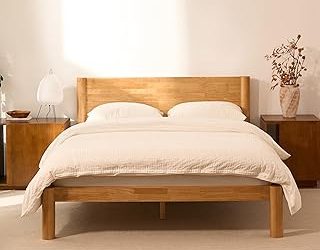
The most polished execution of the category: solid rubberwood, IAS and SGS certified to 1,500 lbs, and a storage headboard that earns its depth without bulking up the profile. A 10-year warranty on a no-tool frame signals real confidence in the joint geometry, and it disassembles cleanly for moves.
Softa Mikor Queen Japanese Joinery Bed Frame
Essentially the Hako’s closest rival, with the same rubberwood build and 1,500 lb rating, but the headboard adds USB-A and USB-C ports plus a shelf, so it functions as a nightstand replacement. Best pick if you’re furnishing a compact bedroom where every surface has to do two jobs.
Birch Plywood Slat Japanese Joinery Platform Bed (Queen)
This one wins on the details that keep a bed quiet years in: birch plywood slats, anti-squeak strips, and corner guards that stop the frame from grinding into itself. A sensible choice for light sleepers and shared beds where noise matters more than storage.
Thor Premium Solid Wood Japanese Joinery Bed Frame (Twin XL, Walnut)
The walnut finish gives this frame a warmer, more furniture-like presence than the pale Japandi norm, and the Twin XL size makes it a strong fit for guest rooms, dorms, or a pair of twins in a shared setup. Slat support handles foam and hybrid mattresses with no box spring.
RUNSUNSPRI Foldable Tatami Floor Bed Frame (Queen)
For genuine floor sleeping or as a bunkie board over an existing base, this folding slatted platform lifts the mattress just enough for airflow while keeping the sightline at floor level. It stores flat, which makes it the practical option for renters and flexible rooms.
Frequently Asked Questions
Do Japanese bed frames need a box spring?
No. Every frame here uses closely spaced slats designed to support foam, latex, and hybrid mattresses directly. Adding a box spring raises the deck and undermines the low profile you’re buying.
How long does assembly actually take?
Tool-free joinery frames like the Brafab Tooless queen realistically go together in 10 to 20 minutes with two people, mostly because there’s no hardware to sort. The heaviest part is maneuvering the panels, not building.
Are they strong enough for heavier sleepers or couples?
Yes, when the listing states a tested capacity. Certified 1,500 lb ratings cover two adults plus a heavy hybrid mattress with substantial margin, and wedge joints tend to tighten under load rather than work loose.
Will a low frame make a small room feel cramped?
The opposite, usually. Dropping the mattress height exposes more wall above the bed, which reads as extra ceiling and opens up the room, especially with a ledge headboard replacing bulky nightstands.
Final Thoughts
If you want one frame that gets everything right, the FLEXISPOT Hako G2 is the safest buy in 2026 thanks to its certified rubberwood build and long warranty. Choose the Softa Mikor instead if built-in USB charging and a shelf would let you skip nightstands entirely, or the RUNSUNSPRI tatami base if you’re committed to true floor-level sleeping in a space that needs to stay flexible.