Key takeaways
- Zoned support over uniform firmness: Look for mattresses that reinforce the lumbar third with firmer foam or higher-gauge coils. Uniform surfaces force a compromise; zoned construction lets shoulders sink while the pelvis stays level, which is the whole mechanism behind neutral alignment.
- Match feel to sleep position: Side sleepers generally need contouring in the 12-inch range to let the shoulder drop. Back and stomach sleepers do better on firmer 14-inch hybrids that prevent the hips from rotating the pelvis forward.
- Weight changes the firmness equation: Above roughly 230 pounds per sleeper, an all-foam bed loses its supportive character faster. Pocketed spring hybrids with reinforced perimeters hold their geometry far longer and make edge-sitting feel secure rather than precarious.
- Verify materials and certifications: CertiPUR-US certification covers foam emissions and content, and fiberglass-free construction has become the baseline expectation. Both are easy to confirm before you buy and awkward to discover after.
- Read the trial, not the warranty: Spines adapt over weeks, not nights. A genuine 365-night trial with straightforward return logistics is worth more than a long warranty that only addresses manufacturing defects.
What's inside
A king bed is the centerpiece of a primary suite, the piece everything else in the room orbits around. But when you wake up with a low back that feels locked in place, the aesthetics stop mattering. Back pain shopping is genuinely hard because the vocabulary is slippery: “medium firm” means one thing on a spec sheet and something else entirely at 3 a.m., and a mattress that supports a 140-pound side sleeper can leave a 250-pound back sleeper hammocked at the hips. Add the reality that most of us share the surface with a partner whose spine has completely different opinions, and the guesswork compounds.
This guide narrows the field to king mattresses built specifically around spinal alignment: zoned lumbar reinforcement, pocketed coil systems that resist sagging under the heaviest part of the body, and foam layers that cushion pressure points without swallowing the waist. Below you will find our current picks, followed by the specification details that actually predict morning comfort, honest notes on each model, and answers to the questions we hear most from readers redesigning a bedroom around better sleep.
As an Amazon Associate we earn from qualifying purchases.


How to Choose a King Mattress For Back Pain (2026)
- Zoned support over uniform firmness: Look for mattresses that reinforce the lumbar third with firmer foam or higher-gauge coils. Uniform surfaces force a compromise; zoned construction lets shoulders sink while the pelvis stays level, which is the whole mechanism behind neutral alignment.
- Match feel to sleep position: Side sleepers generally need contouring in the 12-inch range to let the shoulder drop. Back and stomach sleepers do better on firmer 14-inch hybrids that prevent the hips from rotating the pelvis forward.
- Weight changes the firmness equation: Above roughly 230 pounds per sleeper, an all-foam bed loses its supportive character faster. Pocketed spring hybrids with reinforced perimeters hold their geometry far longer and make edge-sitting feel secure rather than precarious.
- Verify materials and certifications: CertiPUR-US certification covers foam emissions and content, and fiberglass-free construction has become the baseline expectation. Both are easy to confirm before you buy and awkward to discover after.
- Read the trial, not the warranty: Spines adapt over weeks, not nights. A genuine 365-night trial with straightforward return logistics is worth more than a long warranty that only addresses manufacturing defects.
The Best King Mattress For Back Pain (2026)s Reviewed
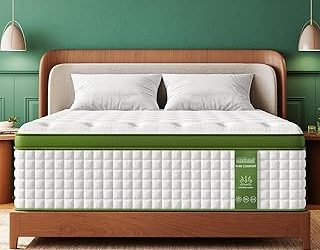
Sweetnight CoolNest 14 Inch King
The five-zone layout here is the headline: it firms up precisely where lumbar collapse happens while staying soft enough at the shoulders for combination sleepers. The cooling treatment is a real advantage if pain wakes you and heat keeps you awake afterward.
Nectar 12″ Memory Foam King
A medium-firm all-foam bed that does slow, even pressure distribution better than most, which suits side sleepers with hip and shoulder complaints. The generous trial period gives your body the several weeks it genuinely needs to judge the surface.
BedStory Firm King 14 Inch Hybrid
Our pick for back and stomach sleepers who need the pelvis held flat. The zoned lumbar section and firm hybrid build resist the mid-mattress dip that turns a decent bed into a source of morning stiffness.
Novilla 12 Inch King Hybrid
A balanced, approachable hybrid with individually wrapped coils that limit motion transfer, making it a sensible choice for couples with mismatched schedules. Hypoallergenic and fiberglass-free construction adds peace of mind for sensitive sleepers.
LETMOON Luxury King 12 Inch
Seven-zone pocket springs paired with gel memory foam produce a hotel-style feel that reads plush on contact but supportive underneath. Readers dealing with hip pain alongside back pain tend to respond well to this combination.
Frequently Asked Questions
Is a firm mattress always better for back pain?
No. Research consistently favors medium-firm surfaces for chronic low back pain because they support the lumbar curve without forcing pressure into the shoulders and hips. Very firm beds only make sense for heavier sleepers or dedicated stomach sleepers.
Memory foam or hybrid for a bad back?
Hybrids generally win for back pain because coils push back against the heaviest part of your body. Memory foam excels at pressure relief, so it is the stronger choice if joint and shoulder discomfort is your primary complaint.
Do I need a box spring for a king mattress in a box?
Not for the models above. They perform best on a solid platform or a slatted frame with gaps under three inches. Inadequate slat spacing is a common cause of premature sagging and voided warranties.
How long before my back feels different?
Give it two to four weeks. Postural muscles adapt gradually, and it is normal to feel slightly worse in the first several nights before improvement sets in.
Final Thoughts
If you want one recommendation, the Sweetnight CoolNest 14 Inch delivers the most versatile zoned support for mixed-position sleepers, while the BedStory Firm 14 Inch Hybrid is the stronger call for heavier bodies and back sleepers who need uncompromising lumbar reinforcement. Side sleepers chasing pressure relief above all else should look hard at the Nectar 12″ Memory Foam and its unusually generous trial window.