Key takeaways
- Center support geometry: A king needs a full-length center rail with at least two or three legs touching the floor, not just perimeter legs. Slats spaced 3 inches apart or less protect foam and hybrid mattress warranties, which frequently void on inadequate foundations.
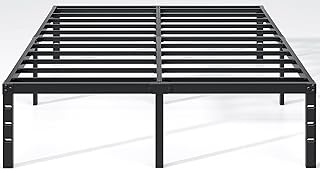
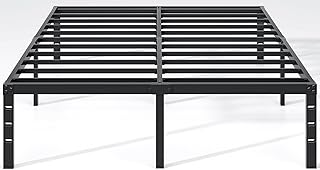
- Under-bed clearance: Decide before you buy. Tall metal builds like the NEW JETO 18-inch frame turn the footprint into usable storage for bins and luggage, while platform beds sit lower for a grounded, minimal profile. Measure your storage containers first, not after.
- Headboard scale: Height should relate to your ceiling and window line. A 56-inch wingback like the OHOHOLIVE reads dramatic under 9-foot ceilings but can swallow a smaller room, while the adjustable headboards on the Novilla and GRUSIGN let you fine-tune the height after the bed is in place.
- Finish and upholstery wear: Velvet feels luxe and photographs beautifully but shows oils along the top edge; linen-weave fabric hides wear better and vacuums clean. Powder-coated steel is the most forgiving option for households with pets or kids.
- Assembly and hardware quality: King frames arrive in multiple boxes, so check that bolts are steel rather than zinc-coated soft alloy. Felt pads and rubber-tipped slat ends are the small details that separate a silent bed from a squeaky one.
What's inside
A king frame is the one piece of furniture in a bedroom that can’t be quietly tucked into a corner. At roughly 76 by 80 inches, it sets the sightlines, dictates the walking paths, and either makes a room feel composed or makes it feel crowded. That scale is also where cheap engineering shows up fastest: a span that wide puts real stress on center legs and slats, so a frame that felt solid in a showroom can develop a creak on one side within a season. Add the persistent confusion over whether a box spring is still required, and it’s easy to over-buy or under-buy.
This guide focuses on king frames that hold up structurally and still read well in a finished room. Below you’ll find a shortlist spanning three approaches: low-profile metal built for under-bed storage, upholstered platforms with adjustable headboards, and a wood-and-metal storage bed with integrated lighting. After the picks, there’s a short buying framework covering support geometry, headboard proportion, and finish durability, plus answers to the questions that come up most after delivery.
As an Amazon Associate we earn from qualifying purchases.


How to Choose a King Size Bed Frame (2026)
- Center support geometry: A king needs a full-length center rail with at least two or three legs touching the floor, not just perimeter legs. Slats spaced 3 inches apart or less protect foam and hybrid mattress warranties, which frequently void on inadequate foundations.
- Under-bed clearance: Decide before you buy. Tall metal builds like the NEW JETO 18-inch frame turn the footprint into usable storage for bins and luggage, while platform beds sit lower for a grounded, minimal profile. Measure your storage containers first, not after.
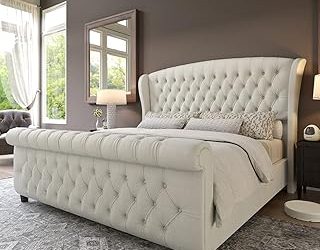
- Headboard scale: Height should relate to your ceiling and window line. A 56-inch wingback like the OHOHOLIVE reads dramatic under 9-foot ceilings but can swallow a smaller room, while the adjustable headboards on the Novilla and GRUSIGN let you fine-tune the height after the bed is in place.
- Finish and upholstery wear: Velvet feels luxe and photographs beautifully but shows oils along the top edge; linen-weave fabric hides wear better and vacuums clean. Powder-coated steel is the most forgiving option for households with pets or kids.
- Assembly and hardware quality: King frames arrive in multiple boxes, so check that bolts are steel rather than zinc-coated soft alloy. Felt pads and rubber-tipped slat ends are the small details that separate a silent bed from a squeaky one.
The Best King Size Bed Frames of 2026, Reviewed
NEW JETO 18-Inch Metal Bed Frame with Storage Space
The most practical pick here: heavy-gauge steel, an 18-inch deck height that opens up genuine storage volume, and no box spring required. It’s utilitarian by design, which makes it an easy candidate for pairing with a wall-mounted or standalone headboard of your choosing.
Novilla King Platform Bed with Adjustable Headboard
Linen-weave upholstery in beige gives this one a softer, more textural presence than velvet, and the adjustable headboard height is genuinely useful when you’re layering pillows or working around a low window. Wooden slat support and noise-free construction make it a strong mid-range default.
GRUSIGN Velvet Platform Bed with Adjustable Height
The standout feature is flexibility: it accommodates a mattress alone or a mattress with a box spring, so it adapts if you change sleep setups later. The velvet headboard leans warm and tactile without pushing into maximalist territory.
OHOHOLIVE 56-Inch Velvet Wingback Bed
This is the design-forward choice, with a tall wingback silhouette in deep gray that anchors a room without needing much else on the walls. Reserve it for spaces with reasonable ceiling height, where the proportions can actually breathe.
Fluest King Platform Bed with Velvet Headboard
A leaner take on the upholstered platform: velvet headboard, metal internal support, and a straightforward assembly that doesn’t demand a second pair of hands for long. The beige finish is neutral enough to survive several rounds of redecorating.
Frequently Asked Questions
Do I still need a box spring for a king frame?
Not for any platform frame with properly spaced slats, which covers every pick above. A box spring only makes sense if you want extra height or your mattress manufacturer specifically requires one.
Why does my king bed creak, and can it be fixed?
Creaking almost always comes from loose bolts or slats rubbing against the rail. Re-torque all hardware after the first two weeks of use and add adhesive felt pads at contact points.
How much clearance do I need around a king bed?
Aim for 24 to 30 inches on the sides and foot for comfortable movement. Below 24 inches, consider a frame with no footboard and a slimmer headboard profile.
Are storage beds with built-in features worth it?
They are if you’d otherwise buy a nightstand and a dresser. The CypBed walnut frame bundles two drawers, LED lighting, and a charging port, which consolidates function in smaller bedrooms.
Final Thoughts
For pure durability and storage value, the NEW JETO metal frame is hard to beat at its price point. If you want the bed to carry the room’s design weight, the OHOHOLIVE wingback delivers the most presence, while the Novilla adjustable-headboard platform remains the most balanced choice for comfort, quiet, and everyday livability.