Key takeaways
- Profile depth: Aim for 13 to 15 inches. A taller build leaves room for three or four inches of contouring foam above the support core, which is what lets your shoulder drop in without bottoming out onto the springs.
- Coil gauge and count: Individually pocketed coils in a lower gauge (thicker wire) resist compression fatigue far better than continuous innerspring or all-foam cores. Zoned coil layouts add extra reinforcement under the lumbar and hip region specifically.
- Feel calibration: Medium to medium-firm is the sweet spot. Heavier bodies experience any given mattress as softer than a lighter sleeper would, so a label reading “medium” often performs like a true medium-firm under 250 pounds and up.
- Heat management: More surface contact means more trapped body heat. Look for gel-infused or open-cell foams, breathable covers, and hybrid coil layers that keep air moving through the core rather than sealing it in.
- Trial window and warranty: Compression issues surface at month four, not week one. A 365-night trial paired with a 10-year warranty gives you time to spot sagging before you own it outright. Check the warranty’s indentation threshold too.
What's inside
Side sleeping concentrates your entire body weight onto two narrow contact zones: the shoulder and the hip. For sleepers over roughly 230 pounds, that geometry turns most mattresses into a compromise. Soft models feel welcoming for a week, then compress past their support layer and let the hips drop into a hammock. Firm models hold the line but refuse to yield at the shoulder, leaving the spine kinked and the arm numb by 3 a.m. The result is a frustrating cycle of returns and lumbar aches that no pillow can fix.
The fix is structural, not cosmetic. What heavier side sleepers need is a deep comfort layer that allows shoulder and hip to sink, sitting on top of a reinforced core dense enough to catch the pelvis before it sags. Below, we look at six mattresses built around that logic, then break down the specifications that actually predict long-term durability at higher body weights, so you can shop by construction rather than by marketing adjectives.
As an Amazon Associate we earn from qualifying purchases.


How to Choose a Mattress For Heavier Side Sleepers (2026)
- Profile depth: Aim for 13 to 15 inches. A taller build leaves room for three or four inches of contouring foam above the support core, which is what lets your shoulder drop in without bottoming out onto the springs.
- Coil gauge and count: Individually pocketed coils in a lower gauge (thicker wire) resist compression fatigue far better than continuous innerspring or all-foam cores. Zoned coil layouts add extra reinforcement under the lumbar and hip region specifically.
- Feel calibration: Medium to medium-firm is the sweet spot. Heavier bodies experience any given mattress as softer than a lighter sleeper would, so a label reading “medium” often performs like a true medium-firm under 250 pounds and up.
- Heat management: More surface contact means more trapped body heat. Look for gel-infused or open-cell foams, breathable covers, and hybrid coil layers that keep air moving through the core rather than sealing it in.
- Trial window and warranty: Compression issues surface at month four, not week one. A 365-night trial paired with a 10-year warranty gives you time to spot sagging before you own it outright. Check the warranty’s indentation threshold too.
The Best Mattress For Heavier Side Sleepers (2026)s Reviewed
Sweetnight CoolNest 14 Inch
The five-zone ergonomic layout is the standout here, softening beneath the shoulders while stiffening under the midsection, which is exactly the differential a heavier side sleeper needs. It’s an all-foam build with genuine cooling credentials, so it suits anyone who wants pressure relief and quiet motion isolation over the buoyancy of coils.
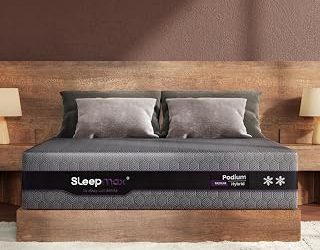
Sleepmax Queen 14 Inch Hybrid
A well-balanced hybrid that pairs a generous comfort layer with a pocketed coil core, delivering the sink-in shoulder relief side sleepers want without letting the hips drift out of alignment. The 365-night trial is a real advantage at this price point, giving you a full year to judge how the foam holds up.
BedStory 14 Inch Hybrid
Explicitly engineered for higher body weights, with zoned lumbar reinforcement and a pocket spring core built to resist the sagging that undoes lesser mattresses. If your primary complaint is lower back pain that worsens overnight, this is the most targeted pick on the list.
Beautyrest World Class Level Four Plush 15.25″
The premium option, and the one that feels most like a hotel bed: 15.25 inches of plush cushioning over a substantial support system, built domestically with a track record behind the name. The plush surface accommodates broad shoulders beautifully while the core keeps everything level.
Medium Firm 14 Inch Hybrid with Zoned Lumbar Support
A straightforward, fiberglass-free hybrid that hits the medium-firm calibration heavier sleepers usually land on after trial and error. Zoned lumbar support does the structural work, and the 365-night trial plus 10-year warranty removes most of the purchasing risk.
Frequently Asked Questions
How firm should a mattress be for a heavier side sleeper?
Medium to medium-firm. You want enough give for the shoulder and hip to sink into alignment, backed by a core firm enough that the pelvis doesn’t keep descending. Anything marketed as plush-soft will likely feel unsupported within a few months.
Is a hybrid better than all-foam at higher body weights?
Usually, yes. Pocketed coils provide pushback that foam alone struggles to match over time, and they breathe better. A high-density all-foam model like the CoolNest still works well if you prefer a quieter, more cradling surface.
Will a 14 inch mattress fit my existing sheets?
Check the pocket depth. Standard fitted sheets typically top out around 14 inches, so a 14 to 15 inch mattress often needs deep-pocket sheets rated to 16 or 18 inches.
How long should one of these last?
Expect seven to ten years from a quality hybrid at higher body weights, slightly less from all-foam. A supportive foundation with center rail bracing meaningfully extends that lifespan.
Final Thoughts
For most heavier side sleepers, the BedStory 14 Inch Hybrid is the smartest starting point, since it was designed around this exact load problem and prices reasonably. If your budget stretches, the Beautyrest World Class Level Four Plush delivers deeper luxury cushioning with proven durability behind it, while the Sweetnight CoolNest 14 Inch remains the pick for anyone who runs hot and prefers the contoured, motion-absorbing feel of foam.