Key takeaways
- Thickness: Two inches is the practical minimum for side sleepers. Three to four inches gives shoulders room to sink without bottoming out, which matters most on firm or innerspring mattresses.
- Zoned vs. uniform foam: Zoned designs vary firmness along the length of the topper, softening at the shoulders and hips while staying supportive under the lumbar. Uniform foam is simpler and works well if your mattress is already reasonably supportive.
- Cooling construction: Look for gel infusion, ventilated foam channels, or a viscose-from-bamboo cover. Foam traps heat by nature, so the cooling layer is doing real work, not just marketing.
- Pocket depth and fit: Measure your mattress before buying. Skirted pads range from 6″ to 21″ of stretch; a topper that won’t grip the corners will shift every night no matter how good the fill is.
- Fill type and certification: Memory foam contours and holds its shape; down-alternative fill feels plusher and more breathable but compresses faster. For foam, CertiPUR-US certification confirms low emissions and no unwanted flame retardants.
What's inside
Side sleeping is the most popular position in the world and the least forgiving of a flat, unyielding bed. All of your weight lands on two narrow contact points — the shoulder and the hip — and if the surface underneath refuses to give, those joints absorb the load instead. That’s the numb arm at 3 a.m., the ache along the outer hip, the low-back tightness that shows up before your first coffee. A too-firm mattress isn’t a comfort preference problem for side sleepers; it’s an alignment problem.
A topper is the most efficient fix available, adding two to four inches of pressure-relieving loft without the cost or commitment of a new mattress. Below are the toppers worth your attention in 2026, spanning gel memory foam for contouring, zoned foam for targeted support, and plush pillow-top pads for anyone who wants cloud-like softness with breathability built in. We’ve also included the specs that actually matter, so you can match a topper to your bed rather than guessing.
As an Amazon Associate we earn from qualifying purchases.



How to Choose a Mattress Topper for Side Sleepers (2026)
- Thickness: Two inches is the practical minimum for side sleepers. Three to four inches gives shoulders room to sink without bottoming out, which matters most on firm or innerspring mattresses.
- Zoned vs. uniform foam: Zoned designs vary firmness along the length of the topper, softening at the shoulders and hips while staying supportive under the lumbar. Uniform foam is simpler and works well if your mattress is already reasonably supportive.
- Cooling construction: Look for gel infusion, ventilated foam channels, or a viscose-from-bamboo cover. Foam traps heat by nature, so the cooling layer is doing real work, not just marketing.
- Pocket depth and fit: Measure your mattress before buying. Skirted pads range from 6″ to 21″ of stretch; a topper that won’t grip the corners will shift every night no matter how good the fill is.
- Fill type and certification: Memory foam contours and holds its shape; down-alternative fill feels plusher and more breathable but compresses faster. For foam, CertiPUR-US certification confirms low emissions and no unwanted flame retardants.
The Best Mattress Toppers for Side Sleepers (2026), Reviewed
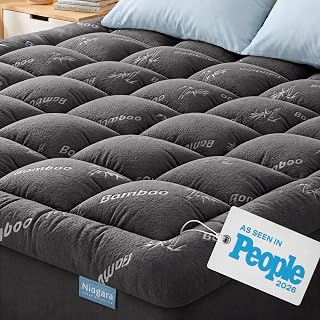
Niagara Sleep Solution Ultra Soft & Cooling Topper
A pillow-top pad with a rayon-from-bamboo surface and a genuinely deep 20″ pocket, this is the pick for hot sleepers who want softness without the sink of memory foam. It cushions the shoulder well and stays put on tall mattresses, though it adds plushness rather than structural support.
BEDLORE Viscose Bamboo Pillow Top Pad
Closely related in concept to the Niagara but with stretch pockets sized for 6″ to 18″ mattresses, making it the more versatile option across bed heights. The viscose bamboo cover sleeps cool and quiet, and the thick quilted fill takes the edge off a firm mattress without changing its feel entirely.
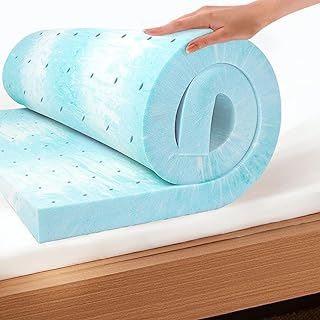
EGO 3 Inch Gel Memory Foam Topper
Three inches of gel-infused, ventilated foam is the sweet spot for most side sleepers, giving your shoulder somewhere to go while keeping the spine level. CertiPUR-US certified and the strongest all-around choice here if your current mattress feels like a board.
LUCID 2 Inch 5-Zone Gel Memory Foam Topper
The five-zone layout is the smart feature: softer under the shoulders and hips, firmer through the middle, so you get pressure relief without losing lumbar support. At two inches it’s best for beds that are only slightly too firm, or for lighter-framed sleepers.
4.5″ Memory Foam and Pillow Top Combo (Full)
This one stacks 2.5″ of cooling memory foam beneath a 2″ quilted pillow top, delivering deep contouring and a soft landing in a single product. It’s the most transformative option on the list, ideal for side sleepers who’ve tried thinner toppers and still wake up sore.
Frequently Asked Questions
How thick should a topper be for side sleeping?
Aim for 2″ to 4″. Under 2″ rarely relieves shoulder pressure on a firm bed, while much over 4″ can make edges feel unstable and complicate sheet fit.
Can a topper fix a mattress that’s too firm?
Yes, and this is exactly where toppers excel. They cannot fix the opposite problem: a sagging or overly soft mattress needs replacing, since a topper will only follow the dip beneath it.
Do memory foam toppers sleep hot?
Traditional foam does. Gel infusion and ventilated designs meaningfully reduce heat retention, and a viscose-bamboo or quilted pillow-top pad will run cooler still if temperature is your main concern.
What works best for a guest room?
A plush down-alternative pad, like the extra-thick 1000GSM king topper with its 8″–21″ pocket range, suits guest beds well. It fits nearly any mattress, feels immediately luxurious, and doesn’t require anyone to adjust to foam.
Final Thoughts
For most side sleepers, the EGO 3 Inch Gel Memory Foam Topper hits the right balance of contouring, cooling, and price. Choose the LUCID 5-Zone if your mattress only needs fine-tuning, or the 4.5″ memory foam and pillow-top combo if you want the most dramatic upgrade a topper can deliver.