Key takeaways
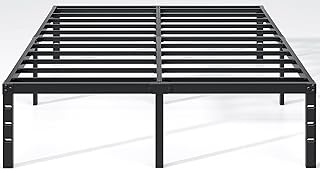
- Check your slat gaps: Foam mattresses need slats spaced 3 inches apart or less. Wider gaps let the foam bow between rails, which reads as sagging within a year. A bunkie board or plywood sheet is a cheap fix.
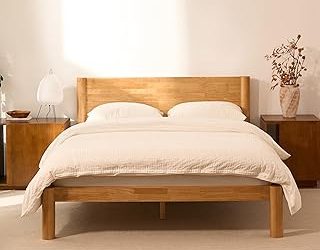
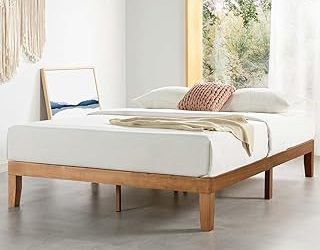
- Match height to the room, not the trend: A 12- to 14-inch mattress on a low platform lands your surface around 18–22 inches — comfortable to sit on and visually grounded. A 14-inch mattress on a tall frame can look top-heavy.
- Prioritize base layers over comfort layers: Without a box spring, the mattress’s own high-density support core does all the load-bearing. Look for at least 5–6 inches of firm base foam or a pocketed coil unit.
- Think about airflow: Solid platforms trap heat and moisture. Choose gel-infused foam, open-cell structures, or a hybrid with coils, and favor a slatted base if you sleep warm.
- Verify the certifications: CertiPUR-US covers foam emissions and content, and fiberglass-free construction matters if the cover ever comes off. Both are now standard on reputable bed-in-a-box brands — treat their absence as a signal.
What's inside
Box springs were built for a different era of bedroom design — high beds, coil mattresses, and frames that needed a shock absorber underneath. Today’s bedrooms lean low and architectural: platform beds, slatted walnut frames, upholstered plinths, storage bases. Drop a modern foam or hybrid mattress onto one of those and a box spring becomes redundant at best, and at worst it stacks your sleeping surface up to an awkward 32 inches, throwing off the proportion of the whole room. The confusion is understandable, though. Most mattress listings say “no box spring required” without explaining what the mattress does need instead.
This guide sorts that out. Below are six mattresses that are engineered to sit directly on a platform, slatted base, or bunkie board — chosen for internal support structure, edge stability, slat-gap tolerance, and how they handle heat without a ventilated coil unit beneath them. You’ll find a buying framework first, then honest reviews of the standouts, from an 8-inch guest-room option to a full 14-inch hybrid.
As an Amazon Associate we earn from qualifying purchases.


How to Choose a Mattress Without a Box Spring (2026)
- Check your slat gaps: Foam mattresses need slats spaced 3 inches apart or less. Wider gaps let the foam bow between rails, which reads as sagging within a year. A bunkie board or plywood sheet is a cheap fix.
- Match height to the room, not the trend: A 12- to 14-inch mattress on a low platform lands your surface around 18–22 inches — comfortable to sit on and visually grounded. A 14-inch mattress on a tall frame can look top-heavy.
- Prioritize base layers over comfort layers: Without a box spring, the mattress’s own high-density support core does all the load-bearing. Look for at least 5–6 inches of firm base foam or a pocketed coil unit.
- Think about airflow: Solid platforms trap heat and moisture. Choose gel-infused foam, open-cell structures, or a hybrid with coils, and favor a slatted base if you sleep warm.
- Verify the certifications: CertiPUR-US covers foam emissions and content, and fiberglass-free construction matters if the cover ever comes off. Both are now standard on reputable bed-in-a-box brands — treat their absence as a signal.
The Best Mattresses Without a Box Spring (2026), Reviewed
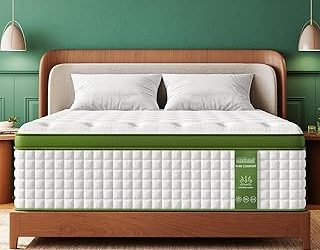
EGOHOME 8-Inch Green Tea Memory Foam (Full)
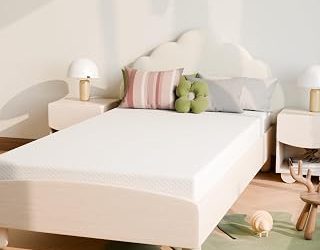
At 8 inches, this is the right call for a guest room, a daybed, or a low platform where you want the mattress to disappear into the frame’s silhouette. The green tea gel infusion and medium-firm feel keep it from sleeping hot or hammocky, and CertiPUR-US certification plus fiberglass-free construction cover the fundamentals.
Nectar 12″ Memory Foam (Queen)
Nectar remains the most reliable all-rounder here — a genuinely balanced medium-firm that suits back and side sleepers without the sink-in lag older memory foam was known for. The year-long trial is unusually generous, which matters when you’re adapting to a new bed height at the same time.
Sweetnight CoolNest 14″ (Queen)
The five-zone construction is the differentiator: firmer foam under the hips and lumbar, softer through the shoulders, which keeps spinal alignment honest for side sleepers. At 14 inches it’s the most substantial-feeling all-foam option on this list, and the breathable build offsets the heat retention foam is usually blamed for.
Novilla 14″ Gel Memory Foam (Queen)
Novilla’s strength is motion isolation — if you share a bed with a restless partner or a dog that relocates hourly, this one absorbs it. The gel layer handles cooling adequately rather than aggressively, making it a sensible value pick for a cooler bedroom.
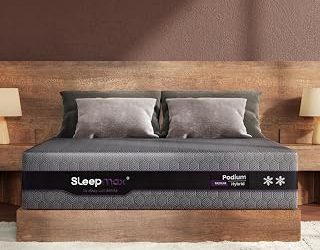
Sleepmax 14″ Hybrid (Queen)
Pocketed coils give this hybrid the edge support that all-foam beds struggle with, so the perimeter holds firm when you sit to put on shoes — a real advantage on a platform frame with no box spring lifting the sides. The 365-night trial and fiberglass-free build make it the low-risk choice for back and side sleepers who want responsive bounce.
Frequently Asked Questions
Do modern mattresses ever need a box spring?
Only traditional innerspring mattresses genuinely benefit from one. Every mattress in this roundup is designed for a solid or closely slatted base, and adding a box spring can actually void some warranties by changing how the foam is supported.
Can I put a foam mattress directly on the floor?
Short-term, yes. Long-term, no — floors block airflow and trap condensation underneath, which invites mildew. If you want the low-profile look, use a bunkie board or a 2-inch riser to let the underside breathe.
What frame works best for a 14-inch mattress?
A slatted platform with 2.5-inch gaps and a center support leg. That combination gives you ventilation, even load distribution, and enough rigidity to stop the middle from dipping over time.
How long before a bed-in-a-box fully expands?
Most reach full loft in 24 to 48 hours, though dense 14-inch models can take up to 72. Sleep on it either way — body heat and weight speed the process along.
Final Thoughts
For most bedrooms, the Nectar 12″ is the safest bet: balanced feel, proven build, and a trial period long enough to be sure. If you want coil responsiveness and stronger edges on a platform frame, the Sleepmax 14″ Hybrid is the better fit, while the EGOHOME 8-Inch handles guest rooms and low-profile setups without overwhelming the frame.