Key takeaways
- Profile height: Measure your frame’s interior depth first, then work backward. A 2-inch bunkie board keeps a low-slung platform bed visually grounded, while an 8- or 9-inch unit restores the classic 24-to-26-inch sleep surface that makes getting in and out effortless.
- Load capacity: Look for a stated weight rating, not vague marketing language. Anything above 3,000 pounds handles two adults plus a heavy hybrid mattress with margin to spare, which matters most in queen and king sizes where the span is widest.
- Slat spacing: Foam and hybrid mattresses need gaps under three inches to avoid uneven compression. Wider spacing creates soft spots you’ll feel within a season, and many manufacturers will deny a warranty claim over it.
- Silence and stability: Steel foundations should use locking joints rather than loose brackets, and wood units should be glued and stapled at the corners. Noise almost always originates at the connection points, not the surface.
- Assembly reality: Fold-out steel bases go together in minutes with no tools. Fully assembled wood units skip that step entirely but require a clear stairwell — confirm your access before ordering a rigid one-piece foundation.
What's inside
Box springs occupy an odd corner of the bedroom market. They are the one component nobody shops for with enthusiasm, yet the wrong choice quietly undermines everything above it — a sagging center, a mattress warranty voided on a technicality, a frame that creaks every time someone rolls over. Most shoppers only discover the problem months after the mattress arrives, when the support layer beneath it has already started to give.
This guide approaches the foundation as a design decision rather than an afterthought. Below you’ll find the standouts worth considering in 2026, spanning slim bunkie boards for platform beds, steel foundations built for weight and silence, and traditional wood units for anyone restoring a classic bed height. We’ve weighed profile, load rating, assembly, and how each one behaves under a modern hybrid or all-foam mattress.
As an Amazon Associate we earn from qualifying purchases.


How to Choose a Place To Buy A Box Spring (2026)
- Profile height: Measure your frame’s interior depth first, then work backward. A 2-inch bunkie board keeps a low-slung platform bed visually grounded, while an 8- or 9-inch unit restores the classic 24-to-26-inch sleep surface that makes getting in and out effortless.
- Load capacity: Look for a stated weight rating, not vague marketing language. Anything above 3,000 pounds handles two adults plus a heavy hybrid mattress with margin to spare, which matters most in queen and king sizes where the span is widest.
- Slat spacing: Foam and hybrid mattresses need gaps under three inches to avoid uneven compression. Wider spacing creates soft spots you’ll feel within a season, and many manufacturers will deny a warranty claim over it.
- Silence and stability: Steel foundations should use locking joints rather than loose brackets, and wood units should be glued and stapled at the corners. Noise almost always originates at the connection points, not the surface.
- Assembly reality: Fold-out steel bases go together in minutes with no tools. Fully assembled wood units skip that step entirely but require a clear stairwell — confirm your access before ordering a rigid one-piece foundation.
The Best Place To Buy A Box Spring (2026)s Reviewed
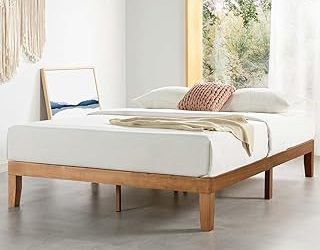
MAF 2 Inch Queen Bunkie Board with Round Corners
This is the cleanest solution for platform and slatted beds where a full box spring would ruin the proportions — two inches of wood slats rated to 3,500 pounds, with rounded corners that won’t chew through your bedding. It’s our pick for anyone replacing failed factory slats without altering bed height by more than a fingertip.
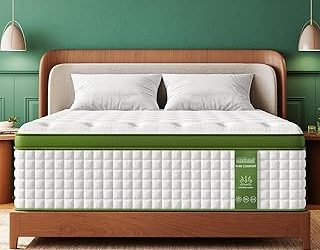
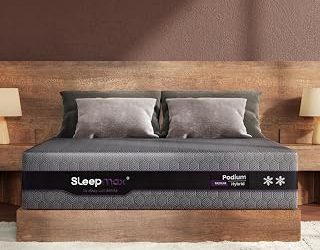
12 Inch Queen Hybrid Mattress in a Box
Worth pairing with a foundation rather than replacing one: a gel memory foam and latex build over pocketed coils, CertiPUR-US certified and fiberglass-free, with a 365-night trial that removes the guesswork. The medium feel suits combination sleepers, and it performs best on a rigid, evenly spaced base like the bunkie boards above.
Amazon Basics Smart Box Spring, 5-Inch (Full)
A mid-profile metal foundation that folds out and locks without tools, hitting the sweet spot between a low bunkie board and a traditional high box spring. The value here is unusually strong for a guest room or a first apartment where budget matters more than a bespoke look.
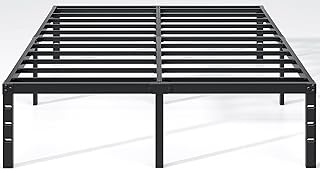
9 Inch Queen Metal Box Spring Foundation
For sleepers who want that tall, hotel-height bed back, this steel foundation delivers a 3,000-pound capacity under a fabric cover that reads as upholstery rather than hardware. Noise-free construction is the headline, and it assembles quickly enough that one person can manage it.
Greaton 8-Inch Wood Foundation (Queen, 2-Piece)
Amish-built in the USA and shipped fully assembled in two split sections, this is the traditionalist’s choice — solid wood, genuinely quiet, and easier to carry upstairs than any one-piece queen unit. Choose it when you want the substance and longevity of real lumber under a heavy mattress.
Frequently Asked Questions
Do I still need a box spring in 2026?
Only if your bed frame lacks its own support surface. Platform beds and slatted frames need nothing more than a bunkie board if the slats are worn, while open metal frames and traditional headboard-and-footboard sets still require a full foundation.
Will a box spring damage a memory foam mattress?
A coil-based vintage box spring can, because it flexes unevenly. A modern steel or slatted foundation with tight spacing provides the flat, rigid plane foam mattresses are engineered for.
What’s the difference between a bunkie board and a box spring?
Thickness and intent. A bunkie board adds one to three inches of firm support without changing bed height, whereas a box spring adds five to nine inches and raises the entire sleep surface.
Can two twin foundations replace a king box spring?
Yes, and it’s often the smarter move. Twin XL pairs navigate tight stairwells easily and, once dressed, are indistinguishable from a single unit.
Final Thoughts
For most modern bedrooms, the MAF 2-Inch Bunkie Board is the efficient fix — minimal height, serious capacity, no visual disruption. If you want a taller bed with a tailored finish, the 9-Inch Metal Foundation earns its place, while the Greaton 8-Inch Wood Foundation remains the choice for anyone who’d rather buy solid lumber once and forget about it.