Key takeaways
- Dual motor over single motor: A single motor moves the back and footrest together on a fixed arc, which locks you into a handful of preset shapes. Dual motor lets you drop the backrest nearly flat while keeping your legs elevated — the infinite-position range that makes overnight sleep viable rather than merely tolerable.
- True lay-flat vs. “almost flat”: Look for a stated recline angle near 180 degrees. Many chairs advertised as lay-flat stop around 160, which is fine for napping but tends to slide you down the seat over several hours. Zero-gravity positioning, with knees above the heart, is the sweet spot for circulation and reflux.
- Size and weight capacity: Measure your shoulder width and inseam before you shop. A 26-inch seat feels generous at 5’6″ and cramped at 6’2″. Big-and-tall models add seat depth and taller backrests so your head lands on the headrest instead of behind it.
- Cushion density and upholstery: Overstuffed foam feels luxurious in week one and forms a permanent trough by month six. High-density foam with a supportive base layer holds up to nightly use. Breathable woven fabric sleeps cooler than faux leather; faux leather wipes clean more easily.
- Practical extras that earn their keep: USB-A and USB-C ports keep a phone or CPAP accessory charged within reach. Battery backup matters if you’d be stranded upright during an outage. Heat is legitimately useful for lumbar tension; massage is a pleasant extra, not a reason to choose one chair over another.
What's inside
Sleeping in a recliner is no longer a compromise reserved for post-surgery recovery or a rough night with acid reflux. For a growing number of people — those managing sleep apnea, chronic back pain, COPD, vertigo, or swelling in the legs — the reclined position is simply the position that works. The problem is that most recliners were engineered for watching television, not for eight hours of unconscious stillness. A chair that feels plush during a movie can leave you with a stiff neck, numb arms, and a lower back that never fully released, because the seat never opens past 140 degrees and the lumbar support was designed for an upright spine.
This guide focuses narrowly on recliners built to be slept in: lay-flat and zero-gravity mechanisms, dual-motor independence so the back and legs move separately, and cushioning dense enough to hold its shape overnight. We’ve prioritized power lift models for anyone who needs help standing in the morning, flagged the options sized for taller and heavier frames, and noted where heat and massage genuinely help versus where they’re just marketing. Below are the six chairs worth your attention in 2026.
As an Amazon Associate we earn from qualifying purchases.


How to Choose a Recliner Chair To Sleep In (2026)
- Dual motor over single motor: A single motor moves the back and footrest together on a fixed arc, which locks you into a handful of preset shapes. Dual motor lets you drop the backrest nearly flat while keeping your legs elevated — the infinite-position range that makes overnight sleep viable rather than merely tolerable.
- True lay-flat vs. “almost flat”: Look for a stated recline angle near 180 degrees. Many chairs advertised as lay-flat stop around 160, which is fine for napping but tends to slide you down the seat over several hours. Zero-gravity positioning, with knees above the heart, is the sweet spot for circulation and reflux.
- Size and weight capacity: Measure your shoulder width and inseam before you shop. A 26-inch seat feels generous at 5’6″ and cramped at 6’2″. Big-and-tall models add seat depth and taller backrests so your head lands on the headrest instead of behind it.
- Cushion density and upholstery: Overstuffed foam feels luxurious in week one and forms a permanent trough by month six. High-density foam with a supportive base layer holds up to nightly use. Breathable woven fabric sleeps cooler than faux leather; faux leather wipes clean more easily.
- Practical extras that earn their keep: USB-A and USB-C ports keep a phone or CPAP accessory charged within reach. Battery backup matters if you’d be stranded upright during an outage. Heat is legitimately useful for lumbar tension; massage is a pleasant extra, not a reason to choose one chair over another.
The Best Recliner Chair To Sleep In (2026)s Reviewed
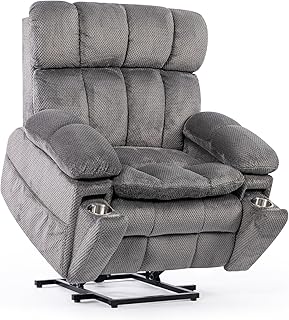
Dual Motor 26″ Extra Wide Power Lift Recliner
This is the most complete package for overnight use: a genuinely wide 26-inch seat, independent back and leg motors for zero-gravity positioning, and flip-arm storage that keeps a remote or reading glasses off the floor. The adjustable headrest is the detail that matters most for sleep, letting you dial out the neck strain that ruins most reclined nights.
Oversized Dual Motor Lay Flat Lift Recliner (Grey)
Built for larger frames without the boxy proportions that make oversized chairs dominate a room, this one pairs infinite-position control with breathable textile upholstery that sleeps noticeably cooler than vinyl. A sensible pick if you run warm or live somewhere humid.
EONIX Dual Motor Zero Gravity Recliner (Navy)
The standout here is control precision — separate backrest and footrest adjustment plus lumbar heat lets you fine-tune pressure relief rather than accept a preset. Plush padding and a navy finish that reads more contemporary than clinical make it easy to place in a bedroom or study.
MCombo Lift Chair for Tall Users 7755
Purpose-built for frames up to about 6’6″, with the extended seat depth and elevated backrest that taller sleepers genuinely need. The faux leather wipes down in seconds, which is a real advantage for caregiving situations or anyone who eats and drinks in the chair.
Korser 360° Swivel Rocker Recliner
The manual outlier, and the right answer for nursery use, small bedrooms, or anyone who doesn’t want a power cord. Full 360-degree swivel plus a rocking motion makes it exceptional for feeding and settling, though it won’t go as flat as the lift chairs above.
Frequently Asked Questions
Is sleeping in a recliner every night bad for you?
For most people it’s safe, and for some conditions — reflux, sleep apnea, certain back injuries — clinicians actively recommend it. The main risks are reduced leg circulation and stiffness, which you mitigate by elevating your legs to heart level or above and getting up to move each morning. Check with your doctor if you have a clotting history.
Do I need a lift chair if I’m not elderly?
Not necessarily, but the lift function is useful more often than people expect: post-surgery recovery, knee and hip issues, and simply rising from a near-flat position without twisting your spine. It also adds resale value and future-proofs the purchase.
How flat does a recliner need to be for real sleep?
Aim for at least 160 degrees, and 170 to 180 if you’re a back sleeper accustomed to a mattress. Below 150 degrees you’ll likely wake with neck and shoulder tension no matter how good the cushioning is.
What happens during a power outage?
Most quality power recliners include a 9V battery backup that will return the chair to an upright position once — enough to get you out safely. Confirm this feature before buying and keep a fresh battery installed.
Final Thoughts
If you want one chair that handles nightly sleep without caveats, the Dual Motor 26″ Extra Wide Power Lift Recliner is the strongest all-round choice, combining true zero-gravity positioning with an adjustable headrest and genuinely usable width. Taller sleepers should go straight to the MCombo 7755, which solves the proportion problem no amount of padding can fix, while the EONIX Dual Motor Zero Gravity Recliner offers the most granular control for anyone managing specific lumbar pain. Match the chair to your body first, then let the heat, massage, and charging ports be the tiebreakers.