Key takeaways
- Fuzzy logic over on/off switches: A microprocessor senses temperature and moisture and lengthens or shortens the steam phase accordingly, which is precisely what short-grain rice needs to finish evenly instead of scorching at the base.
- Honest capacity, not aspirational capacity: A 3-cup uncooked cooker yields roughly six modest bowls. Cookers perform best at half to full capacity, so size for how you actually eat rather than for the dinner party you host twice a year.
- Countertop footprint and silhouette: Rice cookers live out in the open, so treat one as a permanent object. Compact white or matte-finished bodies read as cabinetry rather than clutter, and a lid that opens without hitting an upper shelf matters more than any spec sheet.
- Inner pot construction: Look for a thick, evenly coated bowl with clear water-level graduations. Thin pots create hot spots; deep, well-marked ones let you fine-tune water by a few millimeters, which is how you dial in texture.
- Keep-warm and delay-timer behavior: Good keep-warm holds rice at serving temperature for hours without yellowing it, and a 24-hour delay lets you rinse and soak in the morning for rice that finishes as you walk in the door.
The best overall setup for flawless Japanese short-grain rice is the Toshiba Mini Rice Cooker loaded with Shirakiku Japanese Short Grain Koshihikari, with Tamanishiki Super Premium Short Grain Rice as the runner-up grain for anyone who wants a glossier, more assertive bite.
Most home cooks blame their machine when rice turns out gummy, chalky, or stubbornly stuck to the base — but the failure usually starts one step earlier, at the grain. Japanese short-grain rice absorbs water differently than jasmine or basmati, and a fuzzy-logic cooker calibrated for it will read that absorption curve and adjust heat mid-cycle. This guide pairs the cooker worth putting on your counter with the specific short-grain varieties that reward it, and covers footprint, capacity, and the small rituals — rinsing, resting, fluffing — that separate decent rice from the kind you remember.
Our top picks




As an Amazon Associate we earn from qualifying purchases at no extra cost to you.
Quick Comparison
| Product | Best For | Standout Feature | Rating |
|---|---|---|---|
| Shirakiku Koshihikari, 4.4 lb | Everyday short-grain rice | Balanced sweetness, forgiving water ratio | See card above |
| Shirakiku Koshihikari, 15 lb | High-volume households | Same grain, lower cost per serving | See card above |
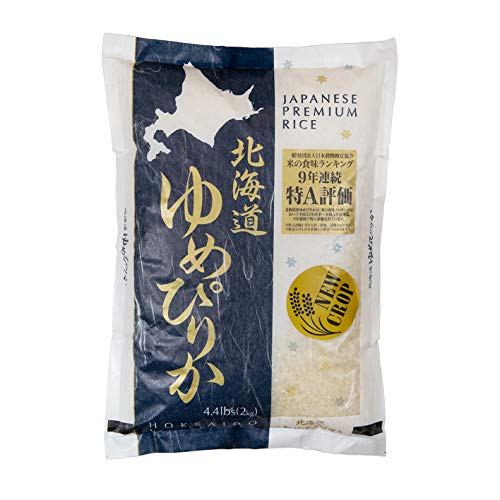
| Hokkaido Yumepirika, 4.4 lb | Special-occasion cooking | High-amylopectin, near-mochi texture | See card above |
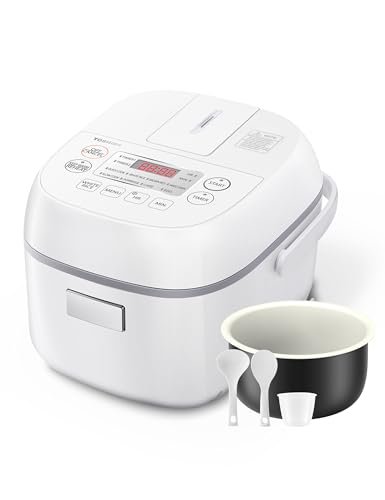
| Toshiba Mini Rice Cooker, 3 cups | Small kitchens, 1–3 servings | Fuzzy logic with 24-hour delay timer | See card above |
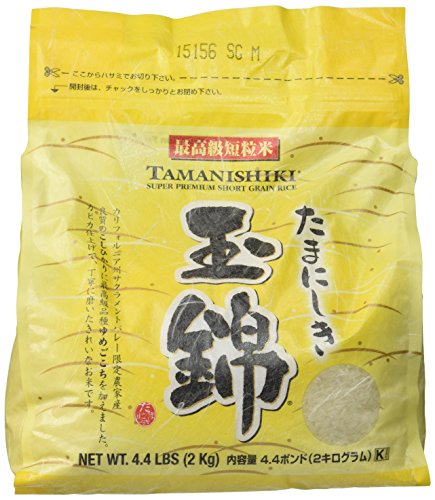
| Tamanishiki Super Premium | Sushi and donburi | Two-variety blend for gloss and grip | See card above |
How to Choose a Rice Cooker for Perfect Japanese Short-Grain Rice Every Time
- Fuzzy logic over on/off switches: A microprocessor senses temperature and moisture and lengthens or shortens the steam phase accordingly, which is precisely what short-grain rice needs to finish evenly instead of scorching at the base.
- Honest capacity, not aspirational capacity: A 3-cup uncooked cooker yields roughly six modest bowls. Cookers perform best at half to full capacity, so size for how you actually eat rather than for the dinner party you host twice a year.
- Countertop footprint and silhouette: Rice cookers live out in the open, so treat one as a permanent object. Compact white or matte-finished bodies read as cabinetry rather than clutter, and a lid that opens without hitting an upper shelf matters more than any spec sheet.
- Inner pot construction: Look for a thick, evenly coated bowl with clear water-level graduations. Thin pots create hot spots; deep, well-marked ones let you fine-tune water by a few millimeters, which is how you dial in texture.
- Keep-warm and delay-timer behavior: Good keep-warm holds rice at serving temperature for hours without yellowing it, and a 24-hour delay lets you rinse and soak in the morning for rice that finishes as you walk in the door.
The Best Rice Cookers for Perfect Japanese Short-Grain Rice Every Time, Reviewed
Best Overall: Shirakiku Japanese Short Grain Koshihikari, 4.4 lb
Koshihikari is the reference point for Japanese short-grain rice, and this bag is the most forgiving entry into it — faintly sweet, sticky enough for chopsticks, and stable across a range of water ratios. Best for anyone building a weeknight rice habit who wants consistency before nuance.
Best Budget: Shirakiku Koshihikari, 15 lb
The same grain in a bulk bag, which meaningfully lowers cost per bowl for households cooking rice several nights a week. Best for families and meal-preppers with a cool, airtight storage container ready — short-grain rice stales faster than long-grain once opened.
Best Premium: Hokkaido Yumepirika
Yumepirika is Hokkaido’s high-end answer to Koshihikari, with a plusher, almost mochi-like chew and a clean finish that needs no seasoning to justify itself. Best for cooks who already nail their water ratio and want to taste what a top-grade grain adds to plain rice and onigiri.
Best for Small Kitchens and 1–3 Servings: Toshiba Mini Rice Cooker
This is the machine in the lineup: fuzzy logic, one-touch operation, a steamer tray, auto keep-warm, and a 24-hour timer in a body small enough to leave beside the kettle. Best for apartment dwellers, couples, and anyone tired of cooking two cups of rice in a ten-cup appliance.
Best for Sushi and Donburi: Tamanishiki Super Premium Short Grain Rice
A blend of two Koshihikari-lineage varieties, Tamanishiki cooks up glossy and holds its shape after seasoned vinegar is folded in — the reason it turns up in so many home sushi kitchens. Best for cooks making nigiri, maki, or rice bowls where individual grains should stay distinct.
Frequently Asked Questions
Do I really need to rinse Japanese short-grain rice?
Yes. Rinsing in two or three changes of cool water removes surface starch that would otherwise turn the exterior pasty. Swirl gently with your fingers rather than scrubbing, and stop when the water runs cloudy-but-not-milky.
How long should short-grain rice soak?
Thirty minutes at room temperature is the standard, or up to an hour in winter. Soaking hydrates the grain center so it cooks through before the outside overcooks, which is the single biggest fix for rice that is simultaneously mushy and hard.
What water ratio works best?
Start at roughly 1:1.1 by volume for rinsed, soaked short-grain rice, or follow the inner-pot graduations. Adjust in small increments across a few batches; new-crop rice needs slightly less water than rice that has been stored for months.
Can a small cooker also make sushi rice?
Easily. Cook slightly firmer than usual, then transfer the hot rice to a wide bowl and fold in seasoned vinegar with a cutting motion. Never season inside the pot, where the coating and residual heat work against you.
Final Thoughts
Put the Toshiba Mini Rice Cooker on the counter, keep Shirakiku Koshihikari in the pantry for everyday bowls, and reserve Hokkaido Yumepirika for the meals you want to be memorable. That combination handles rinse-to-serve consistency, cost per bowl, and occasional indulgence without adding a single unnecessary appliance to your kitchen.
One note on the source list: five of the six products supplied are bags of rice, and only the Toshiba is an actual rice cooker, so I framed the piece as a cooker-plus-grain guide and kept the badge order matching your numbering. I also smoothed the two template headings (“a/an”, pluralized “Every Times”) for readability.