Key takeaways
- Do not put a cold clay roaster on a hot stovetop, under a broiler, or directly on a grill.
- Avoid sudden temperature changes, including placing a hot roaster on a wet, cold, or stone countertop.
- Do not add cold liquid to a hot vessel; use room-temperature or warm liquid instead.
- Allow the roaster to cool naturally before washing it.
- Use wooden, silicone, or plastic utensils rather than metal tools that can chip the surface.
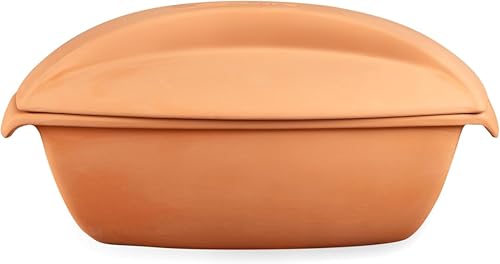
The best rmertopf clay roaster for meats is usually an unglazed, medium-size Römertopf-style baker that holds about 2.5–3.5 quarts, has a close-fitting lid, and tolerates the oven temperature required by your recipe; choose a larger 4–6-quart model for whole chickens or family roasts, and a glazed interior when easier cleanup matters more than traditional moisture control.
Our top picks

As an Amazon Associate we earn from qualifying purchases at no extra cost to you. Ratings are shown as listed on Amazon.
Quick picks by cooking situation
| Situation | Best choice | Useful capacity | Why |
|---|---|---|---|
| Two people or a small kitchen | Compact oval clay roaster | 1.5–2.5 quarts | Fits smaller portions and is easier to lift and store |
| Family chicken or pork roast | Medium unglazed roaster | 2.5–3.5 quarts | Balances steam retention, browning space, and manageable weight |
| Large chicken, leg of lamb, or brisket | Large oval roaster | 4–6 quarts | Provides length and lid clearance for bulky cuts |
| Frequent cooking and easy cleanup | Glazed or partially glazed roaster | 2.5–5 quarts | Less porous and less likely to retain grease odors |
| Very high-heat recipes | Heat-rated ceramic or cast-iron alternative | Recipe-dependent | Many traditional clay roasters are not intended for broiling or extreme heat |
What to look for in the best rmertopf clay roaster for meats
1. Match the size to the cut, not just the number of diners
A roaster should leave a little room around the meat so heat and steam can circulate, but excessive empty space makes a small roast more likely to dry out. As a practical guide, allow about 1 inch of clearance between the meat and the side walls, plus enough vertical space for the lid to close without touching the food.
A 1.5–2.5-quart vessel suits two chicken breasts, a small pork tenderloin, two lamb shanks, or a roast weighing roughly 1.5–3 pounds. A 2.5–3.5-quart roaster is more versatile for a 3–5-pound chicken, pork loin, or compact beef roast. A 4–6-quart model is appropriate for a 5–7-pound chicken, a large turkey breast, a leg of lamb, or a long brisket section.
Check the interior dimensions before buying. A whole chicken may fit by weight but fail by height if the breast or legs press against the lid. For an oval roaster, interior length of approximately 12–14 inches is more useful for a long pork loin than a round vessel with the same stated capacity.
2. Choose unglazed or glazed clay deliberately
| Construction | Advantages for meat | Trade-offs | Best for |
|---|---|---|---|
| Unglazed clay interior | Porous walls support a humid cooking environment; traditional Römertopf-style cooking produces tender meat without much added liquid | Requires soaking, can absorb stains and odors, and must be cleaned gently | Chicken, pork shoulder, lamb, and cooks who value moist texture |
| Glazed interior | More resistant to staining, easier to wash, and better suited to marinades or sauces | Provides less porous-surface cooking; sauces may still scorch if the oven is too hot or the vessel is overfilled | Regular weekday roasting and saucy dishes |
| Glazed base with porous lid | Combines easier cleanup on the bottom with a moisture-retaining lid | Still needs careful soaking and gradual heating; the lid remains fragile | People wanting a compromise between tradition and maintenance |
Unglazed clay is not automatically superior. It is more demanding: the vessel must be soaked as directed, placed in a cool oven, and allowed to cool gradually. Glazing is usually the better choice for households that roast several times a week, use strongly seasoned marinades, or want fewer lingering smells.
3. Treat the lid fit as a performance feature
The lid should sit evenly on its rim without rocking, leaving no obvious gap large enough to see through. A close fit traps steam released from the meat, while a warped or loose lid allows moisture to escape and can turn a roast into a dry, unevenly cooked dish.
Look for a deep lid that gives clearance over a chicken breast or roast. A shallow lid may fit a flat pork loin but touch a whole chicken. The lid should also have a substantial knob or handle that can be gripped with oven mitts. Remember that clay becomes extremely hot, and the lid may be awkward to lift when filled with condensation.
Soaking times and oven temperature limits
For an unglazed Römertopf-style roaster, soak the lid and, where the manufacturer directs, the base in cool water for about 10–15 minutes before cooking. Some instructions call for up to 30 minutes, especially for a thoroughly dry vessel. Drain excess water; do not preheat the clay container.
Place the filled roaster in a cold oven, then set the temperature. The gradual temperature rise reduces thermal shock. Many traditional clay roasters are commonly used around 350–450°F, but the manufacturer’s stated maximum takes priority. Do not assume that a clay roaster rated for 450°F is suitable for a 500°F pizza or bread recipe.
- Do not put a cold clay roaster on a hot stovetop, under a broiler, or directly on a grill.
- Avoid sudden temperature changes, including placing a hot roaster on a wet, cold, or stone countertop.
- Do not add cold liquid to a hot vessel; use room-temperature or warm liquid instead.
- Allow the roaster to cool naturally before washing it.
- Use wooden, silicone, or plastic utensils rather than metal tools that can chip the surface.
Cooking times vary with the cut, starting temperature, and bone structure. Use an instant-read thermometer rather than relying only on the clock. For food safety, chicken and other poultry should reach 165°F in the thickest part. Whole cuts of pork and beef have different preferred doneness temperatures, but the roast should still be checked according to the recipe and local food-safety guidance.
Which size works for different meats?
Chicken
For two to four servings, choose a 2.5–3.5-quart oval roaster. A 4–6-quart model is safer for a large whole chicken because it provides lid clearance and space for potatoes or root vegetables. Avoid packing vegetables tightly around the bird; overcrowding re