Key takeaways
- Fiber: Wool is the durability benchmark, with natural crush resistance and lanolin that repels light spills. Polypropylene is the practical alternative: nearly bulletproof against stains, safe for bleach-based cleaning, and priced for rooms with kids or dogs.
- Pile density over pile height: A tightly packed low pile survives foot traffic far better than a plush one. Shag can work in transitional spaces, but density is what keeps footprints from becoming permanent.
- Construction: Hand-knotted and hand-tufted wool rugs age slowly and can be professionally restored. Power-loomed synthetics won’t develop patina, but they resist matting and cost a fraction to replace.
- Backing and grip: Jute or latex backing keeps a rug from creeping and buckling. Add a separate felt-and-rubber pad regardless of what’s on the underside; it absorbs impact and roughly doubles usable life.
- Pattern as camouflage: Multi-tonal borders, distressed medallions, and geometric fields hide crumbs, pet hair, and wear lines. Solid ivory or charcoal in a busy corridor is a maintenance commitment.
What's inside
Hallways, living rooms, and the path between kitchen and sofa put a rug through more abuse in a year than a guest bedroom sees in a decade. Fibers crush underfoot, pile mats into visible tracks, and the first spilled glass of red wine settles the question of whether you bought the right material. Most shoppers pick by color and pattern, then discover eight months later that the rug looks tired in exactly the places people walk.
This guide flips the order of operations: material and construction first, aesthetics second. Below are six rugs that hold their shape under real household traffic, from dense hand-knotted wool to synthetic weaves engineered to shed nothing and release stains with a damp cloth. You will also find a short framework for judging fiber, pile, and backing so you can evaluate any rug you come across, not just the ones listed here.
As an Amazon Associate we earn from qualifying purchases.


How to Choose a Rug Material for High-Traffic Areas (2026)
- Fiber: Wool is the durability benchmark, with natural crush resistance and lanolin that repels light spills. Polypropylene is the practical alternative: nearly bulletproof against stains, safe for bleach-based cleaning, and priced for rooms with kids or dogs.
- Pile density over pile height: A tightly packed low pile survives foot traffic far better than a plush one. Shag can work in transitional spaces, but density is what keeps footprints from becoming permanent.
- Construction: Hand-knotted and hand-tufted wool rugs age slowly and can be professionally restored. Power-loomed synthetics won’t develop patina, but they resist matting and cost a fraction to replace.
- Backing and grip: Jute or latex backing keeps a rug from creeping and buckling. Add a separate felt-and-rubber pad regardless of what’s on the underside; it absorbs impact and roughly doubles usable life.
- Pattern as camouflage: Multi-tonal borders, distressed medallions, and geometric fields hide crumbs, pet hair, and wear lines. Solid ivory or charcoal in a busy corridor is a maintenance commitment.
The Best Rug Materials for High-Traffic Areas (2026) Reviewed
Gertmenian Romi Indoor Boho Area Rug, 8×10
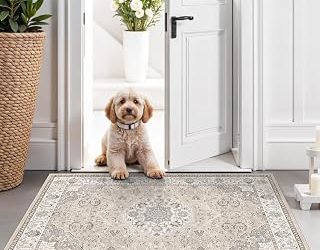
A flat, tightly woven synthetic in a faded beige boho print, which is close to ideal for open-plan living rooms where traffic arrives from three directions. The stain-resistant surface wipes clean and the low profile clears door swings and dining chairs without a rumple.
SAFAVIEH Hudson Shag, 5’3″ x 7’6″
A 2-inch shag with a modern trellis in grey and beige, dense enough that footprints settle out rather than setting in. Best suited to bedrooms and living-room seating zones rather than an entry, where the deeper pile will trap grit.
SAFAVIEH Metro Handmade Wool, 10′ x 14′
Handmade wool in dark grey and ivory, and the pick for anyone treating a rug as a decade-long purchase. Wool’s natural resilience means the pile springs back after a party, and the oversized footprint anchors a large living room without exposed floor at the edges.
SUPERIOR Rockwood Geometric, 8′ x 10′
A jute-backed slate geometric with a short, hardwearing pile that suits entryways and offices where chairs roll and shoes come and go. The graphic pattern earns its keep by disguising the daily grit that shows immediately on plainer rugs.
SAFAVIEH California Shag, 8′ x 10′
Dark grey, non-shedding, and generously thick, this is the comfort-first option for family rooms that see heavy but mostly barefoot use. Easy-care fibers tolerate frequent vacuuming, which is exactly what a deep pile in a busy home requires.
Frequently Asked Questions
Is wool or polypropylene better for high-traffic rooms?
Wool wins on longevity and appearance retention; polypropylene wins on stain resistance and cost. Choose wool for a formal living room you plan to keep, and polypropylene for entryways, playrooms, and anywhere food and pets are in play.
How short should the pile be?
Under half an inch is safest for corridors, entries, and dining rooms. Reserve 1- to 2-inch shags for seating areas where the traffic is concentrated rather than constant.
Do I still need a rug pad?
Yes. A pad prevents slipping, stops edges from curling into trip hazards, and cushions the fiber against the subfloor so crushing happens more slowly.
How often should a busy rug be cleaned?
Vacuum high-traffic lanes two or three times a week and deep-clean annually. Blot spills immediately; most synthetic rugs release fresh stains with water and mild detergent alone.
Final Thoughts
If budget allows, the SAFAVIEH Metro handmade wool is the material to beat for a room that never stops moving. For a lower-maintenance synthetic that handles spills and sun without complaint, the Gertmenian Romi is the smarter everyday buy, while the SUPERIOR Rockwood is the one to put where boots and desk chairs land.