Key takeaways
- Go thin, not plush: Over carpet you already have cushioning underfoot. A 1/4″ pad adds stability without creating a trampoline effect; 1/2″ pads belong on hard floors, not stacked on top of existing padding.
- Density beats softness: A dense, firm felt pad compresses less and gives your rug a stable base. Loose, airy padding collapses unevenly and telegraphs every footstep into a wrinkle.
- Look for dual-surface construction: Felt-and-rubber pads use the felt side to sit against carpet fibers and the rubber side to hold the rug itself. That two-way friction is what stops migration.
- Measure for a 1-inch inset: Cut or order your pad an inch smaller than the rug on all sides. An exposed pad edge under a rug lying on carpet creates a visible ridge and a trip hazard.
- Check the certifications: Look for CRI Green Label Plus or Greenguard-style testing. Pads sit in a warm, enclosed space against synthetic carpet, and low-VOC materials matter more here than most buyers realize.
What's inside
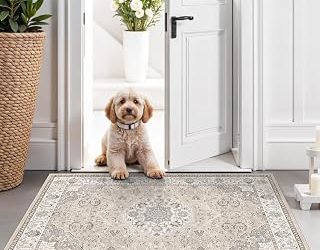
Layering a rug over wall-to-wall carpet is one of the fastest ways to define a zone in an open room, but it comes with a mechanical problem nobody warns you about. Carpet is a soft, moving surface. A rug placed directly on top of it has nothing to grip, so it creeps toward the door, bunches at the corners, and develops ripples down the middle within weeks. Vacuuming makes it worse. Foot traffic makes it worse. And the thicker your carpet pile, the more the rug behaves like a raft on water.
The fix is a pad, but not the same pad you would buy for hardwood. Rubber backing that grips a smooth floor does almost nothing against fiber, and a plush pad that feels luxurious on tile can turn a carpeted room into an unstable, spongy mess. This guide covers the pads that actually work over carpet, how thickness and material change the outcome, and which options are worth the spend in 2026.
As an Amazon Associate we earn from qualifying purchases.


How to Choose a Rug Pad For Carpeted Floors (2026)
- Go thin, not plush: Over carpet you already have cushioning underfoot. A 1/4″ pad adds stability without creating a trampoline effect; 1/2″ pads belong on hard floors, not stacked on top of existing padding.
- Density beats softness: A dense, firm felt pad compresses less and gives your rug a stable base. Loose, airy padding collapses unevenly and telegraphs every footstep into a wrinkle.
- Look for dual-surface construction: Felt-and-rubber pads use the felt side to sit against carpet fibers and the rubber side to hold the rug itself. That two-way friction is what stops migration.
- Measure for a 1-inch inset: Cut or order your pad an inch smaller than the rug on all sides. An exposed pad edge under a rug lying on carpet creates a visible ridge and a trip hazard.
- Check the certifications: Look for CRI Green Label Plus or Greenguard-style testing. Pads sit in a warm, enclosed space against synthetic carpet, and low-VOC materials matter more here than most buyers realize.
The Best Rug Pad For Carpeted Floors (2026)s Reviewed
RUGPADUSA Dual Surface 1/4″ Felt + Rubber
This is the pad to buy if your rug refuses to stay put over carpet. The felt face grips carpet fibers while the natural rubber face locks the rug in place, and at 1/4″ it adds enough body to smooth out ripples without raising the rug into an awkward step. It is the most reliable all-around choice on this list.
RUGPADUSA Basics 1/4″ 100% Felt
A pure felt pad with no rubber, which makes it the quiet workhorse for heavier rugs that already have enough weight to stay in place. It adds structure, protects rug fibers from crushing, and costs noticeably less than the dual-surface version, though lightweight rugs will still shift on it.
Jorvila Non-Slip Rug Pad Gripper
The most budget-friendly option here, and it earns its place under low-pile or commercial-style carpet where a thin gripper is all you need. The cushioning is modest compared with felt, so treat it as a slip solution rather than a comfort upgrade.
RUGPADUSA Eco-Plush 1/2″ 100% Felt
Genuinely luxurious, dense recycled felt in a half-inch profile, and best understood as the exception on this list. Save it for very low-pile or berber carpet where the extra loft reads as intentional plushness instead of instability.
Jorvila Rug Pad Gripper (Second Size Option)
Worth flagging separately because Jorvila’s sizing range makes it easy to pad multiple rugs in one order without paying custom-cut prices. Good for layering runners and accent rugs in bedrooms and hallways where the stakes are lower.
Frequently Asked Questions
Do I really need a rug pad on carpet?
Yes, if you want the rug to stay flat. Without a pad the rug has no friction against the carpet beneath it, and it will shift, ripple, and wear unevenly along the fold lines.
Will a rubber pad damage my carpet?
Natural rubber pads are safe on carpet. Avoid cheap PVC or adhesive-backed products, which can discolor synthetic fibers and leave a sticky residue that is difficult to remove.
What thickness works best over thick, plush carpet?
Stay at 1/4″ or thinner. Thick carpet already supplies cushioning, and adding a half-inch pad on top makes the rug feel unsteady and raises the tripping risk at the edges.
Can I cut a rug pad to fit?
Felt and felt-rubber pads cut cleanly with a sharp utility knife or heavy shears. Cut on the underside, take your time on curves, and aim for that inch of inset on every side.
Final Thoughts
For most carpeted rooms, the RUGPADUSA Dual Surface 1/4″ pad is the pick that solves the actual problem, combining fiber grip below with rug grip above. Choose the RUGPADUSA Basics felt pad if your rug is heavy enough to stay put on its own and you want cushioning at a lower price, or the Jorvila Gripper if you need a thin, affordable fix for low-pile carpet.