Key takeaways
- Backing chemistry: Natural rubber and silicone are the two safe bets on sealed hardwood. Avoid anything described only as “PVC,” “vinyl,” or “adhesive mesh” — those plasticizers can migrate into a floor finish and leave discoloration that no cleaner removes.
- Thickness versus door clearance: A quarter inch is the sweet spot for living and dining rooms: enough loft to soften footfall without ramping the rug edge into a trip hazard. Drop to an eighth inch under doors, low-profile furniture, or in tight entryways.
- Felt-to-rubber ratio: Felt supplies cushion and protects the finish from abrasion; rubber supplies the grip. Dual-surface construction gives you both, which is why it dominates this category. Grip-only pads make sense for thick, heavy rugs that already sit flat.
- Breathability: Solid, non-perforated backings trap moisture against wood. Look for an open or waffled structure so humidity can escape, especially over radiant heat or in humid climates.
- Trim-ability and sizing: Buy the pad an inch or two smaller than the rug on each side so it disappears at the edges. Needle-punched felt pads cut cleanly with a utility knife; loosely bonded ones fray.
What's inside
Hardwood tells on you. Every shifted corner, every ground-in grit particle, every rug that skates half an inch each time someone crosses the room leaves a record in the finish. The rug itself gets the compliments, but the layer underneath decides whether that floor still looks good in a decade — or whether you’re sanding out a haze of micro-scratches and, worse, the sticky ghost of a cheap backing that reacted with the polyurethane.
This guide looks at rug pads through the lens of the floor first and the rug second: what materials are genuinely inert against a cured finish, how much cushion actually changes the way a room feels underfoot, and where the price jumps are worth paying. Below are the pads I’d specify for a client project in 2026, from an 8×10 living room anchor down to a runner-sized gripper, plus the buying criteria that separate a pad you install once from one you’ll be re-taping every spring.
As an Amazon Associate we earn from qualifying purchases.




How to Choose a/an Rug Pad For Hardwood Floor (2026)
- Backing chemistry: Natural rubber and silicone are the two safe bets on sealed hardwood. Avoid anything described only as “PVC,” “vinyl,” or “adhesive mesh” — those plasticizers can migrate into a floor finish and leave discoloration that no cleaner removes.
- Thickness versus door clearance: A quarter inch is the sweet spot for living and dining rooms: enough loft to soften footfall without ramping the rug edge into a trip hazard. Drop to an eighth inch under doors, low-profile furniture, or in tight entryways.
- Felt-to-rubber ratio: Felt supplies cushion and protects the finish from abrasion; rubber supplies the grip. Dual-surface construction gives you both, which is why it dominates this category. Grip-only pads make sense for thick, heavy rugs that already sit flat.
- Breathability: Solid, non-perforated backings trap moisture against wood. Look for an open or waffled structure so humidity can escape, especially over radiant heat or in humid climates.
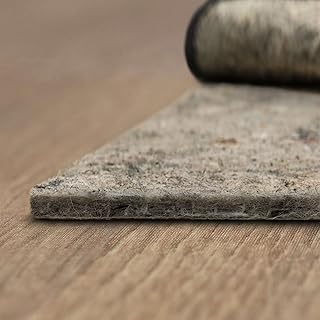
- Trim-ability and sizing: Buy the pad an inch or two smaller than the rug on each side so it disappears at the edges. Needle-punched felt pads cut cleanly with a utility knife; loosely bonded ones fray.
The Best Rug Pad For Hardwood Floor (2026)s Reviewed
RUGPADUSA Dual Surface 8’x10′ 1/4″
This is the benchmark: a dense recycled-felt body bonded to natural rubber, with no glue layer to off-gas or bleed into a finish. It holds a large rug dead still under real traffic and gives the kind of quiet, substantial feel underfoot that inexpensive pads only imitate.
Veken Cushioned Rug Pad Gripper 8×10
Veken’s approach is a felt core over dotted silicone rather than sheet rubber, which means excellent breathability and a lighter, easier install on a big rug. The dense grip pattern keeps corners planted, making it a smart choice over polyurethane-sealed oak where you want minimal contact area.
BAGAIL Felt and Natural Rubber 5×7
The best pick for the awkward in-between sizes — 5×7 rugs in bedrooms, offices, and reading corners. Same felt-plus-natural-rubber formula as the premium pads at a friendlier price, and it trims accurately if your rug runs a little short.
Mohawk Home Non Slip Rug Pad 8’x10′
Made in the USA with a felt-and-latex-rubber build, this one earns its place on consistency: uniform thickness across the whole panel, so you don’t get soft spots or telegraphing through a flatweave. A reliable, no-drama option under wool and jute.
Jorvila Non-Slip Rug Pad Gripper 8×10
Jorvila leans toward cushion, which suits thin machine-woven and vintage-style rugs that need body added. Grip is solid on smooth hardwood, and the plush hand makes a low-pile rug feel considerably more expensive than it is.
Frequently Asked Questions
Can a rug pad damage a hardwood floor?
A poorly made one can. PVC and adhesive-backed pads are the usual culprits, leaving residue or discoloration on cured finishes. Felt bonded to natural rubber or silicone is the safe pairing.
What size pad should I buy for my rug?
Roughly one inch smaller than the rug per side. That keeps the pad invisible and lets the rug edge lie flat instead of curling over a hard lip.
Do I need a pad for a small runner or accent rug?
Yes — small rugs slide the most. A grip-focused pad like the GORILLA GRIP Rug Pad Gripper in 2×3 handles bath mats, kitchen accents, and entry rugs where cushion matters less than staying put.
How long does a rug pad last?
Expect five to ten years from a quality felt-and-rubber pad in a residential room. Replace it when the rubber stiffens, cracks, or stops gripping after vacuuming.
Final Thoughts
For most hardwood rooms, the RUGPADUSA Dual Surface is the pad I’d buy without overthinking it — inert materials, real cushion, and grip that doesn’t fade. Veken is the value alternative at 8×10 if you want silicone-dot breathability, and BAGAIL covers smaller footprints with the same sound construction.